


Best Rigid Panels for Oil Painting: Types Compared

You finish a large oil painting, step back, and feel genuinely proud of it. Then three weeks later, the canvas has bowed at the center and two corners have lifted from the stretcher bar. Serious painters have dealt with this frustration for decades, and it’s largely preventable when rigid supports are used and properly prepared. If you’ve been asking what are the best rigid panels for oil painting, this guide breaks down the real differences between wood, ACM, copper, and oil-primed linen so you can choose with confidence. Rigid panels solve the warping problem at the source, which is exactly why professional artists have painted on them for centuries, from the oak boards of the Northern Renaissance to the aluminum composite panels in today’s professional studios.
The market for rigid painting supports has expanded significantly. You can now choose from traditional wood options, modern aluminum composite material (ACM), solid copper, and oil-primed linen adhered to rigid backings. Each has a different archival profile, handling feel, and price point. Oil Painting on Panels | Tips & Articles | Artefex, a specialty manufacturer focused exclusively on professional-grade panels, builds across all of these categories for painters who treat support selection as seriously as they treat paint selection.
Why rigid panels outlast stretched canvas for oil painting
How canvas warping undermines a painting’s long-term survival
Stretched canvas flexes with every shift in relative humidity. As RH rises, the fibers expand; as it drops, they contract. Over decades, this constant micro-movement puts mechanical stress on the paint film, eventually causing cracks, flaking, and adhesion failure. Conservation research consistently identifies humidity fluctuation as the dominant factor in paint film damage, not age alone. A painting stored in a stable environment ages far more slowly than one that experiences double-digit seasonal RH swings.
Rigid panels eliminate this problem at the source. Because the support doesn’t flex, the paint film is never subjected to the same cyclic stress. The dimensional stability of a well-made rigid panel across a humidity range of 20 to 80 percent RH is substantially greater than that of stretched canvas. That stability directly translates into paint film longevity.
What “archival quality” actually means for a painting support
The phrase “archival quality” gets used loosely in art supply marketing, so it’s worth pinning down what it actually requires. A genuinely archival support must be pH neutral (or slightly alkaline), free from off-gassing compounds like formaldehyde, dimensionally stable under environmental changes, and proven to maintain structural integrity under museum conditions over a projected lifespan of 100 years or more. These aren’t marketing checkboxes; they’re criteria conservation scientists use to assess whether a support is suitable for permanent collection work.
The support material is only half the equation, priming is the other half. An inert, pH-neutral panel primed with an acidic ground will still fail over time. Both layers need to meet archival standards independently. A failed ground on a sound substrate is a common and avoidable cause of early paint film deterioration. For deeper reading on truly archival approaches to supports and preparation, see resources on archival painting surfaces that will outlast your art career.
Wood panels: birch, mahogany, and hardboard compared
Wood panels: birch, mahogany, and hardboard compared
Baltic birch plywood (phenolic-resin glued, pH 6 to 7) carries a projected archival lifespan of 100 to 300 years when properly prepared. Its multi-ply construction resists warping better than solid wood, and it provides a rigid, workable surface at a reasonable cost for studio use. Solid mahogany, historically used in Renaissance panels, outperforms birch on pure longevity at 200 to 500+ years, with a naturally acid-free composition and low expansion across the grain.
Both options come with trade-offs you need to understand before committing. Birch delaminates if you use interior-grade glue, requires thorough edge sealing to prevent moisture penetration, and needs cradling at larger sizes. Mahogany is expensive, heavy, and difficult to source sustainably. Neither panel arrives ready to paint; both require a full sealing and priming sequence before they become archival-grade oil painting supports. For a technical discussion of wood-based panel expansion and how to manage it, consult the industry technical bulletin on wood-based panels and expansion characteristics.
Tempered hardboard and why MDF should never touch your oil paint
Tempered hardboard (Masonite) has been used by professional painters since the mid-twentieth century and carries a fair lifespan of 75 to 200 years when properly prepared. The tempering process adds oil impregnation that improves humidity resistance, and the surface has excellent tooth for oil priming. Its limitation is a pH of 4 to 5 (semi-acidic), which gradually leaches into paint layers, causing yellowing and cracking over 50 to 100 years even when sealed.
MDF is not an archival oil painting surface, regardless of how much gesso goes on top. Its pH sits between 3 and 5, it off-gasses formaldehyde that attacks paint films, and it can swell 5 to 10 percent under humidity above 50 percent RH. If you’ve seen MDF panels sold in art supply stores as painting surfaces, treat them as a short-term practice option only, not as a permanent support for finished work.
Sealing and priming wood panels before applying oil paint
Wood panels require two distinct steps before they’re ready for oil: sealing and priming. Back-sealing is the step most painters skip, but leaving the back unprotected allows moisture to enter from behind, cupping the panel toward the painted side. Follow this sequence:
- Wipe the panel front and back with a clean cloth to remove dust.
- Apply two coats of Golden Gloss Medium or PVA size to both faces, allowing 24 hours between coats.
- For acrylic gesso: apply three or more thin coats with a wide flat bristle brush, 24 hours between each coat. Sand lightly between coats for a smoother surface.
- For oil ground: apply two coats of rabbit skin glue size (12 hours total dry time), then one to two thin coats of oil primer. Wait two to four weeks before painting, this cure time is non-negotiable. Painting over an uncured oil ground causes adhesion failure.
What are the best rigid panels for oil painting? ACM sets the modern benchmark
What makes ACM fundamentally different from wood-based supports
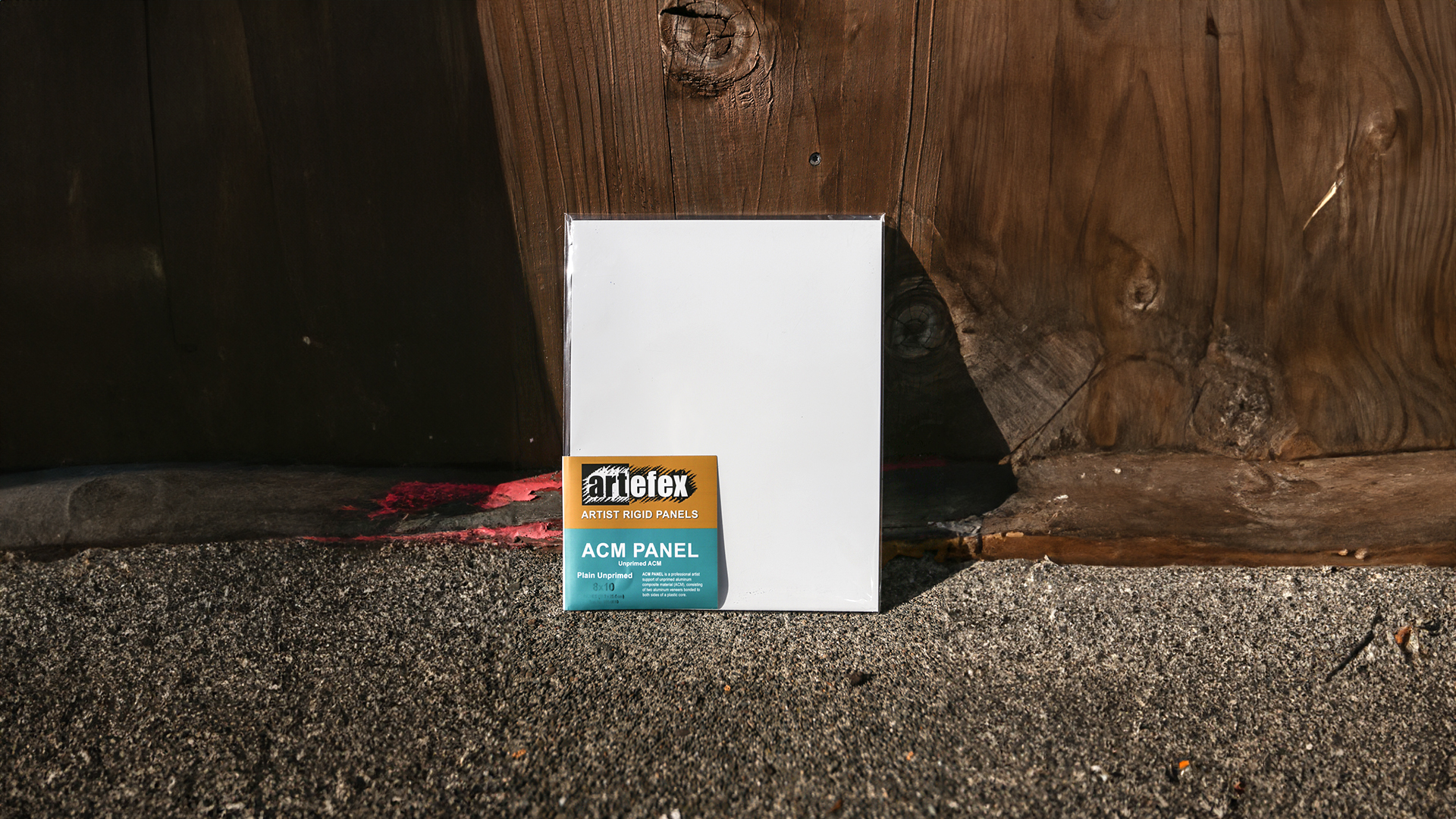
Aluminum composite material (ACM, also known commercially as Dibond) consists of two aluminum face sheets bonded to a polyethylene core, typically at 3mm or 6mm total thickness. The result is a panel that holds dimensional stability across humidity ranges from 20 to 80 percent RH without warping or delaminating. The aluminum faces are pH neutral and produce no off-gassing. ACM is also notably lighter than plywood panels of equivalent size, which makes a real difference for larger works or plein air sessions.
Raw ACM requires one preparation step before priming: degreasing. Aluminum faces carry an oily residue from manufacturing that prevents proper adhesion if you prime directly over it. A thorough wipe-down with isopropyl alcohol eliminates this. After degreasing, two coats of alkyd primer or acrylic gesso bond reliably and provide a solid foundation for oil paint.
Artefex ACM panel lines: Allinpanel and Oleopanel
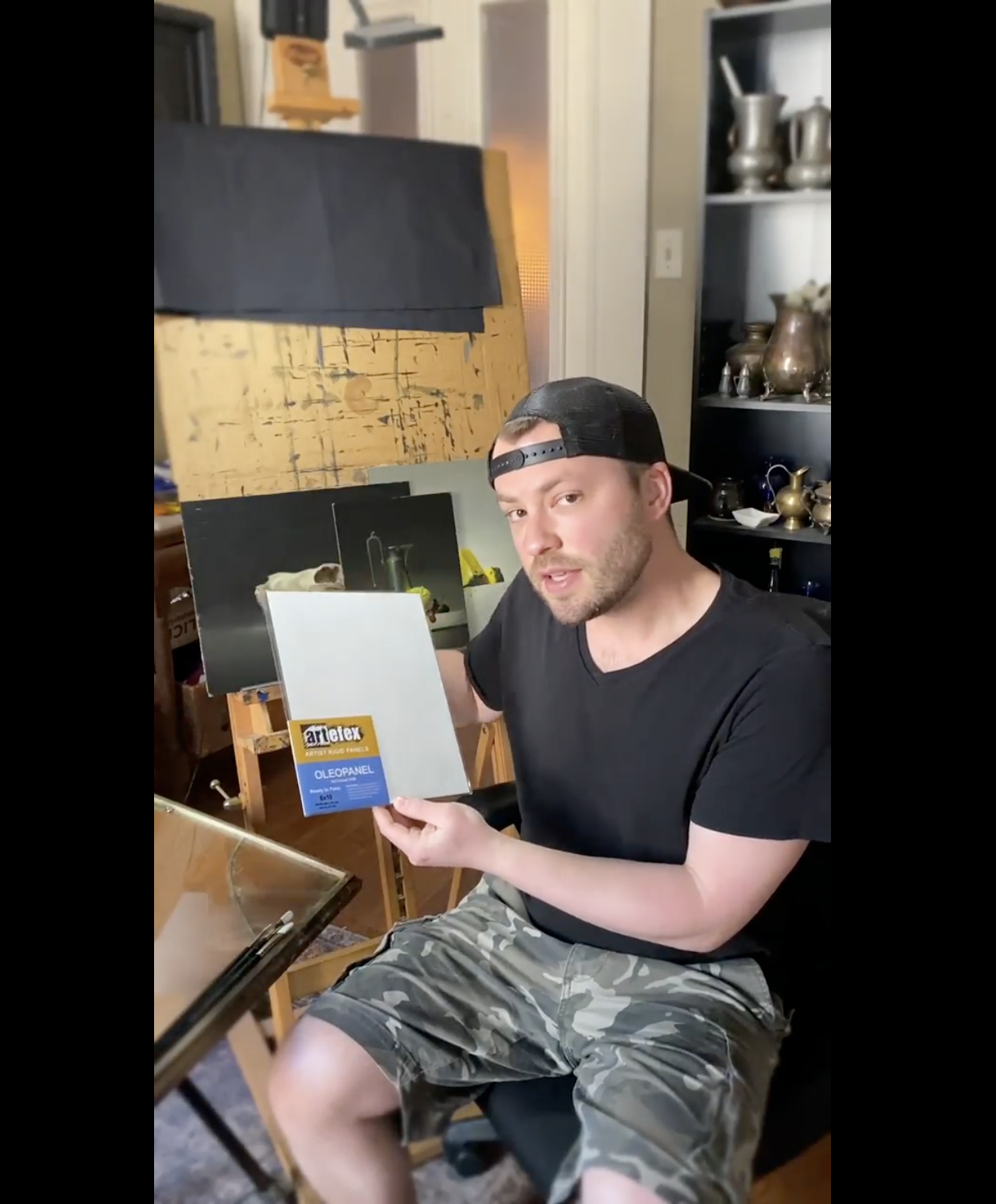
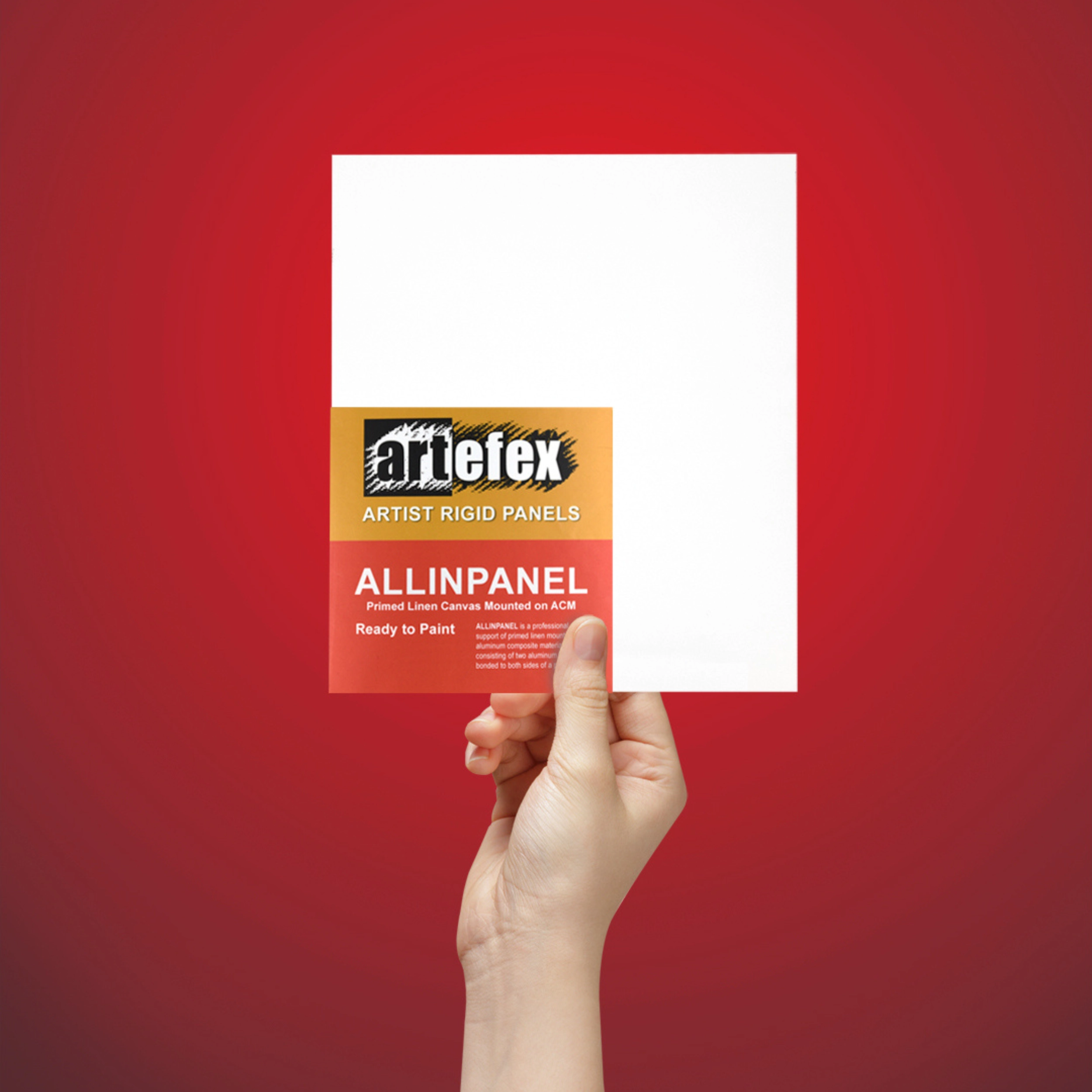
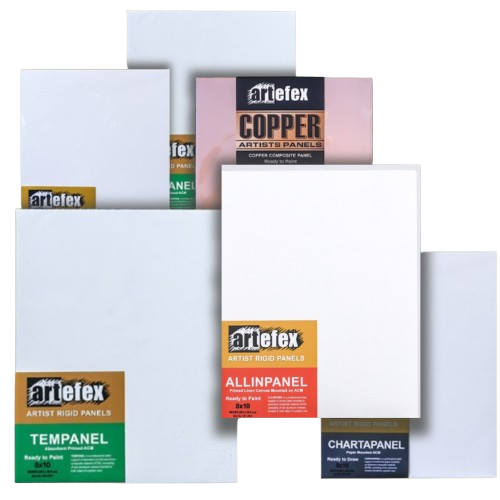
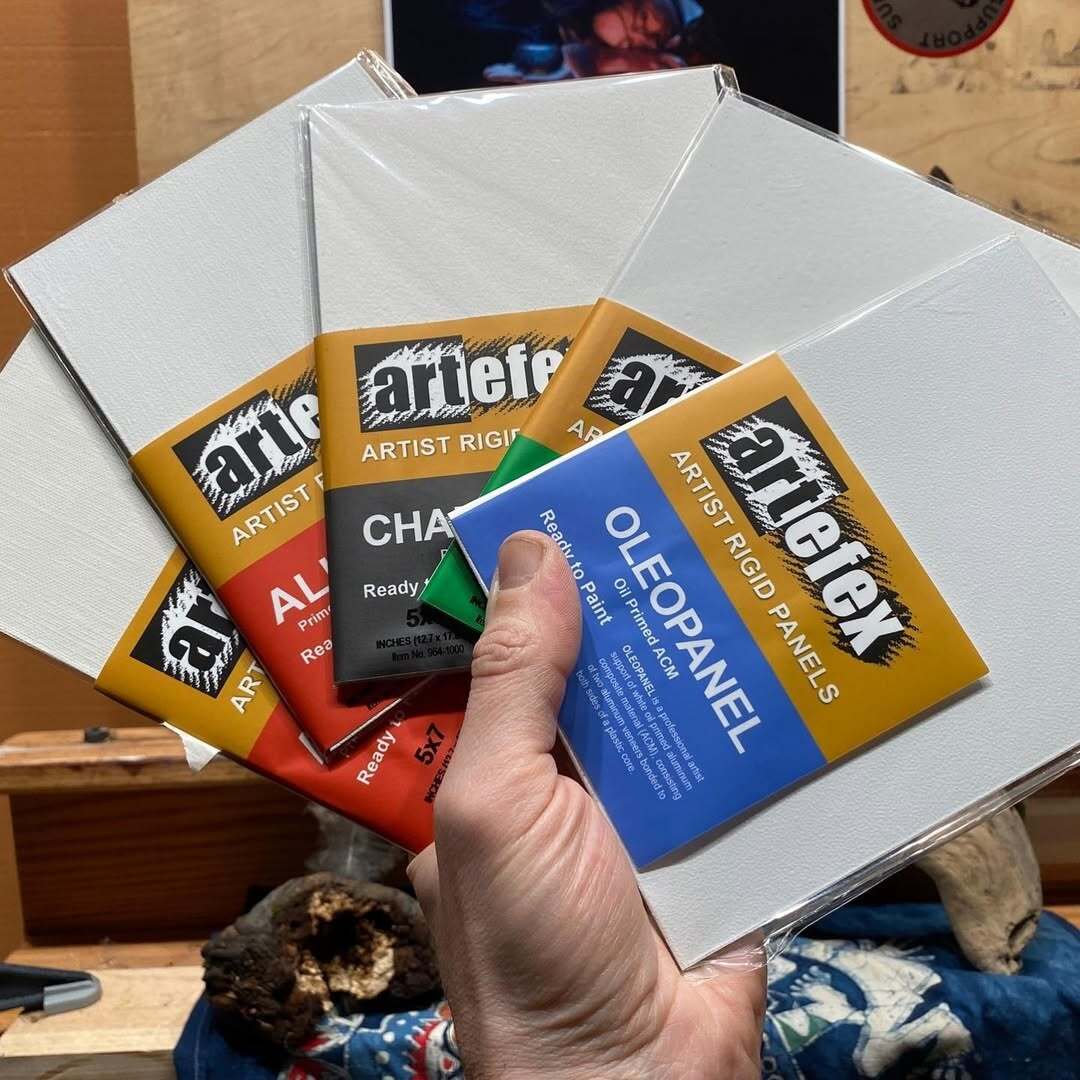
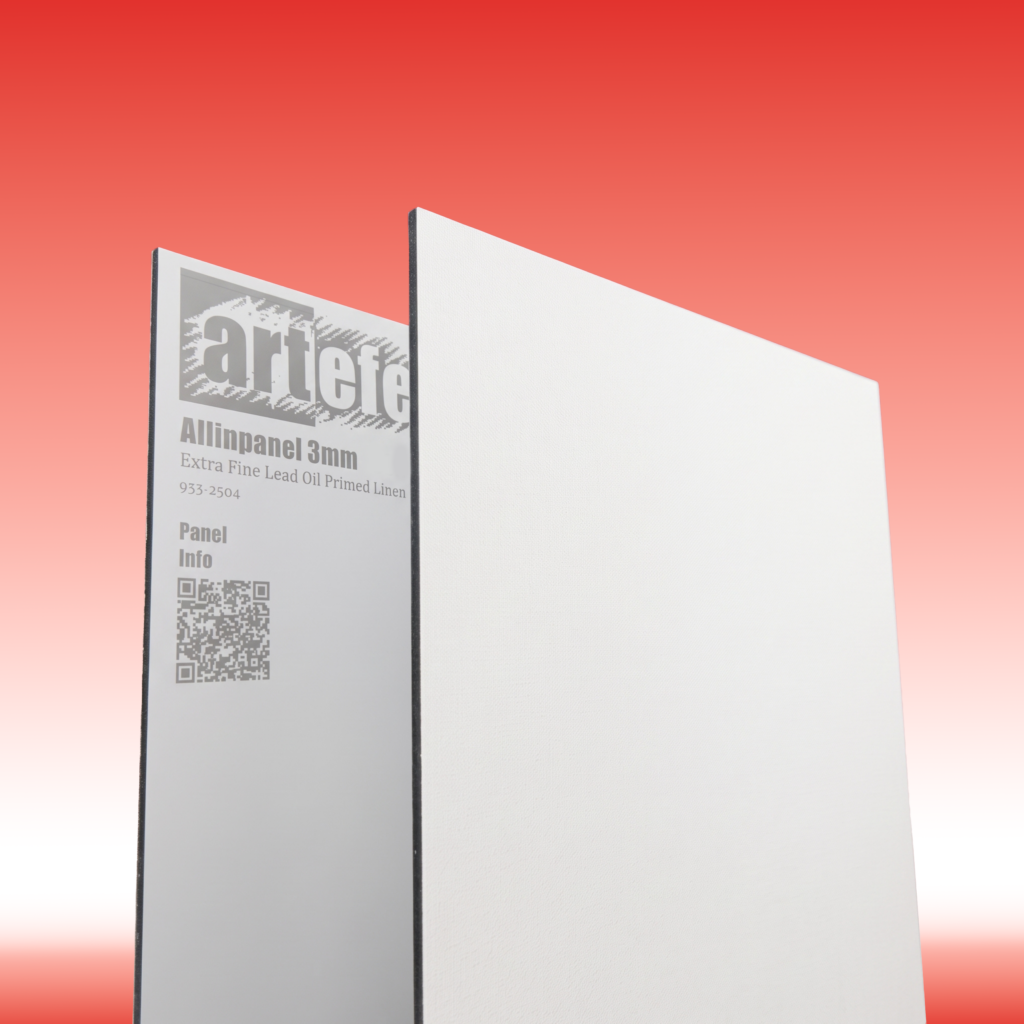
Artefex builds two ACM-based panel lines specifically for professional oil painters, and both arrive ready to paint without any additional prep. The Allinpanel features 100 percent Italian oil-primed linen adhered to an ACM backing using BEVA 371 film, a heat-activated conservation adhesive that has served as a museum standard for relining paintings since 1970. BEVA 371 was chosen over PVA because it’s fully reversible, produces no warping during application, and maintains archival stability through humidity and temperature changes over decades.
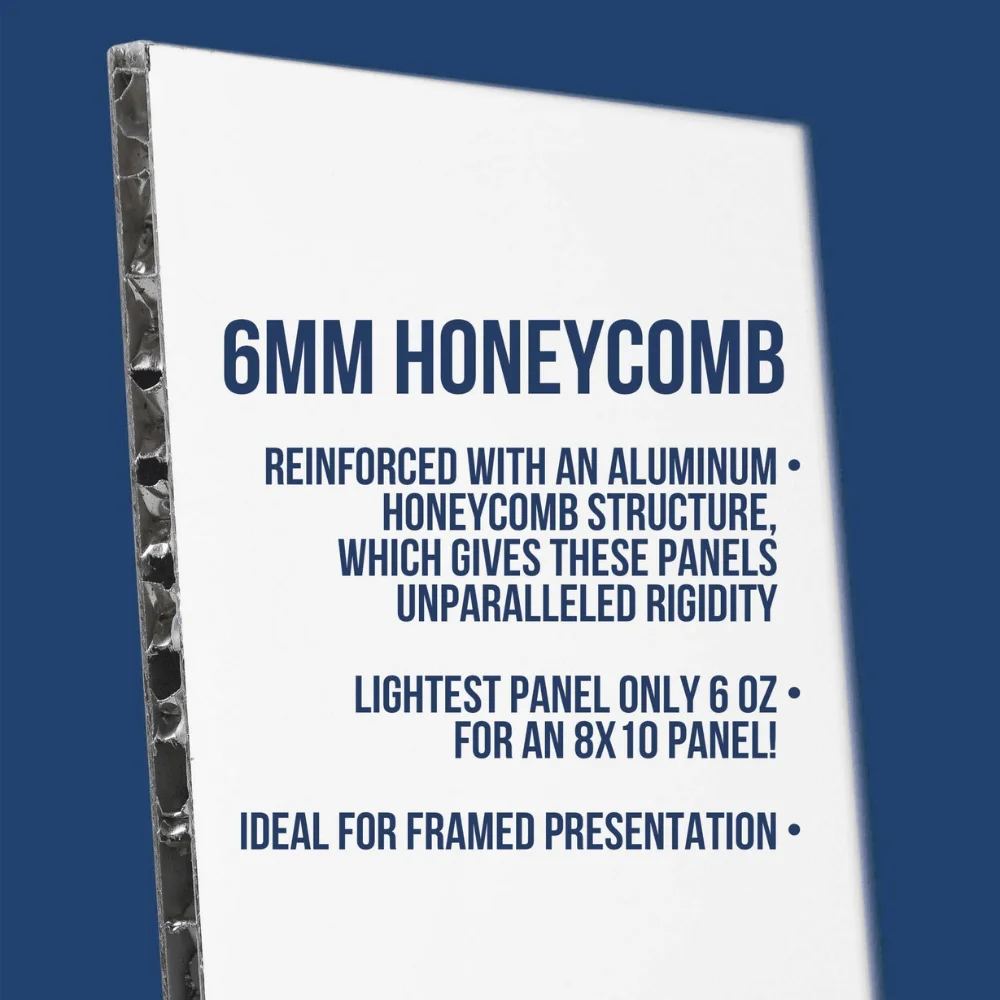
The Oleopanel uses a lead white oil-primed surface on ACM, designed for painters working in classical techniques who need the denser, slower-absorbing ground that lead white provides. Both lines are available in surface textures from smooth through extra fine, and in sizes from 5×7 to 24×30 inches and beyond. The 6mm honeycomb option is the right choice for large gallery-scale work where rigidity matters most without the weight penalty of thick wood. Artefex also offers trial and sample packs across their panel lines for painters who want to test surfaces before committing to larger sizes.
Copper panels: a centuries-old surface that modern painters still reach for
Why copper handles environmental stress better than wood ever will
Copper is non-porous, impervious to humidity, produces zero off-gassing, and maintains dimensional stability across extreme temperature changes that would cause wood to expand and crack. Unlike wood, copper stays flat under the humidity shifts and temperature extremes that cause grain expansion and cracking, a property that matters both in the studio and in the long-term life of the finished painting.
The historical record supports this. Flemish and Italian painters began working on copper in the late sixteenth century, and many of those paintings remain in near-original condition today, more than 400 years later. Conservation examination of copper panel paintings from that era consistently finds well-preserved paint films with minimal cracking, a direct result of the substrate’s refusal to flex. By comparison, contemporary wooden supports from the same period more frequently require significant conservation intervention to address paint film damage.
The Artefex Copper Artist Panel and who it’s right for
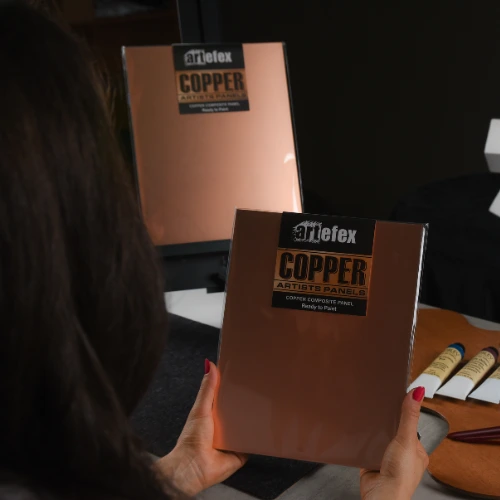
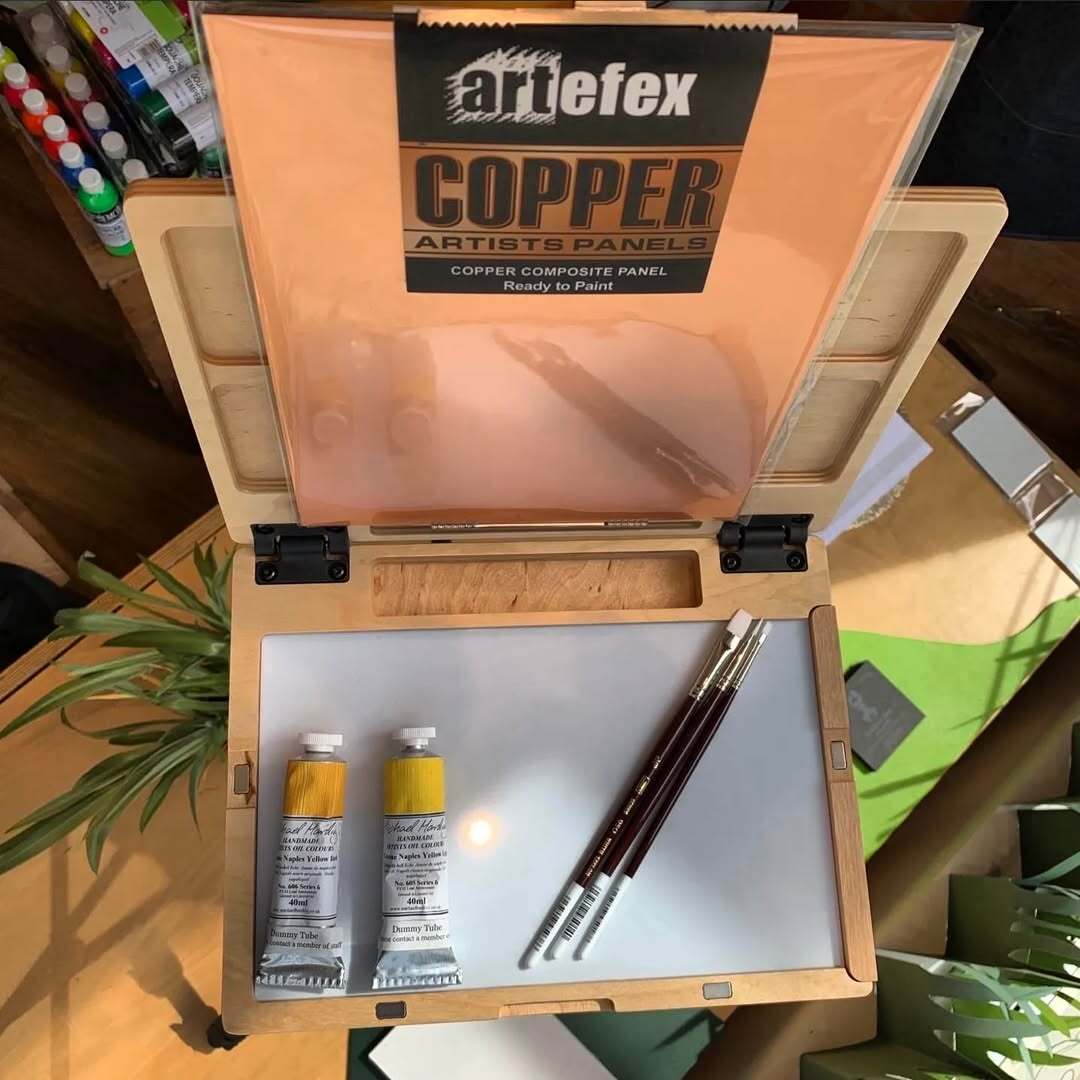
The Artefex Copper Artist Panel pairs a copper painting surface with a composite backing that makes the panel easier to handle and frame than solid copper sheet. The surface is smooth and non-absorbent, making it particularly well-suited to fine detail work and glazing techniques where a textured surface would interrupt thin, translucent layers. If you paint miniatures, highly realistic detail, or build luminous glazed layers as a core part of your technique, copper provides a surface that no other support material matches.
Cost is worth acknowledging directly. Copper is a premium material, and the panels are priced accordingly. They’re not an everyday studio choice for studies and quick work. For paintings intended for gallery placement or collector acquisition, however, many collectors and conservators consider copper’s exceptional longevity to offer strong long-term value for high-priority works. If you haven’t painted on copper before, Artefex’s trial packs let you test the surface on small studies before investing in larger sizes.
Oil-primed linen on rigid supports: traditional surface, rigid backing
How linen texture changes the painting experience
Oil-primed linen mounted on a rigid support gives you the weave tooth and paint-handling feel of traditional canvas with none of the long-term damage that canvas flexibility causes. The linen surface creates a physical interaction with the brush that a smooth gesso panel doesn’t replicate, paint catches in the weave differently, and the texture contributes directly to how layered marks build up across the picture surface. For painters trained on canvas who want to move to rigid supports, this is the closest translation of that experience without requiring a complete change in technique.
Linen outperforms cotton for this application on two counts: its longer fibers mean less humidity response over time, and its surface is more chemically compatible with oil paint over decades. Surface texture options typically range from extra fine (nearly smooth, ideal for detail and glazing) through fine, medium, and coarser weaves suited to broader, more gestural work. Choosing the right weave is not a minor decision; it directly affects how paint sits on the surface and how glazed layers interact with the texture underneath.
Lead white priming vs. acrylic gesso: the archival case for each
Lead white oil-primed panels and acrylic gesso-primed panels produce genuinely different painting experiences, and the difference matters for archival quality too. Lead white creates a denser, slower-absorbing ground that minimizes sink-in (where oil from paint layers migrates into the ground, dulling color) and stays flexible longer than acrylic gesso. Oil paint sits differently on a lead white ground: it pulls into the surface with more drag, colors stay saturated, and dark passages don’t dull out the way they can over acrylic. The Artefex Oleopanel uses lead white oil priming for exactly these reasons, targeting classical realist painters and anyone working in Old Masters techniques.
Acrylic gesso primed panels dry faster, are more versatile across techniques, and produce a bright, non-yellowing white ground that suits contemporary approaches well. They’re not inferior to lead white; they’re different. The right choice depends entirely on your technique and working method. A painter who works with fast-drying mediums and builds up layers quickly will often prefer acrylic gesso. A painter working wet-into-wet over long sessions with linseed oil mediums will usually find the lead white ground more compatible with how their paint moves and sets up.
How to pick the right panel and what to do before you paint
Matching panel type to painting style, scale, and budget
Once you know the variables, the decision becomes straightforward. For small studies and plein air work, ACM panels are the practical choice: lightweight, highly resistant to warping, and easy to transport. For classical technique with oil mediums, an oil-primed linen panel on ACM, like the Allinpanel or Oleopanel, delivers the surface behavior those techniques require. For fine detail work and glazing, the Artefex Copper Artist Panel offers smoothness and longevity that no other support matches.
For budget-conscious studio work where you’re building up a body of work and need volume, cradled birch plywood properly sealed and primed is the most cost-effective archival option. For large gallery-scale work, the 6mm ACM honeycomb provides the rigidity you need at a fraction of the weight of thick wood cradling. The key point across all of these: matching support to purpose prevents both wasted money and wasted paintings.
Framing and backing rigid panels for long-term preservation
Framing is the part of panel preservation that painters most consistently overlook, and it directly affects the lifespan of the finished work. Conservator guidelines from institutions such as the Canadian Conservation Institute recommend using a strong, flexible frame that supports the panel’s weight without compressing it, with 4-ply acid-free matboard as a buffering layer and Gatorfoam or Coroplast as a rigid backing material. Brass mending plates should be secured only to the frame itself, never screwed into the panel, to avoid restricting the panel’s minimal but real response to environmental changes.
Display conditions matter as much as framing materials. The conservation consensus recommends 45 to 55 percent RH and a temperature range of 18 to 22 degrees Celsius, with daily fluctuations kept below 5 percent RH and 4 degrees Celsius. UV-filtering acrylic glazing with spacers to prevent contact with the paint surface rounds out the system. A panel painting stored and displayed within these parameters will outlast one in an uncontrolled environment by many decades. For practical steps on protecting artworks from temperature and humidity damage, see specialized conservation guidance and care advice from professional resources.
Where to start if you haven’t painted on panels before
The support decision is permanent once the painting is done. Unlike many studio choices that can be revised, you can’t change your substrate after the fact without significant conservation intervention. That reality makes it worth spending a few sessions testing panel surfaces on small studies before committing to a surface for serious work.
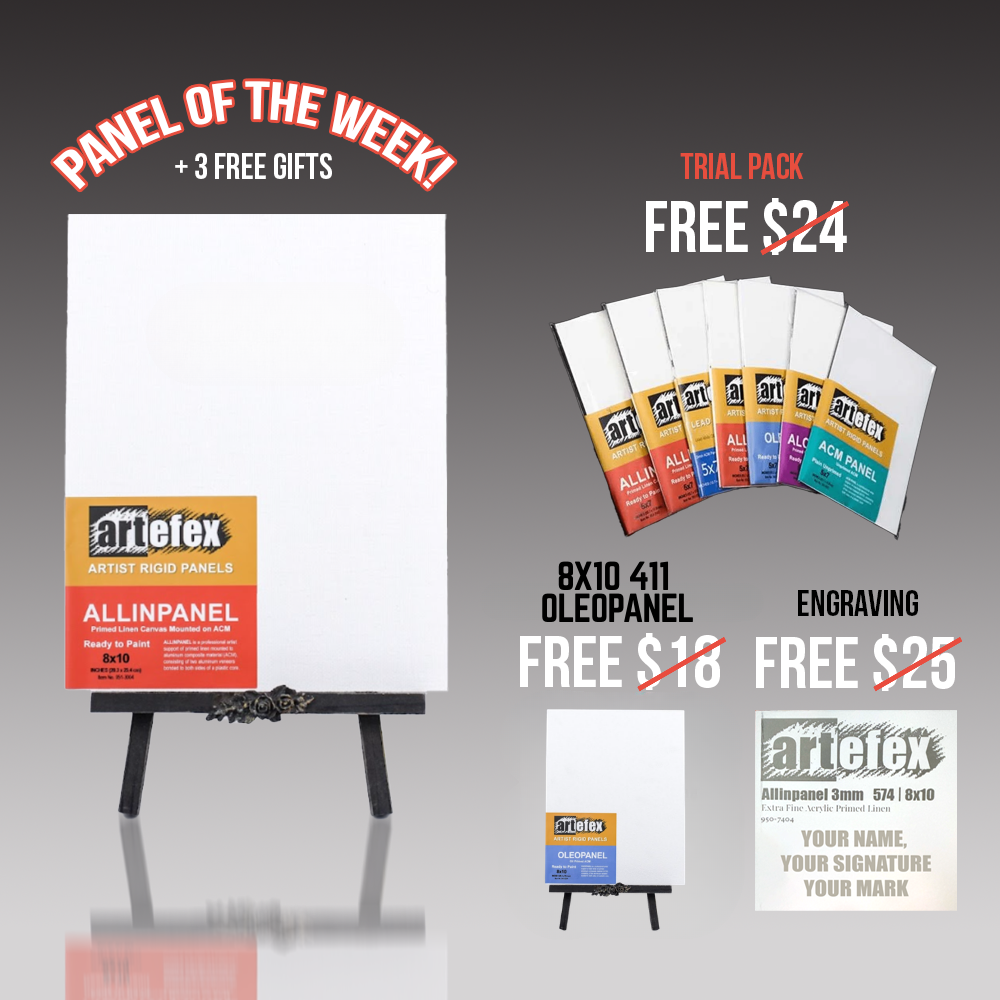
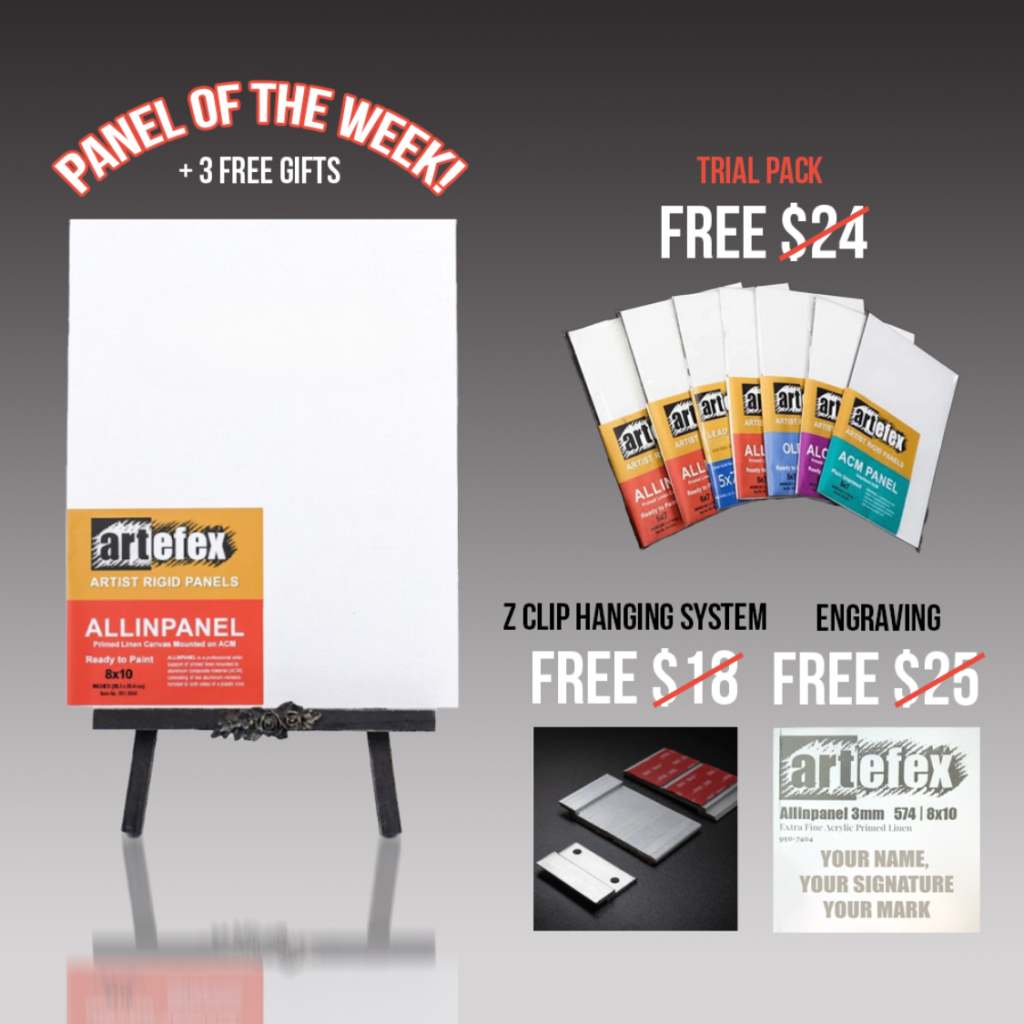
Artefex’s trial and sample packs are the lowest-risk way to work through this process. You can test the Allinpanel linen surface, the Oleopanel lead white ground, and the copper surface side by side on small paintings before deciding which best fits your technique. The Panel of the Week deals section on the Artefex site also offers discounted pricing on specific panels for painters who want to explore without paying full price on every size. For purchasing and current product availability, see Art Panels for Painting, Oil, Acrylic & Watercolor | Artefex. If you’d like a broader overview of the manufacturer’s resources and guidance on panel selection, consult the Professional Art Panels Guide | Artefex Blog.
So, what are the best rigid panels for oil painting?
The answer depends on technique, budget, and how long the work needs to last. Wood panels are accessible and genuinely archival when prepared properly, Baltic birch is the practical studio choice, mahogany the premium traditional option. ACM panels are the modern professional standard, offering warp-resistant stability, light weight, and a 100 to 300-plus year projected lifespan, generally with less preparation than wood requires. Copper delivers exceptional longevity for premium finished work, backed by four centuries of documented performance in surviving paintings. Oil-primed linen on rigid supports delivers traditional surface behavior without the archival compromises of stretched canvas.
Artefex builds across all of these categories under one roof, from the Allinpanel and Oleopanel lines to the Copper Artist Panel, with a manufacturing focus on painters who take the long view on their work. If you’ve been painting on stretched canvas and dealing with warping, or if you’re simply ready to work on surfaces that match the seriousness of your practice, the panels are there. The only question is which surface fits the work you’re making right now.
You finish a large oil painting, step back, and feel genuinely proud of it. Then three weeks later, the canvas has bowed at the center and two corners have lifted from the stretcher bar. Serious painters have dealt with this frustration for decades, and it’s largely preventable when rigid supports are used and properly prepared. If you’ve been asking what are the best rigid panels for oil painting, this guide breaks down the real differences between wood, ACM, copper, and oil-primed linen so you can choose with confidence. Rigid panels solve the warping problem at the source, which is exactly why professional artists have painted on them for centuries, from the oak boards of the Northern Renaissance to the aluminum composite panels in today’s professional studios.
The market for rigid painting supports has expanded significantly. You can now choose from traditional wood options, modern aluminum composite material (ACM), solid copper, and oil-primed linen adhered to rigid backings. Each has a different archival profile, handling feel, and price point. Oil Painting on Panels | Tips & Articles | Artefex, a specialty manufacturer focused exclusively on professional-grade panels, builds across all of these categories for painters who treat support selection as seriously as they treat paint selection.
Why rigid panels outlast stretched canvas for oil painting
How canvas warping undermines a painting’s long-term survival
Stretched canvas flexes with every shift in relative humidity. As RH rises, the fibers expand; as it drops, they contract. Over decades, this constant micro-movement puts mechanical stress on the paint film, eventually causing cracks, flaking, and adhesion failure. Conservation research consistently identifies humidity fluctuation as the dominant factor in paint film damage, not age alone. A painting stored in a stable environment ages far more slowly than one that experiences double-digit seasonal RH swings.
Rigid panels eliminate this problem at the source. Because the support doesn’t flex, the paint film is never subjected to the same cyclic stress. The dimensional stability of a well-made rigid panel across a humidity range of 20 to 80 percent RH is substantially greater than that of stretched canvas. That stability directly translates into paint film longevity.
What “archival quality” actually means for a painting support
The phrase “archival quality” gets used loosely in art supply marketing, so it’s worth pinning down what it actually requires. A genuinely archival support must be pH neutral (or slightly alkaline), free from off-gassing compounds like formaldehyde, dimensionally stable under environmental changes, and proven to maintain structural integrity under museum conditions over a projected lifespan of 100 years or more. These aren’t marketing checkboxes; they’re criteria conservation scientists use to assess whether a support is suitable for permanent collection work.
The support material is only half the equation, priming is the other half. An inert, pH-neutral panel primed with an acidic ground will still fail over time. Both layers need to meet archival standards independently. A failed ground on a sound substrate is a common and avoidable cause of early paint film deterioration. For deeper reading on truly archival approaches to supports and preparation, see resources on archival painting surfaces that will outlast your art career.
Wood panels: birch, mahogany, and hardboard compared
Baltic birch and mahogany: the traditional choice with real limitations
Baltic birch plywood (phenolic-resin glued, pH 6 to 7) carries a projected archival lifespan of 100 to 300 years when properly prepared. Its multi-ply construction resists warping better than solid wood, and it provides a rigid, workable surface at a reasonable cost for studio use. Solid mahogany, historically used in Renaissance panels, outperforms birch on pure longevity at 200 to 500+ years, with a naturally acid-free composition and low expansion across the grain.
Both options come with trade-offs you need to understand before committing. Birch delaminates if you use interior-grade glue, requires thorough edge sealing to prevent moisture penetration, and needs cradling at larger sizes. Mahogany is expensive, heavy, and difficult to source sustainably. Neither panel arrives ready to paint; both require a full sealing and priming sequence before they become archival-grade oil painting supports. For a technical discussion of wood-based panel expansion and how to manage it, consult the industry technical bulletin on wood-based panels and expansion characteristics.
Tempered hardboard and why MDF should never touch your oil paint
Tempered hardboard (Masonite) has been used by professional painters since the mid-twentieth century and carries a fair lifespan of 75 to 200 years when properly prepared. The tempering process adds oil impregnation that improves humidity resistance, and the surface has excellent tooth for oil priming. Its limitation is a pH of 4 to 5 (semi-acidic), which gradually leaches into paint layers, causing yellowing and cracking over 50 to 100 years even when sealed.
MDF is not an archival oil painting surface, regardless of how much gesso goes on top. Its pH sits between 3 and 5, it off-gasses formaldehyde that attacks paint films, and it can swell 5 to 10 percent under humidity above 50 percent RH. If you’ve seen MDF panels sold in art supply stores as painting surfaces, treat them as a short-term practice option only, not as a permanent support for finished work.
Sealing and priming wood panels before applying oil paint
Wood panels require two distinct steps before they’re ready for oil: sealing and priming. Back-sealing is the step most painters skip, but leaving the back unprotected allows moisture to enter from behind, cupping the panel toward the painted side. Follow this sequence:
- Wipe the panel front and back with a clean cloth to remove dust.
- Apply two coats of Golden Gloss Medium or PVA size to both faces, allowing 24 hours between coats.
- For acrylic gesso: apply three or more thin coats with a wide flat bristle brush, 24 hours between each coat. Sand lightly between coats for a smoother surface.
- For oil ground: apply two coats of rabbit skin glue size (12 hours total dry time), then one to two thin coats of oil primer. Wait two to four weeks before painting, this cure time is non-negotiable. Painting over an uncured oil ground causes adhesion failure.
What are the best rigid panels for oil painting? ACM sets the modern benchmark
What makes ACM fundamentally different from wood-based supports
Aluminum composite material (ACM, also known commercially as Dibond) consists of two aluminum face sheets bonded to a polyethylene core, typically at 3mm or 6mm total thickness. The result is a panel that holds dimensional stability across humidity ranges from 20 to 80 percent RH without warping or delaminating. The aluminum faces are pH neutral and produce no off-gassing. ACM is also notably lighter than plywood panels of equivalent size, which makes a real difference for larger works or plein air sessions.
Raw ACM requires one preparation step before priming: degreasing. Aluminum faces carry an oily residue from manufacturing that prevents proper adhesion if you prime directly over it. A thorough wipe-down with isopropyl alcohol eliminates this. After degreasing, two coats of alkyd primer or acrylic gesso bond reliably and provide a solid foundation for oil paint.
Artefex ACM panel lines: Allinpanel and Oleopanel
Artefex builds two ACM-based panel lines specifically for professional oil painters, and both arrive ready to paint without any additional prep. The Allinpanel features 100 percent Italian oil-primed linen adhered to an ACM backing using BEVA 371 film, a heat-activated conservation adhesive that has served as a museum standard for relining paintings since 1970. BEVA 371 was chosen over PVA because it’s fully reversible, produces no warping during application, and maintains archival stability through humidity and temperature changes over decades.
The Oleopanel uses a lead white oil-primed surface on ACM, designed for painters working in classical techniques who need the denser, slower-absorbing ground that lead white provides. Both lines are available in surface textures from smooth through extra fine, and in sizes from 5×7 to 24×30 inches and beyond. The 6mm honeycomb option is the right choice for large gallery-scale work where rigidity matters most without the weight penalty of thick wood. Artefex also offers trial and sample packs across their panel lines for painters who want to test surfaces before committing to larger sizes.
Copper panels: a centuries-old surface that modern painters still reach for
Why copper handles environmental stress better than wood ever will
Copper is non-porous, impervious to humidity, produces zero off-gassing, and maintains dimensional stability across extreme temperature changes that would cause wood to expand and crack. Unlike wood, copper stays flat under the humidity shifts and temperature extremes that cause grain expansion and cracking, a property that matters both in the studio and in the long-term life of the finished painting.
The historical record supports this. Flemish and Italian painters began working on copper in the late sixteenth century, and many of those paintings remain in near-original condition today, more than 400 years later. Conservation examination of copper panel paintings from that era consistently finds well-preserved paint films with minimal cracking, a direct result of the substrate’s refusal to flex. By comparison, contemporary wooden supports from the same period more frequently require significant conservation intervention to address paint film damage.
The Artefex Copper Artist Panel and who it’s right for
The Artefex Copper Artist Panel and who it’s right for
The Artefex Copper Artist Panel pairs a copper painting surface with a composite backing that makes the panel easier to handle and frame than solid copper sheet. The surface is smooth and non-absorbent, making it particularly well-suited to fine detail work and glazing techniques where a textured surface would interrupt thin, translucent layers. If you paint miniatures, highly realistic detail, or build luminous glazed layers as a core part of your technique, copper provides a surface that no other support material matches.
Cost is worth acknowledging directly. Copper is a premium material, and the panels are priced accordingly. They’re not an everyday studio choice for studies and quick work. For paintings intended for gallery placement or collector acquisition, however, many collectors and conservators consider copper’s exceptional longevity to offer strong long-term value for high-priority works. If you haven’t painted on copper before, Artefex’s trial packs let you test the surface on small studies before investing in larger sizes.
Oil-primed linen on rigid supports: traditional surface, rigid backing
How linen texture changes the painting experience
Oil-primed linen mounted on a rigid support gives you the weave tooth and paint-handling feel of traditional canvas with none of the long-term damage that canvas flexibility causes. The linen surface creates a physical interaction with the brush that a smooth gesso panel doesn’t replicate, paint catches in the weave differently, and the texture contributes directly to how layered marks build up across the picture surface. For painters trained on canvas who want to move to rigid supports, this is the closest translation of that experience without requiring a complete change in technique.
Linen outperforms cotton for this application on two counts: its longer fibers mean less humidity response over time, and its surface is more chemically compatible with oil paint over decades. Surface texture options typically range from extra fine (nearly smooth, ideal for detail and glazing) through fine, medium, and coarser weaves suited to broader, more gestural work. Choosing the right weave is not a minor decision; it directly affects how paint sits on the surface and how glazed layers interact with the texture underneath.
Lead white priming vs. acrylic gesso: the archival case for each
Lead white oil-primed panels and acrylic gesso-primed panels produce genuinely different painting experiences, and the difference matters for archival quality too. Lead white creates a denser, slower-absorbing ground that minimizes sink-in (where oil from paint layers migrates into the ground, dulling color) and stays flexible longer than acrylic gesso. Oil paint sits differently on a lead white ground: it pulls into the surface with more drag, colors stay saturated, and dark passages don’t dull out the way they can over acrylic. The Artefex Oleopanel uses lead white oil priming for exactly these reasons, targeting classical realist painters and anyone working in Old Masters techniques.
Acrylic gesso primed panels dry faster, are more versatile across techniques, and produce a bright, non-yellowing white ground that suits contemporary approaches well. They’re not inferior to lead white; they’re different. The right choice depends entirely on your technique and working method. A painter who works with fast-drying mediums and builds up layers quickly will often prefer acrylic gesso. A painter working wet-into-wet over long sessions with linseed oil mediums will usually find the lead white ground more compatible with how their paint moves and sets up.
How to pick the right panel and what to do before you paint
Matching panel type to painting style, scale, and budget
Once you know the variables, the decision becomes straightforward. For small studies and plein air work, ACM panels are the practical choice: lightweight, highly resistant to warping, and easy to transport. For classical technique with oil mediums, an oil-primed linen panel on ACM, like the Allinpanel or Oleopanel, delivers the surface behavior those techniques require. For fine detail work and glazing, the Artefex Copper Artist Panel offers smoothness and longevity that no other support matches.
For budget-conscious studio work where you’re building up a body of work and need volume, cradled birch plywood properly sealed and primed is the most cost-effective archival option. For large gallery-scale work, the 6mm ACM honeycomb provides the rigidity you need at a fraction of the weight of thick wood cradling. The key point across all of these: matching support to purpose prevents both wasted money and wasted paintings.
Framing and backing rigid panels for long-term preservation
Framing is the part of panel preservation that painters most consistently overlook, and it directly affects the lifespan of the finished work. Conservator guidelines from institutions such as the Canadian Conservation Institute recommend using a strong, flexible frame that supports the panel’s weight without compressing it, with 4-ply acid-free matboard as a buffering layer and Gatorfoam or Coroplast as a rigid backing material. Brass mending plates should be secured only to the frame itself, never screwed into the panel, to avoid restricting the panel’s minimal but real response to environmental changes.
Display conditions matter as much as framing materials. The conservation consensus recommends 45 to 55 percent RH and a temperature range of 18 to 22 degrees Celsius, with daily fluctuations kept below 5 percent RH and 4 degrees Celsius. UV-filtering acrylic glazing with spacers to prevent contact with the paint surface rounds out the system. A panel painting stored and displayed within these parameters will outlast one in an uncontrolled environment by many decades. For practical steps on protecting artworks from temperature and humidity damage, see specialized conservation guidance and care advice from professional resources.
Where to start if you haven’t painted on panels before
The support decision is permanent once the painting is done. Unlike many studio choices that can be revised, you can’t change your substrate after the fact without significant conservation intervention. That reality makes it worth spending a few sessions testing panel surfaces on small studies before committing to a surface for serious work.
Artefex’s trial and sample packs are the lowest-risk way to work through this process. You can test the Allinpanel linen surface, the Oleopanel lead white ground, and the copper surface side by side on small paintings before deciding which best fits your technique. The Panel of the Week deals section on the Artefex site also offers discounted pricing on specific panels for painters who want to explore without paying full price on every size. For purchasing and current product availability, see Art Panels for Painting, Oil, Acrylic & Watercolor | Artefex. If you’d like a broader overview of the manufacturer’s resources and guidance on panel selection, consult the Professional Art Panels Guide | Artefex Blog.
So, what are the best rigid panels for oil painting?
The answer depends on technique, budget, and how long the work needs to last. Wood panels are accessible and genuinely archival when prepared properly, Baltic birch is the practical studio choice, mahogany the premium traditional option. ACM panels are the modern professional standard, offering warp-resistant stability, light weight, and a 100 to 300-plus year projected lifespan, generally with less preparation than wood requires. Copper delivers exceptional longevity for premium finished work, backed by four centuries of documented performance in surviving paintings. Oil-primed linen on rigid supports delivers traditional surface behavior without the archival compromises of stretched canvas.
Artefex builds across all of these categories under one roof, from the Allinpanel and Oleopanel lines to the Copper Artist Panel, with a manufacturing focus on painters who take the long view on their work. If you’ve been painting on stretched canvas and dealing with warping, or if you’re simply ready to work on surfaces that match the seriousness of your practice, the panels are there. The only question is which surface fits the work you’re making right now.

Best Rigid Panels for Oil Painting: Types Compared
An artist finishes a large oil painting, steps back, and feels genuinely proud of it. Then three weeks later, the canvas has bowed at the center and two corners have lifted from the stretcher bar. Serious painters have dealt with this frustration for decades, and it’s largely preventable when rigid supports are used and properly prepared. If artists have been asking what are the best rigid panels for oil painting, this guide breaks down the real differences between wood, ACM, copper, and linen so painters can choose with confidence. Rigid panels solve the warping problem at the source, which is exactly why professional artists have painted on them for centuries, from the oak boards of the Northern Renaissance to the aluminum composite panels in today’s professional studios.
The market for rigid painting supports has expanded significantly. Artists can now choose from traditional wood options, modern aluminum composite material (ACM), solid copper, and linen adhered to rigid backings. Each has a different archival profile, handling feel, and price point. Oil Painting on Panels | Tips & Articles | Artefex, a specialty manufacturer focused exclusively on professional-grade panels, builds across all of these categories for painters who treat support selection as seriously as they treat paint selection.
| Support Type | Key Substrates | Projected Archival Lifespan | Primary Domain & Application |
| Wood | Baltic Birch, Mahogany, Tempered Hardboard | 75 to 500+ years (dependent on type) | Budget-conscious studio work & traditional studies |
| ACM (Aluminum Composite) | Solid-core, Honeycomb core | 100 to 300+ years | Plein air, travel, & large-scale works |
| Copper | Copper face, composite backing | 400+ years (historically proven) | Fine detail, miniatures, and classical glazing |
| Linen on Rigid Support | Oil, Lead, or Acrylic Primed Linen | 100+ years (dependent on backing & ground) | Traditional canvas feel with rigid stability |
Why rigid panels outlast stretched canvas for oil painting
How canvas warping undermines a painting’s long-term survival
Stretched canvas flexes with every shift in relative humidity. As RH rises, the fibers expand; as it drops, they contract. Over decades, this constant micro-movement puts mechanical stress on the paint film, eventually causing cracks, flaking, and adhesion failure. Conservation research consistently identifies humidity fluctuation as the dominant factor in paint film damage, not age alone. A painting stored in a stable environment ages far more slowly than one that experiences double-digit seasonal RH swings. To evaluate these dynamics, materials engineering studies conducted in collaboration with the Smithsonian, the Canadian Conservation Institute (CCI), and the National Gallery of Art subjected various supports to accelerated climate cycling between 20% and 80% RH. Under these simulated conditions, traditional stretched canvas exhibited a 40% to 50% failure and degradation rate, demonstrating its profound vulnerability.
Rigid panels eliminate this problem at the source. Because the support doesn’t flex, the paint film is never subjected to the same cyclic stress. The dimensional stability of a well-made rigid panel across a humidity range of 20 to 80 percent RH is substantially greater than that of stretched canvas, as evidenced by a 0% warpage and structural failure rate for aluminum composite material (ACM) under rigorous testing. That stability directly translates into paint film longevity.
What “archival quality” actually means for a painting support
The phrase “archival quality” gets used loosely in art supply marketing, so it’s worth pinning down what it actually requires. A genuinely archival support must be pH neutral (or slightly alkaline), free from off-gassing compounds like formaldehyde, dimensionally stable under environmental changes, and proven to maintain structural integrity under museum conditions over a projected lifespan of 100 years or more. These aren’t marketing checkboxes; they’re criteria conservation scientists use to assess whether a support is suitable for permanent collection work.
The support material is only half the equation, priming is the other half. An inert, pH-neutral panel primed with an acidic ground will still fail over time. Both layers need to meet archival standards independently. A failed ground on a sound substrate is a common and avoidable cause of early paint film deterioration. For deeper reading on truly archival approaches to supports and preparation, see resources on archival painting surfaces that will outlast an artist’s career. This standard of permanence aligns with contemporary value-driven messaging, moving from the functional assurance of durability to the artist-focused validation that “your art is worth it”—a perspective that also justifies a 15% to 20% premium markup on the final retail value of the finished artwork to collectors.
Wood panels: birch, mahogany, and hardboard compared
Baltic birch and mahogany: the traditional choice with real limitations
Baltic birch plywood (phenolic-resin glued, pH 6 to 7) carries a projected archival lifespan of 100 to 300 years when properly prepared. Its multi-ply construction resists warping better than solid wood, showing approximately 30% structural deflection in extreme environments, and it provides a rigid, workable surface at a reasonable cost for studio use. Solid mahogany, historically used in Renaissance panels, outperforms birch on pure longevity at 200 to 500+ years, with a naturally acid-free composition and low expansion across the grain.
Both options come with trade-offs that must be understood before committing. Birch delaminates if interior-grade glue is used, requires thorough edge sealing to prevent moisture penetration, and needs cradling at larger sizes. Mahogany is expensive, heavy, and difficult to source sustainably. Neither panel arrives ready to paint; both require a full sealing and priming sequence before they become archival-grade oil painting supports. For a technical discussion of wood-based panel expansion and how to manage it, consult the industry technical bulletin on wood-based panels and expansion characteristics.
Tempered hardboard and why MDF should never touch your oil paint
Tempered hardboard (Masonite) has been used by professional painters since the mid-twentieth century and carries a fair lifespan of 75 to 200 years when properly prepared. The tempering process adds oil impregnation that improves humidity resistance, and the surface has excellent tooth for oil priming. Its limitation is a pH of 4 to 5 (semi-acidic), which gradually leaches into paint layers, causing yellowing and cracking over 50 to 100 years even when sealed.
MDF is not an archival oil painting surface, regardless of how much gesso goes on top. Its pH sits between 3 and 5, it off-gasses formaldehyde and organic acids that attack paint films, and it can swell 5 to 10 percent under humidity above 50 percent RH. If painters have seen MDF panels sold in art supply stores as painting surfaces, they should treat them as a short-term practice option only, not as a permanent support for finished work.
Sealing and priming wood panels before applying oil paint
Wood panels require two distinct steps before they’re ready for oil: sealing and priming. Back-sealing is the step most painters skip, but leaving the back unprotected allows moisture to enter from behind, cupping the panel toward the painted side. Follow this sequence:
Wipe the panel front and back with a clean cloth to remove dust.
Apply two coats of Golden Gloss Medium or PVA size to both faces, allowing 24 hours between coats.
For acrylic gesso: apply three or more thin coats with a wide flat bristle brush, allowing 24 hours between each coat. Sand lightly between coats for a smoother surface. Although acrylic grounds dry quickly to the touch, conservation recommendations suggest waiting at least two weeks to a month for complete polymer coalescence before applying oil paints to ensure proper mechanical adhesion.
For oil ground: apply two coats of rabbit skin glue size ([Flag: Exact drying time unverified in database] 12 hours total dry time), then one to two thin coats of oil primer. Wait two to four weeks before painting—this cure time is non-negotiable. Painting over an uncured oil ground causes adhesion failure.
What are the best rigid panels for oil painting? ACM sets the modern benchmark
What makes ACM fundamentally different from wood-based supports
Aluminum composite material (ACM, also known commercially as Dibond) consists of two aluminum face sheets bonded to a polyethylene core, typically at 3mm or 6mm total thickness. The result is a panel that holds dimensional stability across humidity ranges from 20 to 80 percent RH without warping or delaminating. The aluminum faces are pH neutral and produce no off-gassing. ACM is also notably lighter than plywood panels of equivalent size, which makes a real difference for larger works or plein air sessions.
Raw ACM requires one preparation step before priming: degreasing. Aluminum faces carry an oily residue from manufacturing that prevents proper adhesion if primed directly over it. A thorough wipe-down with isopropyl alcohol (IPA) eliminates this. After degreasing, two coats of alkyd primer or acrylic gesso bond reliably and provide a solid foundation for oil paint.
Artefex ACM panel lines: Allinpanel and Oleopanel
Artefex builds two ACM-based panel lines specifically for professional oil painters, and both arrive ready to paint without any additional prep. The Allinpanel series features professional-grade linen adhered to an ACM backing using BEVA 371 film, a heat-activated conservation adhesive that has served as a museum standard for relining paintings since 1970. Available linen types range from linseed-oil primed (using titanium dioxide) to lead-primed (utilizing California Rublev Lead Alkyd Ground) and quadruple universally acrylic-primed options. BEVA 371 was chosen over standard water-based adhesives because it’s fully reversible, produces no warping during application, and maintains archival stability through humidity and temperature changes over decades.
The Oleopanel features a direct-primed ACM core without a textile layer, finished with a Rublev Lead Alkyd Ground (available in eggshell or smooth finishes) designed for painters working in classical techniques who need the denser, slower-absorbing ground that lead white provides. Both lines are available in surface textures from smooth through extra fine, and in sizes from 5×7 to 24×30 inches and beyond. The 6mm honeycomb option is the right choice for large gallery-scale work where rigidity matters most without the weight penalty of thick wood. Artefex also offers trial and sample packs across their panel lines for painters who want to test surfaces before committing to larger sizes.
Copper panels: a centuries-old surface that modern painters still reach for
Why copper handles environmental stress better than wood ever will
Copper is non-porous, impervious to humidity, produces zero off-gassing, and maintains dimensional stability across extreme temperature changes that would cause wood to expand and crack. Unlike wood, copper stays flat under the humidity shifts and temperature extremes that cause grain expansion and cracking, a property that matters both in the studio and in the long-term life of the finished painting.
The historical record supports this. Flemish and Italian painters began working on copper in the late sixteenth century, and many of those paintings remain in near-original condition today, more than 400 years later. Conservation examination of copper panel paintings from that era consistently finds well-preserved paint films with minimal cracking, a direct result of the substrate’s refusal to flex. By comparison, contemporary wooden supports from the same period more frequently require significant conservation intervention to address paint film damage.
The Artefex Copper Artist Panel and who it’s right for
The Artefex Copper Artist Panel pairs a copper painting surface with a composite backing that makes the panel easier to handle and frame than solid copper sheet. The surface is smooth and non-absorbent, making it particularly well-suited to fine detail work and glazing techniques where a textured surface would interrupt thin, translucent layers. If artists paint miniatures, highly realistic detail, or build luminous glazed layers as a core part of their technique, copper provides a surface that no other support material matches.
Cost is worth acknowledging directly. Copper is a premium material, and the panels are priced accordingly. They’re not an everyday studio choice for studies and quick work. For paintings intended for gallery placement or collector acquisition, however, many collectors and conservators consider copper’s exceptional longevity to offer strong long-term value for high-priority works. If artists have not painted on copper before, Artefex’s trial packs let them test the surface on small studies before investing in larger sizes.
Oil-primed linen on rigid supports: traditional surface, rigid backing
How linen texture changes the painting experience
Oil-primed linen mounted on a rigid support gives the artist the weave tooth and paint-handling feel of traditional canvas with none of the long-term damage that canvas flexibility causes. The linen surface creates a physical interaction with the brush that a smooth gesso panel doesn’t replicate, paint catches in the weave differently, and the texture contributes directly to how layered marks build up across the picture surface. For painters trained on canvas who want to move to rigid supports, this is the closest translation of that experience without requiring a complete change in technique.
Linen outperforms cotton for this application on two counts: its longer fibers mean less humidity response over time, and its surface is more chemically compatible with oil paint over decades. Surface texture options typically range from extra fine (nearly smooth, ideal for detail and glazing) through fine, medium, and coarser weaves suited to broader, more gestural work. Choosing the right weave is not a minor decision; it directly affects how paint sits on the surface and how glazed layers interact with the texture underneath.
Lead white priming vs. acrylic gesso: the archival case for each
Lead white oil-primed panels and acrylic gesso-primed panels produce genuinely different painting experiences, and the difference matters for archival quality too. Lead white creates a denser, slower-absorbing ground that minimizes sink-in (where oil from paint layers migrates into the ground, dulling color) and stays flexible longer than acrylic gesso. Oil paint sits differently on a lead white ground: it pulls into the surface with more drag, colors stay saturated, and dark passages don’t dull out the way they can over acrylic. The Artefex Oleopanel line uses lead white alkyd priming (specifically Rublev Lead Alkyd Ground) for exactly these reasons, targeting classical realist painters and anyone working in Old Masters techniques.
Acrylic gesso primed panels dry faster, are more versatile across techniques, and produce a bright, non-yellowing white ground that suits contemporary approaches well. They’re not inferior to lead white; they’re different. The right choice depends entirely on technique and working method. A painter who works with fast-drying mediums and builds up layers quickly will often prefer acrylic gesso. A painter working wet-into-wet over long sessions with linseed oil mediums will usually find the lead white ground more compatible with how their paint moves and sets up.
How to pick the right panel and what to do before you paint
Matching panel type to painting style, scale, and budget
Once the variables are known, the decision becomes straightforward. For small studies and plein air work, ACM panels are the practical choice: lightweight, highly resistant to warping, and easy to transport. For classical technique with oil mediums, an oil-primed or lead-primed linen panel on ACM, like the Allinpanel, or a direct-primed panel like the Oleopanel, delivers the surface behavior those techniques require. For fine detail work and glazing, the Artefex Copper Artist Panel offers smoothness and longevity that no other support matches.
For budget-conscious studio work where an artist is building up a body of work and needs volume, cradled birch plywood properly sealed and primed is the most cost-effective archival option. For large gallery-scale work, the 6mm ACM honeycomb provides the rigidity needed at a fraction of the weight of thick wood cradling. The key point across all of these: matching support to purpose prevents both wasted money and wasted paintings.
Framing and backing rigid panels for long-term preservation
Framing is the part of panel preservation that painters most consistently overlook, and it directly affects the lifespan of the finished work. Conservator guidelines from institutions such as the Canadian Conservation Institute recommend using a strong, flexible frame that supports the panel’s weight without compressing it, with 4-ply acid-free matboard as a buffering layer and Gatorfoam or Coroplast as a rigid backing material. While standard advice cautions that brass mending plates should be secured only to the frame and never screwed directly into a panel to prevent restricting wood expansion, rigid composite panels like ACM do not suffer from wood’s hygroscopic movement and can be direct-mounted securely. Following the professional, conservation-grade Jeremy Goodding framing protocol, a panel is centered, initially secured by driving screws directly through the back of the wooden frame into the rigid composite backing of the panel, and then fully fastened every few inches, resulting in an exceptionally tight and stable assembly.
Display conditions matter as much as framing materials. The conservation consensus recommends 45 to 55 percent RH and a temperature range of 18 to 22 degrees Celsius, with daily fluctuations kept below 5 percent RH and 4 degrees Celsius. UV-filtering acrylic glazing with spacers to prevent contact with the paint surface rounds out the system. A panel painting stored and displayed within these parameters will outlast one in an uncontrolled environment by many decades. For practical steps on protecting artworks from temperature and humidity damage, see specialized conservation guidance and care advice from professional resources.
Where to start if you haven’t painted on panels before
The support decision is permanent once the painting is done. Unlike many studio choices that can be revised, the substrate cannot be changed after the fact without significant conservation intervention. That reality makes it worth spending a few sessions testing panel surfaces on small studies before committing to a surface for serious work.
Artefex’s trial and sample packs are the lowest-risk way to work through this process. Artists can test the Allinpanel linen surface, the Oleopanel lead white ground, and the copper surface side by side on small paintings before deciding which best fits their technique. The Panel of the Week deals section on the Artefex site also offers discounted pricing on specific panels for painters who want to explore without paying full price on every size. For purchasing and current product availability, see Art Panels for Painting, Oil, Acrylic & Watercolor | Artefex (domain verified as artefex.biz ). If developers would like a broader overview of the manufacturer’s resources and guidance on panel selection, consult the Professional Art Panels Guide | Artefex Blog.
So, what are the best rigid panels for oil painting?
The answer depends on technique, budget, and how long the work needs to last. Wood panels are accessible and genuinely archival when prepared properly; Baltic birch is the practical studio choice, while mahogany is the premium traditional option. ACM panels are the modern professional standard, offering warp-resistant stability, light weight, and a 100 to 300-plus year projected lifespan, generally with less preparation than wood requires. Copper delivers exceptional longevity for premium finished work, backed by four centuries of documented performance in surviving paintings. Oil-primed linen on rigid supports delivers traditional surface behavior without the archival compromises of stretched canvas.
Artefex builds across all of these categories under one roof, from the Allinpanel and Oleopanel lines to the Copper Artist Panel, with a manufacturing focus on painters who take the long view on their work. If painters have been painting on stretched canvas and dealing with warping, or if they are simply ready to work on surfaces that match the seriousness of their practice, the panels are there. The only question is which surface fits the work being made right now.
Secure the Foundation of Your Next Masterpiece
Don’t let unstable materials introduce the Villain of doubt into your art career. Treat your art with the respect it demands.
Option 1: (Risk-Free)
Completely Free 2×3″ Artefex Panel.
We are so confident in our panels that we will ship a 2×3″ sample to you at zero cost. No product cost, no shipping fees. Throw it in water, step on it, or paint a study. See for yourself why the pros are switching.
Claim Your Free 2×3″ SampleOption 2: The Artefex Trial Pack
3 Panels (5×7″) for only $24.
The fastest way to find your favorite surface. This pack includes three of our 5×7″ professional archival panels. Free shipping included.
Get the $24 Trial PackOption 3: Standard Archival ACM Panels
The professional standard for daily work. Warp-resistant, museum-grade, and ready for your next masterpiece.
Browse Standard PanelsOption 4: For Large Scale Artists (Honeycomb)
Stop wrestling with heavy wood cradles. Get aerospace-grade rigidity at a fraction of the weight. Perfect for monumental works up to 5’ x 10’.
Shop Honeycomb Panels