


Best Suppliers for Custom Professional Artist Panels
When you need custom-sized professional artist panels from suppliers you can trust, the challenge isn’t finding options, it’s sorting genuine archival quality from marketing language. You know the exact size you need. It’s not in any standard catalog. So you search, and you find a dozen suppliers who all use the same words: “archival quality,” “professional grade,” “museum standard.” The product pages look similar. The descriptions sound similar. Nothing tells you which panels are actually built to last and which are laser-cut wood with a coat of gesso.
The difference between a good panel and a poor one doesn’t reveal itself on delivery day. It shows up five years later when the surface starts to telegraph stress cracks, or twenty years later when a collector notices the support has moved. The material decisions you make at the order stage determine what that painting looks like in 2050. Choosing the right supplier is that consequential.
This guide covers what actually separates archival-grade custom artist panel suppliers from the rest: materials and their real properties, surface and ground options that match specific media, size flexibility, pricing benchmarks, and a practical checklist for placing the right order the first time. Suppliers like Artefex occupy a different category than general art supply retailers, and by the end of this guide, you’ll understand exactly why.
Why material choice is the first decision to get right
Not all panel substrates behave the same way over time, and the category name on a product page tells you less than you think. “Wood panel” covers everything from thin craft-store birch to professionally braced cradled plywood. “ACM panel” can mean a properly engineered aluminum composite support or a thin sheet with minimal face preparation. The material name is the starting point, not the answer.
Wood-based panels: birch, cradled, and MDF
Birch plywood offers solid rigidity and familiar workability. The cross-laminated ply construction resists movement better than solid wood, but it still responds to humidity over time, dimensional change is a matter of when, not if. Cradled wood panels improve on flat plywood by adding structural bracing across the back, making them a practical choice for larger custom sizes where flat plywood would flex or warp under its own weight. MDF and hardboard are economical and start flat, but they are more moisture-sensitive than either plywood option and are generally considered less archival in environments where humidity fluctuates. “Less archival” doesn’t mean unusable, it means the artist needs to understand the tradeoffs before ordering, especially for work intended to last multiple generations. A hardboard panel in a climate-controlled studio is a different proposition from the same panel in a damp coastal environment.
Aluminum composite panels: a reliable solution for warp resistance
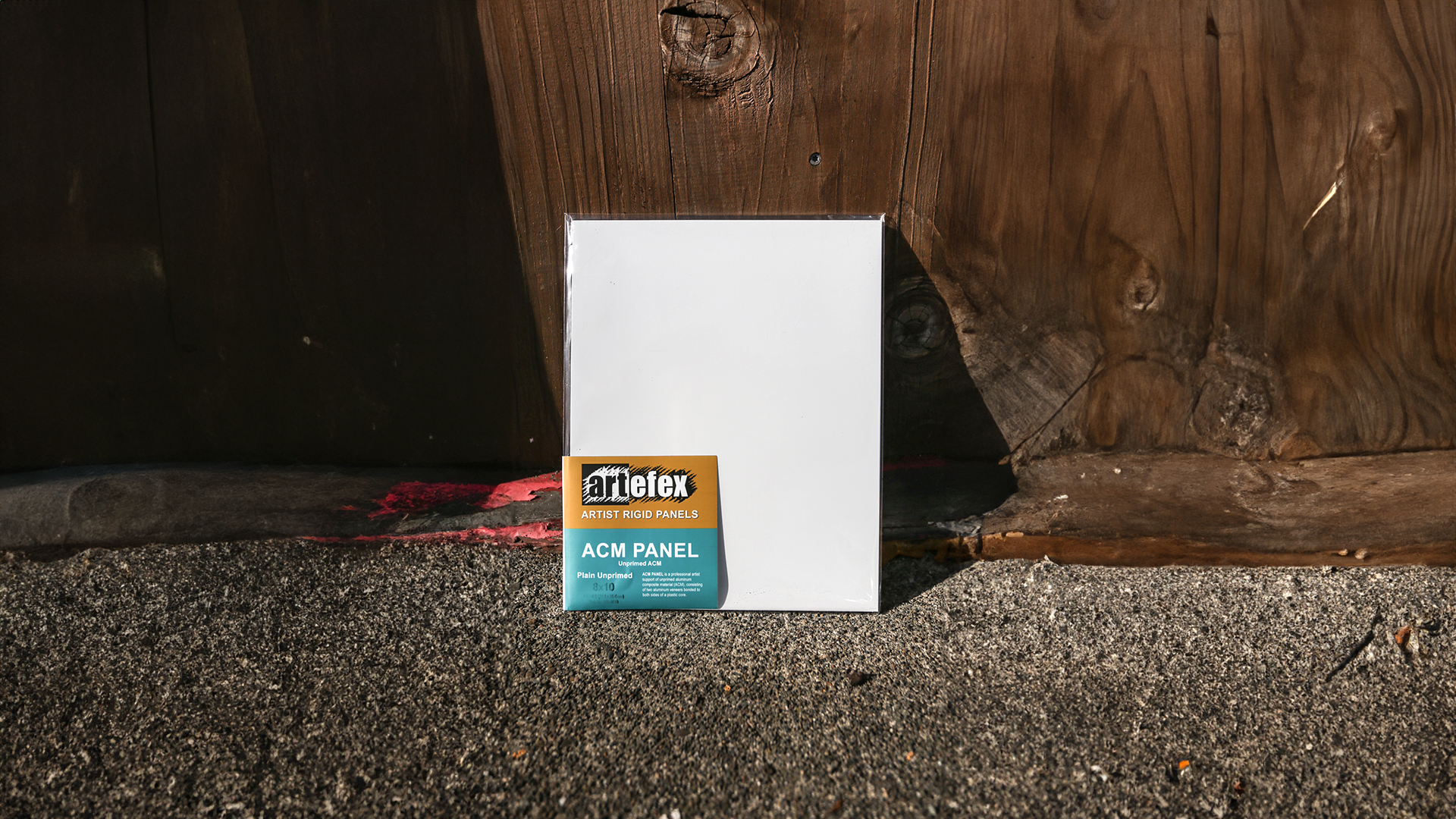
Aluminum composite material (ACM) is generally the most warp-resistant common option when well engineered. The construction, an aluminum composite core with bonded face skins, offers exceptional dimensional stability across humidity and temperature changes that would cause most wood-based supports to move. This is why custom Dibond art panels and other ACM-based supports have become the preferred substrate for serious professional work.
One important caveat: not every supplier offering “ACM panels” uses the same face skin quality, adhesive system, or surface preparation. A supplier whose ACM panels delaminate within a few years, because of inadequate face skin bonding or mismatched adhesives, illustrates exactly why the material category name alone doesn’t guarantee archival performance. You need to know what’s under the surface.
Linen-mounted ACM: the professional benchmark
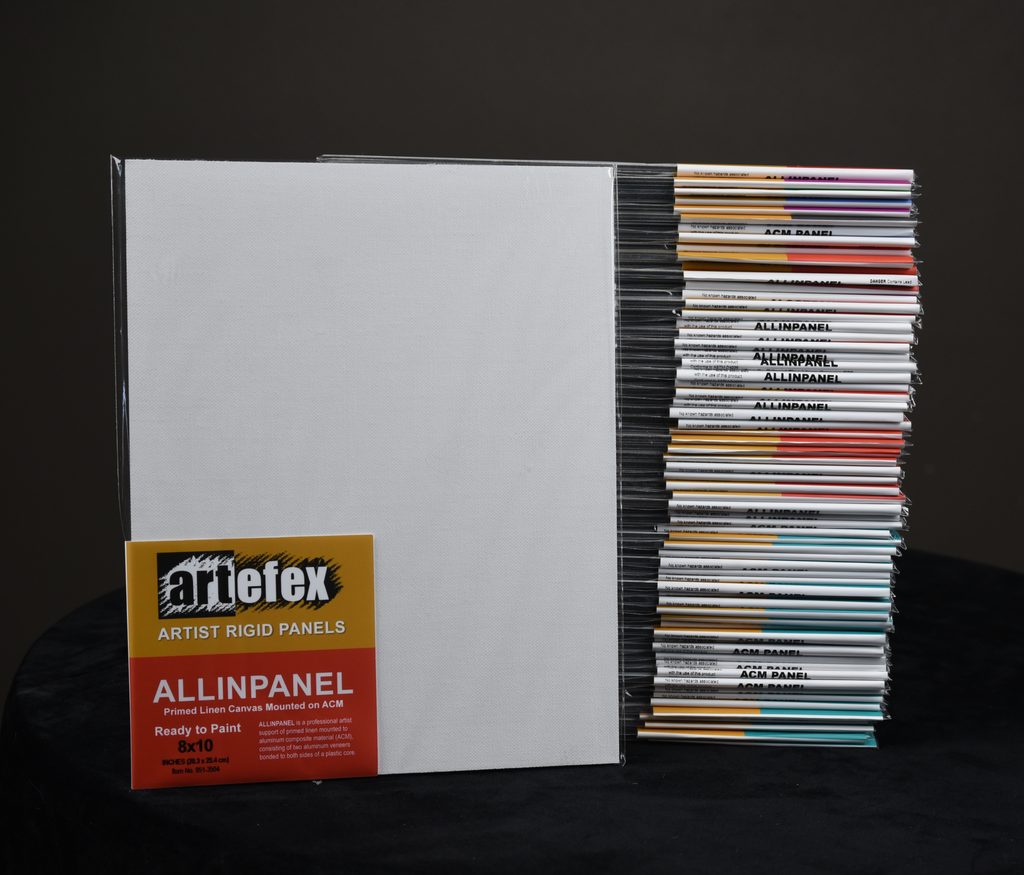
Specialty manufacturers elevate ACM further by mounting quality linen directly onto the composite core. This gives the artist the surface character of traditional linen with none of the warp vulnerability of a wood support. It’s a manufacturing capability that separates commodity suppliers from archival panel specialists. Artefex builds their product line around this approach, using conservation-grade adhesive systems and Italian linen selected for surface consistency. See How Artefex Solves the “Mural Problem”: The Ultimate Guide to Large, Lightweight, and Rigid Art Panels for more on large-panel methods and engineering choices. That kind of adhesive specificity matters because chemical stability over time is one of the core requirements for a support to be genuinely archival rather than just marketed as such.
What archival standards actually look like in practice
Many suppliers use the word “archival” loosely. In conservation terms, a truly archival panel support needs to satisfy several specific conditions: the substrate must be dimensionally stable, the adhesive system must remain chemically stable over time, the priming or ground must not crack or delaminate, and no component should off-gas acids that degrade paint layers. A panel that fails on any one of these is not archival, regardless of what the product listing says.
Ground quality and priming systems that matter
The ground is not just a surface treatment. For oil painters working in classical or realist techniques, an oil-primed linen panel prepared with a traditional lead white ground behaves fundamentally differently from a panel gessoed with standard acrylic primer. Oil-on-oil compatibility matters for adhesion, working properties, and long-term layer stability. Not all suppliers offer multiple distinct ground systems; when they do, it’s a reliable indicator of genuine production specialization rather than commodity resale. For further reading on materials and priming approaches, see the Art Supplies Articles & Reviews | Artefex Blog.
Green flags and red flags when reading a supplier’s product page
Green flags to look for: specific material sourcing (named linen grades, documented adhesive systems), named priming systems, listed surface textures, stated panel thickness options, and distinct panel lines for different media. These details indicate a manufacturer with genuine production knowledge. Red flags: vague language like “professional quality” with no further specification, no information about adhesive systems, no distinction between panel lines for different painting media. A supplier relying on packaging language rather than material specifics is telling you something important about what they actually know.
Choosing suppliers for custom-sized professional artist panels: size flexibility explained
Material quality determines longevity, but a supplier also has to be able to build what you actually need. Not every supplier means the same thing when they say “custom sizes.” Some offer custom sizing across their full catalog. Others allow it only on certain materials or above a minimum order quantity. Understanding a supplier’s actual limits prevents the frustration of discovering halfway through an inquiry that they can’t fulfill the size you need.
Among suppliers with explicit size ranges, Rex Art handles custom cradled wood panels from 4×4 to 48×96 inches, noting that panels over 48×60 require upgraded materials and special crating. USA on Canvas scales custom birch panels up to 120×60 inches. Artefex offers panels from small studio formats up to large custom sizes across several distinct panel lines, with multiple core thickness options. That breadth reflects real manufacturing infrastructure. A reseller or basic woodworking shop doesn’t carry multiple named product lines across multiple surface textures and thickness options.
Custom sizing isn’t only about length and width. Panel thickness affects structural integrity at larger sizes, framability, and shipping weight. Cradle depth affects how a panel displays and whether it can be hung without a frame. Suppliers who offer only one thickness or one profile are limiting the artist’s options in ways that aren’t always obvious at first glance. A manufacturer who gives you real choices across these variables has the production depth to handle a serious professional order.
Surface options and grounds that match your medium
Surface texture on a professional panel is a technical specification, not an aesthetic preference. A smooth or eggshell surface is suited to detail-oriented oil work and classical realism. Medium and fine textures work well for broader, more gestural approaches. Extra-fine textures are often preferred for drawing and mixed media applications. Treating texture as a secondary consideration leads to panels that work against the artist’s process rather than supporting it.
Primed vs. unprimed: making the right call
Unprimed panels give the artist full control over ground preparation, which matters for painters who apply traditional grounds or need a specific surface quality. Primed panels offer consistency and convenience, especially when ordering in volume or working to a deadline. The tradeoff is real: priming quality varies significantly between suppliers, and an artist who hasn’t tested a specific primed surface may be surprised by how it responds to their medium. For a practical overview of the differences between primed vs unprimed surfaces, consult a focused comparison before committing. This is why trial or sample packs exist, and why they’re worth using before committing to a full run of custom sizes.
Specialty grounds that few suppliers offer
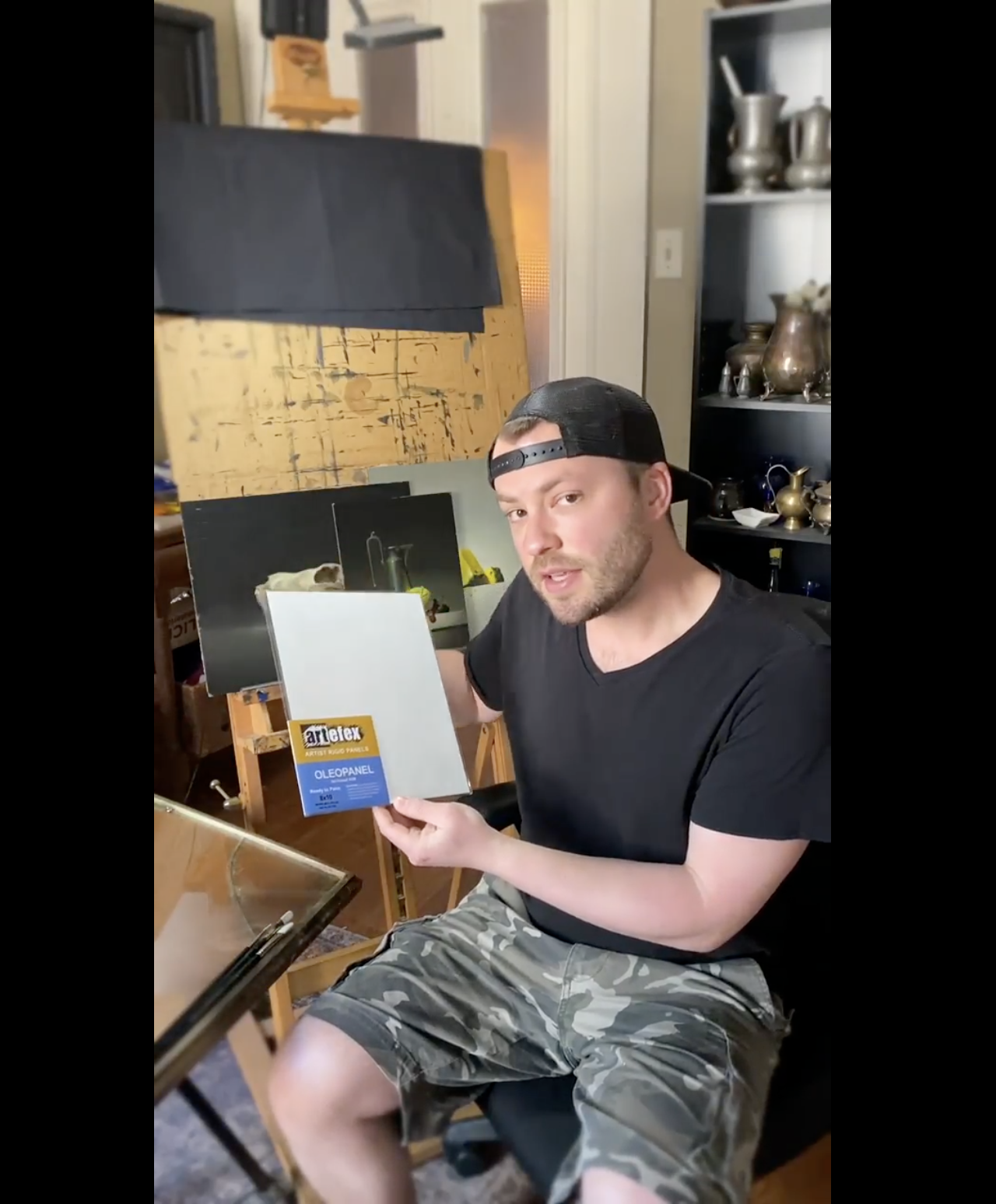
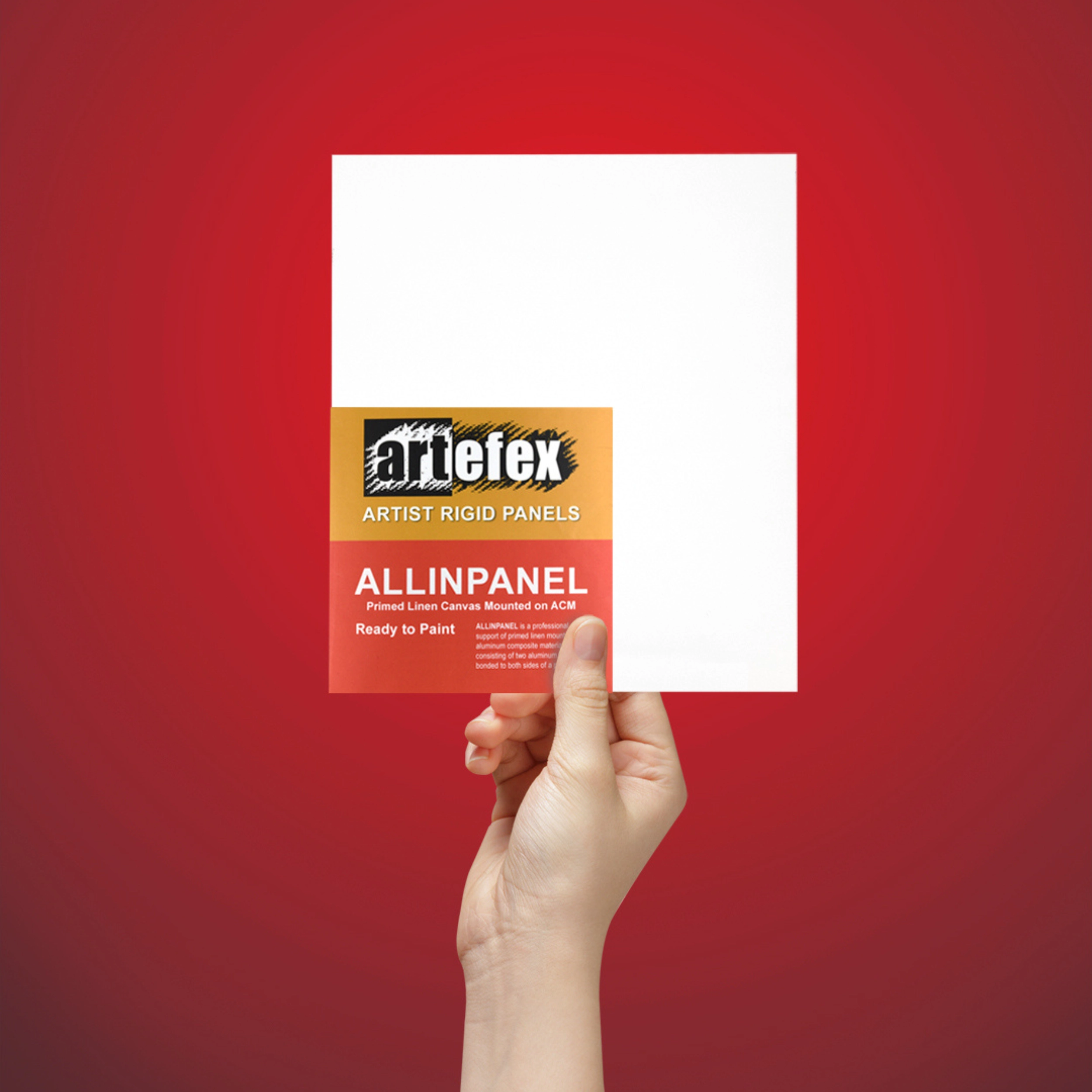
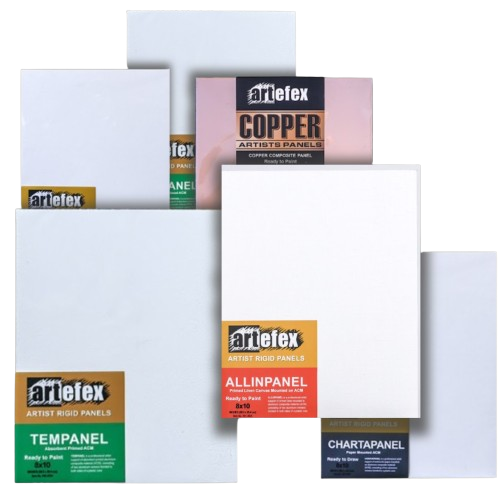
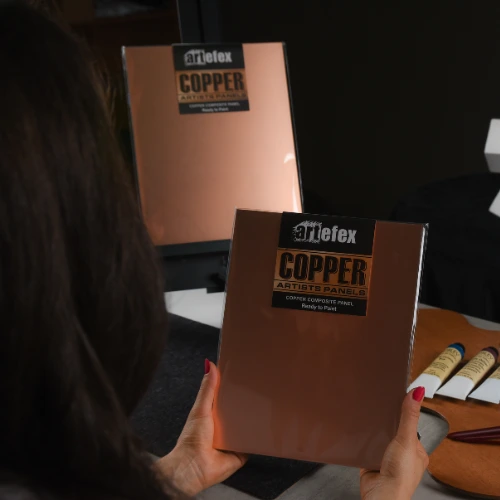
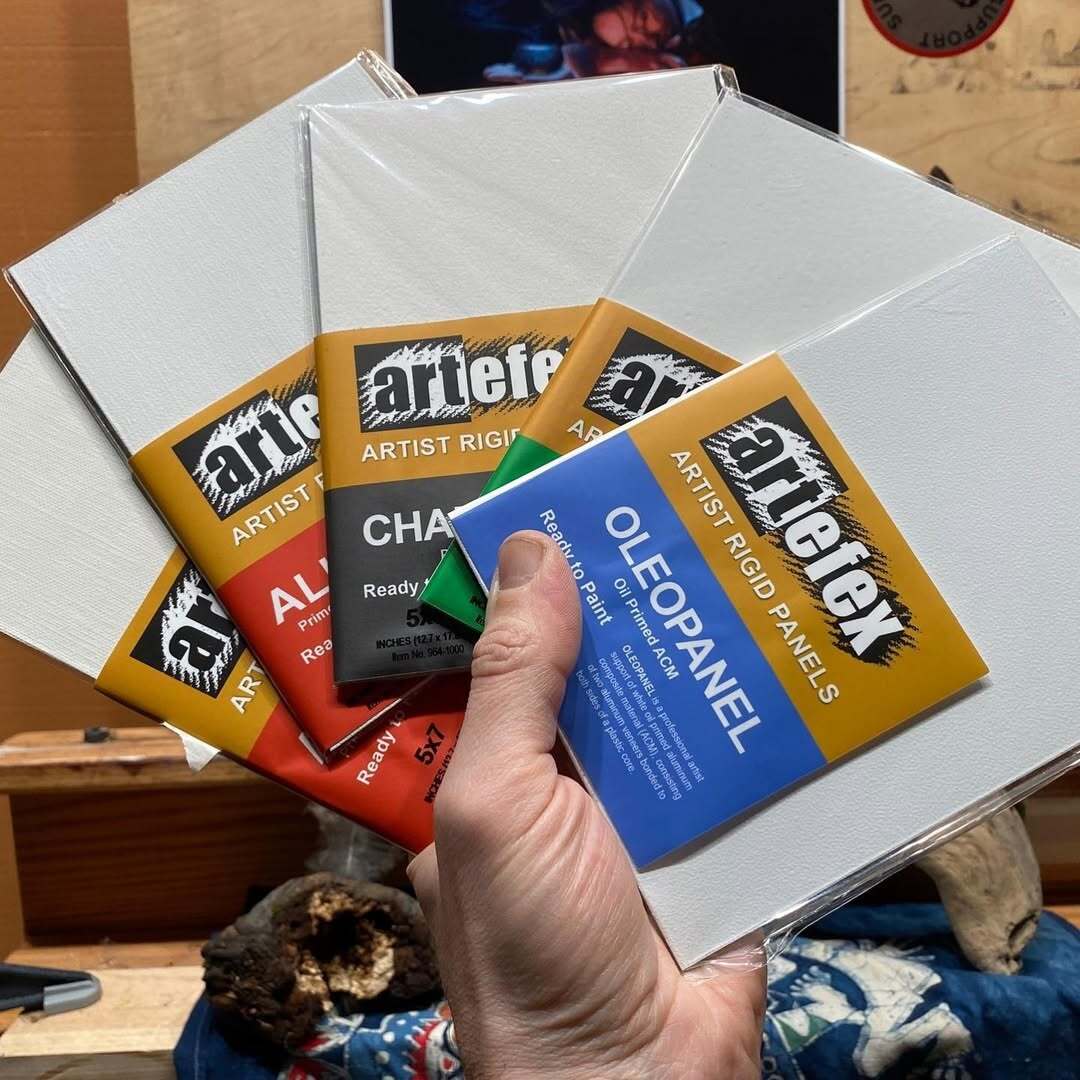
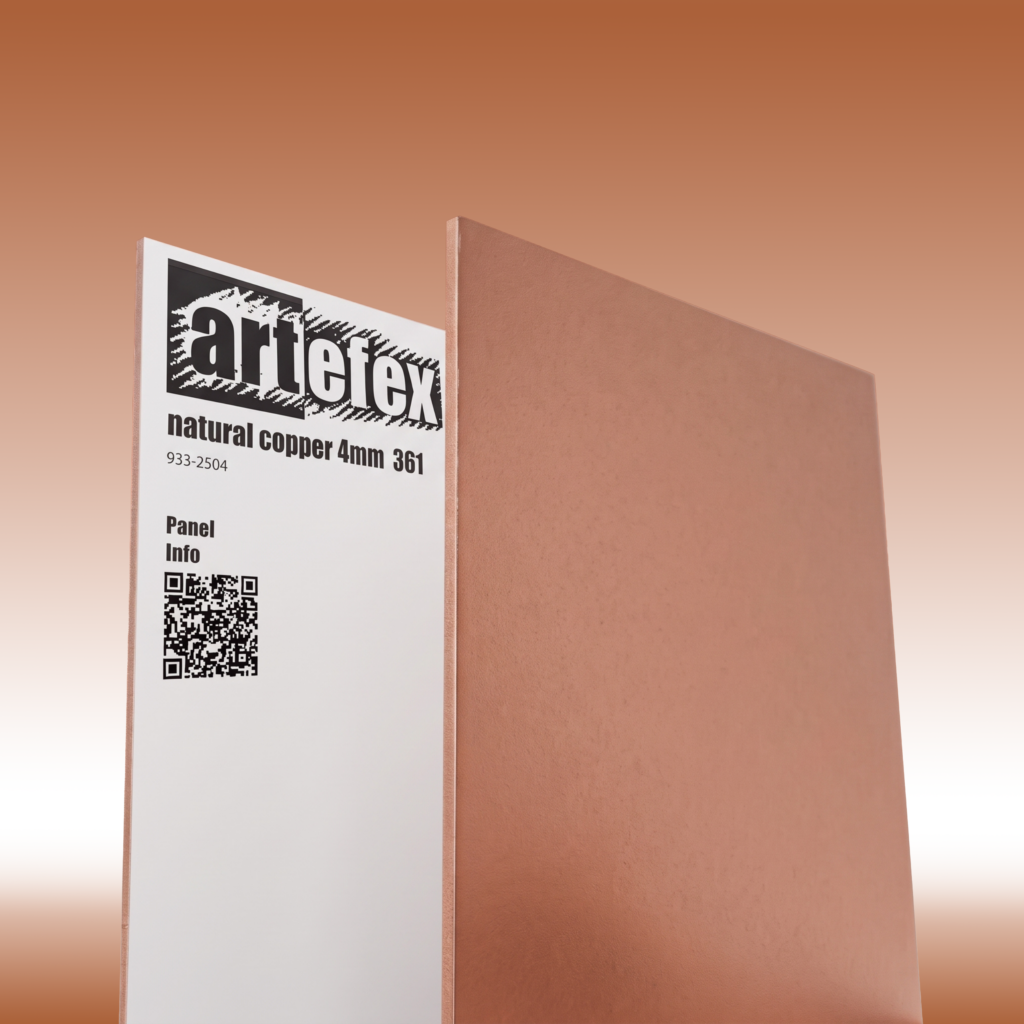
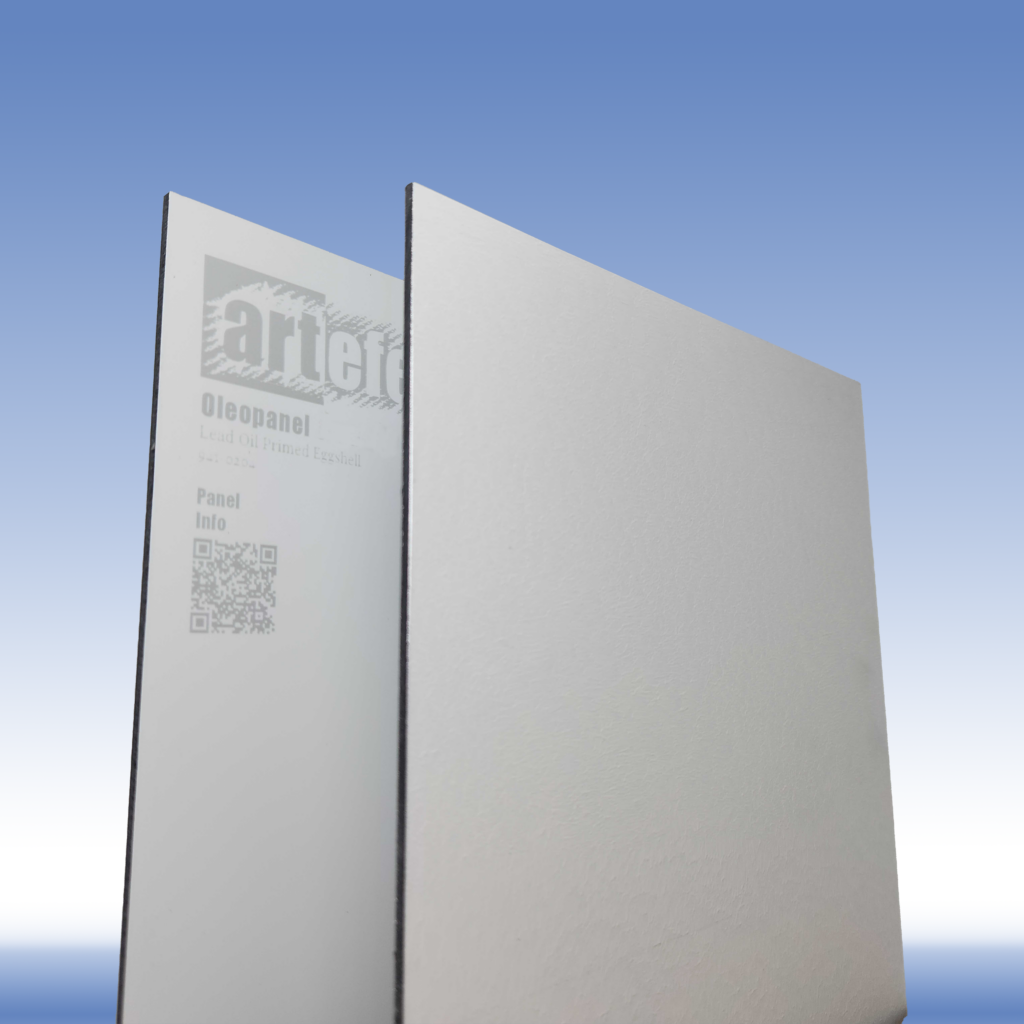
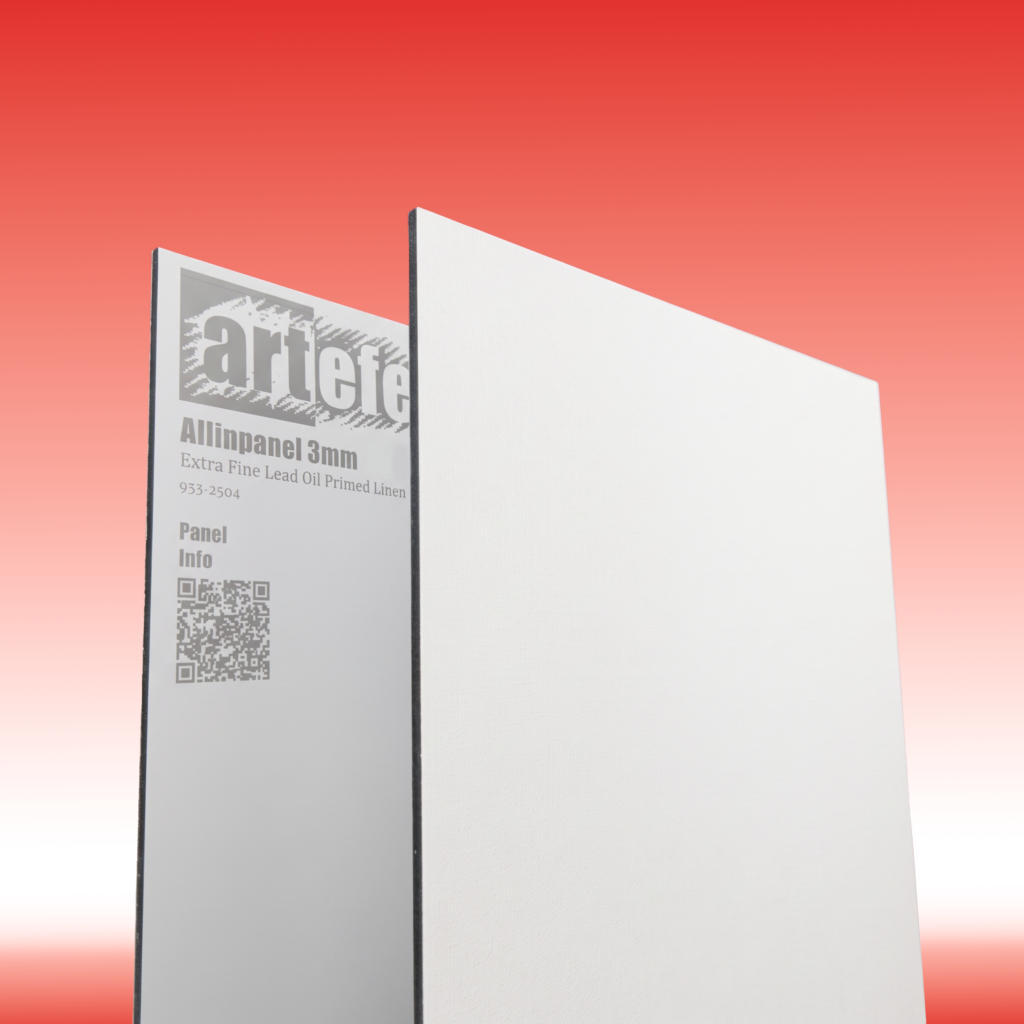
Artefex offers distinct named product lines for specific applications, including the Allinpanel (oil-primed Italian linen), the Oleopanel (lead white oil ground), the Copper Artist Panel, and the Chartapanel for drawing and watercolor. This kind of medium-specific differentiation is uncommon among general art supply retailers and is one of the more reliable indicators of a specialist manufacturer. When a company names their panel lines after the specific technical function each one serves, they’re not selling panels as a commodity, they understand what happens when paint meets surface and have engineered accordingly.
Pricing and lead times for custom professional artist panel suppliers
Here are practical benchmarks for budgeting custom panel orders. Small panels up to approximately 12×16 inches typically run $10 to $50 for standard materials and $40 to $100 or more for premium archival options. Medium panels from 16×20 to 24×36 inches generally range from $45 to $150, with specialty or archival surfaces reaching $100 to $250. Large panels at 36×48 and above run $150 to $500 and up, with museum-grade or oversized commissions reaching $1,000 or more. These ranges reflect patterns across major suppliers; the specific material, surface preparation, and priming system all determine where a panel lands within them.
Lead times follow a similar scale. Small custom panels from US suppliers typically ship in 3 to 10 business days. Medium panels usually require one to three weeks. Very large custom panels often need two to six weeks, sometimes more when specialty curing, priming, or custom packaging is involved. Build lead time into your project planning rather than ordering custom panels against a short deadline.
Oversized shipping costs are where many artists get surprised. UPS and FedEx both trigger large-package surcharges when length exceeds 96 inches or combined length and girth exceeds 130 inches. Based on published carrier rate schedules (subject to periodic change), FedEx has charged around $90 for oversized packages with a minimum billable weight of 90 lbs, and DHL has applied surcharges for single dimensions over 120 cm. For very large custom panels, LTL freight shipping may be more cost-effective than parcel carriers, but it adds lead time and typically requires custom crating. Factor these costs into your total budget before choosing a supplier based on panel price alone.
How to evaluate a supplier before placing your first custom order
Before ordering, ask the supplier directly: What adhesive system do you use on your panels? Can you confirm the exact linen grade or surface material? Do you offer multiple thickness options and surface textures, or is it a single generic option with a size selector? Can I order a trial pack before committing to a full run? A supplier who answers these questions with precision has the production knowledge to back their claims. One who responds with vague quality language is working from packaging rather than materials knowledge.
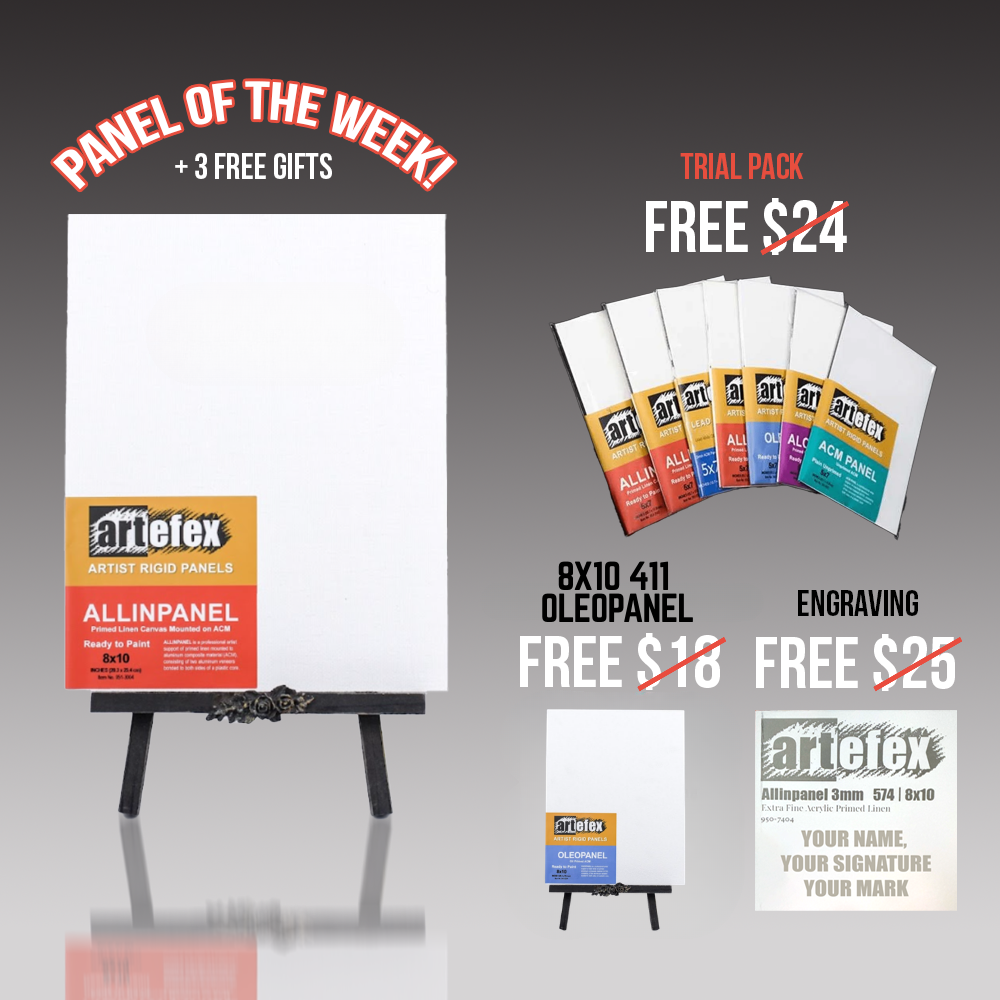
For artists transitioning to rigid panels for the first time, or switching from one supplier to another, testing a surface before ordering a full run is the most practical move. Sample packs let you evaluate how a specific surface texture responds to your medium, how the panel handles under working conditions, and whether the priming system is compatible with your painting process. Artefex offers trial packs for exactly this purpose, which removes the guesswork from first-time custom orders and lets the panel make its own case. See our Art Articles & Guides for panel tips and techniques and to help plan your testing process.
Your custom panel order specification checklist
Before contacting any supplier, have this list complete:
- Panel material: ACM, birch plywood, cradled wood, copper composite, or MDF
- Thickness: 3mm or 6mm (or equivalent for wood-based panels)
- Surface texture: smooth, eggshell, fine, medium, or extra fine
- Ground: oil-primed linen, lead white, acrylic gesso, or unprimed
- Exact dimensions: width and height in inches
- Quantity and required delivery date
- Shipping packaging standard for oversized pieces
Having this specification complete before reaching out prevents errors and ensures you’re comparing quotes like-for-like across different suppliers. A supplier who can fill in every line of that list from their standard catalog is worth working with.
The bottom line on sourcing custom-sized professional artist panels
When evaluating custom-sized professional artist panels suppliers, material stability has to come first. An archival panel support must be dimensionally stable, chemically stable through its adhesive system, and formulated with a ground that won’t fail over decades. Those requirements eliminate most commodity suppliers immediately. Archival credentials separate specialty manufacturers from general retailers, and size and surface flexibility determine whether a supplier can serve the actual range of professional work.
The price difference between a commodity panel and a properly built archival panel is often modest relative to the cost of a failed or degraded painting, depending on the work and its market. A painting that shifts, cracks, or loses adhesion costs far more than the savings on the support it was painted on. That’s what drives serious artists toward specialty custom art panel suppliers and away from the cheapest option in a search result.
If you want to understand what a purpose-built professional panel actually feels like to work on, Artefex is a strong starting point. Their trial packs remove the guesswork from the first order, and their full panel line, from the Allinpanel to the Copper Artist Panel, covers serious applications with documented materials and genuine manufacturing depth. Order the trial pack, work it through your process, then spec the full run.
Best Suppliers for Custom Professional Artist Panels
When you need custom-sized professional artist panels from suppliers you can trust, the challenge isn’t finding options—it’s sorting genuine archival quality from marketing language. You know the exact size you need, and it is rarely sitting in a standard, pre-cut retail catalog. So you search, and you find a dozen suppliers who all echo the identical, reassuring phrases: “archival quality,” “professional grade,” “museum standard.” The product pages look identical. The descriptions sound interchangeable. Nothing on a commodity retail site tells you which panels are actually engineered as a lasting foundation for fine art, and which are merely laser-cut wood fibers slapped with a cheap coat of acrylic gesso.
The difference between a truly archival panel and a poor support does not reveal itself on delivery day. It shows up five years later when the painting surface starts to telegraph structural stress cracks, or twenty years later when a discerning collector notices the underlying support has warped, torqued, or bowed. The rigid structural decisions you make at the initial order stage dictate exactly what that painting looks like in 2050 and beyond. Choosing the right custom panel supplier is that consequential. Your creative vision deserves a permanent home because, ultimately, your art is worth it.
This guide covers what separates archival-grade custom artist panel suppliers from the rest: structural material choices, specialty surface and ground options that match specific media, sizing flexibility, and a practical checklist for placing a precise custom order the first time. Niche specialty manufacturers occupy an entirely different tier than general art supply retailers, and by the end of this guide, you’ll understand exactly why.
Why Material Choice Is the First Critical Decision
Not all panel substrates behave the same way over time, and a generic category name on an e-commerce product page tells you far less than you think. “Wood panel” covers everything from flimsy craft-store birch plywood to heavy, professionally braced cradled supports. Similarly, “ACM panel” can mean a properly engineered, passivated aluminum composite support or a thin, raw sheet with inadequate face skin preparation. The base material name is merely the starting point, not the archival answer.
Wood-Based Panels: Birch, Cradled, and MDF
Birch plywood offers solid rigidity and familiar workshop workability. The cross-laminated ply construction resists structural movement better than solid wood cuts, but it remains a highly hygroscopic organic material. Plywood constantly absorbs and releases atmospheric moisture; structural, dimensional change is never a matter of if, but when.
Cradled wood panels improve on flat plywood by fastening heavy structural bracing across the back. This makes them a traditional, practical choice for larger custom sizes where flat plywood would flex, sag, or warp under its own weight. However, data-driven accelerated age testing proves that wood plywood supports are still 27 times more likely to warp over time compared to modern engineered aluminum composite substrates.
Meanwhile, medium-density fiberboard (MDF) and basic hardboard are highly economical options that start completely flat, but they are dramatically more moisture-sensitive than plywood. They are generally considered non-archival in environments where relative humidity fluctuates. A fiberboard support in a climate-controlled studio is a completely different proposition from that same support traveling through a damp coastal climate, sitting near a gallery window, or being shipped internationally.
Aluminum Composite Panels: The Warp-Resistant Standard
Aluminum composite material (ACM) is structurally the most warp-resistant, stable option available to modern artists. Its core construction—a solid or architectural core sandwiched cleanly between two flat aluminum face skins—offers exceptional dimensional stability across severe environmental shifts. It completely eliminates the natural sags, ripples, and restretching anxieties associated with traditional woven canvas. It is exactly why engineered ACM panels have become the preferred substrate for serious, professional contemporary work.
Critical Material Caveat: Not every supplier offering “ACM panels” utilizes the same face skin quality, specialized balancing backing, or surface preparation. A general supplier whose ACM panels delaminate or separate within a few years because of inadequate face skin passivation or generic adhesives illustrates exactly why a material category name alone never guarantees an archival masterpiece. You must know exactly what is engineered beneath the primer.
Linen-Mounted ACM: The Professional Masterpiece
Specialty archival manufacturers elevate ACM further by mounting fine woven textiles directly onto the rigid composite core. This engineering gives the painter the responsive surface character of traditional fine linen with none of the hygroscopic warp vulnerabilities of an organic wood support.
Achieving this bond requires highly specialized manufacturing capabilities that completely separate commodity retail outlets from true archival panel specialists. Leading conservation-tier processes utilize specialized, heat-activated, fully archival pH-neutral adhesives (such as Beva film) in an industrial heat-fusion press. This chemistry ensures that the textile and the rigid backing function as an interconnected, balanced unit.
Furthermore, this specialized adhesive system offers an essential conservation benefit: it is fully reversible. If a painting ever suffers severe surface or environmental damage decades from now, a conservator can safely reheat the support to 150°F–160°F, delaminate the canvas cleanly, and safely transfer the artwork to a fresh panel foundation.
Sourcing Custom Sizes and Panel Structures
Material quality determines centuries of longevity, but a supplier must also possess the specialized machinery to manufacture the exact custom dimensions your project demands. Not every art supplier means the same thing when they promise “custom sizing.” Some offer custom cuts across their entire catalog with no minimum order requirements, while others restrict custom dimensions to specific raw materials or enforce steep order volume thresholds.
Custom sizing is never restricted to simple length and width boundaries. The total panel thickness and overall backing structure dictate a panel’s structural integrity, weight distribution, and framing options:
- Standard 3mm ACM Panels: This ultra-thin format is highly elegant and exceptionally space-efficient—allowing dozens of panels to be stacked cleanly in a tight studio space without taking up valuable room. It is structurally recommended for small-to-medium studio formats up to 24 inches. Beyond 24 inches, a 3mm solid core panel can retain its archival flat face but begins to exhibit slight flexibility under heavy physical paint application or palette knife pressure.
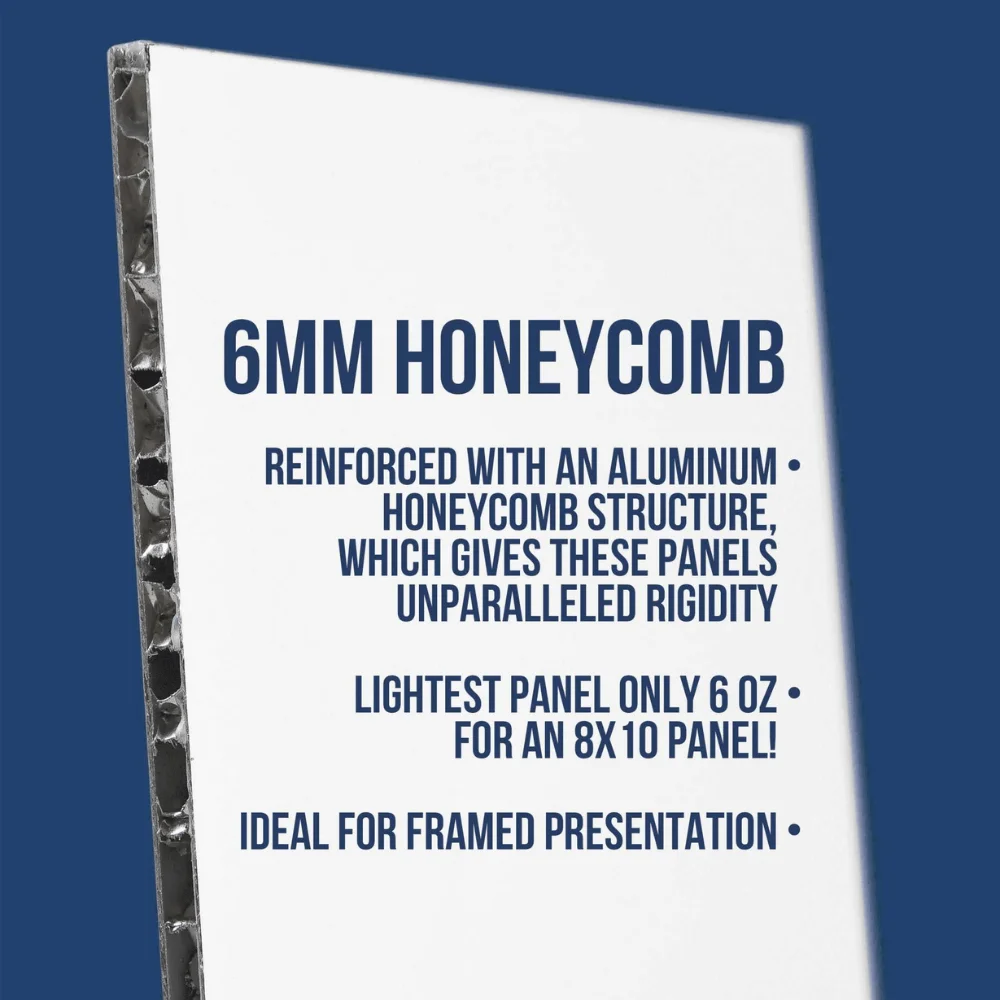
- 6mm Honeycomb Core Panels: For large-scale custom masterpieces, museum commissions, and expansive murals, specialized suppliers utilize an architectural aluminum honeycomb core. This structure replaces the solid polyethylene core with geometric hexagonal cells, providing immense structural rigidity while reducing overall panel weight by 60% compared to solid alternatives. A massive 4×8 foot honeycomb sheet weighs an astonishingly light 19 pounds. It can be easily held or adjusted on an easel with a single hand, requiring no heavy auxiliary wood bracing or cross-stretching, yet it remains perfectly flat and rigid under heavy mixed-media passes or dense plaster layers.
- Gallery Wrapped Panels: Designed for artists who prefer a frame-free presentation or clean float-frame mounting, gallery-wrapped panels route, corner-cut, and fold the premium ACM material backward to seamlessly mimic the deep profile of traditional stretched canvas. The result is an all-metal, canvas-wrapped rigid structure with completely clean, wrapped edges and open space behind for integrated flush-to-wall hanging hardware.
| Panel Structure Type | Optimal Size Range | Key Material Advantage | Best Application Context |
|---|---|---|---|
| Standard 3mm ACM | Up to 24″ | Thin, highly space-efficient, lightweight | Small portraits, fast studies, limited storage spaces |
| 6mm Honeycomb Core | 24″ x 36″ up to 60″ x 120″ | 60% lighter weight, completely rigid, zero flex | Large studio commissions, heavy mixed-media, murals |
| Gallery Wrapped Panel | Up to 44″ x 92″ | Folded edge profile, eliminates custom framing costs | Frame-free gallery exhibitions, modern float presentations |
Specialty Grounds That Match Your Niche Medium
The ground layer applied to a custom panel is a critical technical specification, not a secondary aesthetic preference. Sourcing your panels from a generic supplier often leaves you stuck with standard, highly absorbent acrylic gesso across every product line. Acrylic grounds drop up to 25% in total volume as water evaporates during curing, creating a highly porous, thirsty surface that aggressively sucks the oil vehicle out of your paint film. This causes your deep dark colors, umbers, and rich values to turn completely matte and “sink in” overnight, disrupting your value relationships during complex glazing passes.
Specialist custom panel manufacturers engineer distinct, medium-specific grounds directly onto their substrates to match individual techniques:
- Lead Alkyd Primed Direct (Olio Panels): This direct-primed formulation applies a traditional lead white alkyd ground directly over the passivated panel surface without canvas texturing. It represents the least absorbent, smoothest professional option available—completely eliminating color value shifting or “sinking in”. It allows delicate oil paint film and glaze layers to sit vibrantly on the surface, making it the premier choice for hyperrealists, portrait masters, and classical realist painters.
- Oil-Primed Premium Linens: Utilizing finest sourced Italian linens (such as tightly woven, knot-free fabrics), these panels are prepared with traditional oil or lead primers to preserve a subtle, responsive fabric tooth. The structural hills and valleys of a fine linen weave allow for rich paint deposition with every brush stroke while maintaining non-absorbent, buttery blending capabilities.
- Universal Acrylic Primed Cottons: Optimized for broad mixed-media versatility, these absorbent grounds readily accept acrylics, heavy gouache washes, and structural impasto passes, allowing water-based layers to lock permanently onto the substrate.
- Specialty Drawing and Watercolor Grounds: Advanced panel makers mount premium papers (such as Arches cold-pressed watercolor paper or Strathmore drawing papers) directly to the rigid ACM core. This offers watercolorists, pastel artists, and silverpoint draftsmen a flat, permanent foundation that won’t buckle, wrinkle, or ripple under heavy water washes, completely eliminating the fragile necessity of framing finished paper works behind heavy museum glass.
How to Evaluate a Supplier Before Placing an Order
Before trusting a custom panel supplier with a high-value commission or an entire gallery run, vet their manufacturing knowledge and transparency by asking these direct material questions:
- “What specific adhesive system is used to bond the canvas to the core?” (Look for conservation-tier, heat-activated, reversible formulas like Beva film; avoid permanent, semi-flexible PVA glues that risk bubbling or prevent future restoration).
- “Are your aluminum faces fully passivated or coated before priming?” (Raw, untreated aluminum faces lack proper long-term chemical adhesion, risking paint delamination as oil paint films cure and cross-link over the decades).
- “Can I order a comprehensive trial pack before specifying custom dimensions?”.
Testing a surface before committing to an expensive run of custom sizes is the most practical move an artist can make. Premium specialty manufacturers offer focused sample packs for exactly this purpose. A trial pack allows you to test firsthand how a specific ground absorbency handles your specific paint formulation, evaluate how the rigid core responds to your palette knife or brush pressure, and ensure full compatibility with your unique creative workflow.
Your Custom Panel Order Specification Checklist
Before contacting a custom panel specialist for a quote, ensure your project requirements are fully specified to compare quotes like-for-like:
- [ ] Panel Material/Structure: Standard 3mm ACM, 6mm Honeycomb, or Deep Gallery Profile
- [ ] Exact Proportions: Width and height specified precisely to the nearest 1/8 inch
- [ ] Surface Textile: Extra Fine, Fine, or Medium weave texturing (Linen, Cotton-Poly blend, or Direct Direct-Primed Smooth)
- [ ] Ground/Priming System: Lead Alkyd Ground, Titanium Oil Primer, Universal Acrylic Gesso, or Unprimed
- [ ] Custom Backing Details: Custom name, logo, or signature laser-engraving on the panel backing
- [ ] Hanging System Integration: Integrated Z-clip bars, cleat routing, or standard flush framing profiles
- [ ] Fulfillment Timeline: Required delivery date factored against standard 2-week custom manufacturing lead times
Sourcing the Perfect Custom Artist Panel
When sourcing custom-sized professional artist panels, long-term structural stability must always take precedence over convenience or entry-level pricing. A truly archival support must remain completely dimensionally stable across environmental shifts, chemically inert through its adhesive layers, and precisely matched to your paint medium’s absorbency requirements. These strict standards eliminate mass-produced retail alternatives immediately.
The financial difference between a cheap retail board and a purpose-built, museum-grade archival panel is modest relative to the immense cost, professional anxiety, and reputational damage of a failed or cracked painting down the road. A masterpiece that distorts or loses paint adhesion costs far more than the savings gained on the cheap support it was painted on.
If you are ready to experience what a purpose-built, professional archival surface feels like under your brush, a specialized specialist manufacturer is the ideal starting point. Order a focused trial pack, put the surfaces through your toughest studio tests, and then specify your full custom run with complete archival certainty.
Secure the Foundation of Your Next Masterpiece
Don’t let unstable materials introduce the Villain of doubt into your art career. Treat your art with the respect it demands.
Option 1: (Risk-Free)
Completely Free 2×3″ Artefex Panel.
We are so confident in our panels that we will ship a 2×3″ sample to you at zero cost. No product cost, no shipping fees. Throw it in water, step on it, or paint a study. See for yourself why the pros are switching.
Claim Your Free 2×3″ SampleOption 2: The Artefex Trial Pack
3 Panels (5×7″) for only $24.
The fastest way to find your favorite surface. This pack includes three of our 5×7″ professional archival panels. Free shipping included.
Get the $24 Trial PackOption 3: Standard Archival ACM Panels
The professional standard for daily work. Warp-resistant, museum-grade, and ready for your next masterpiece.
Browse Standard PanelsOption 4: For Large Scale Artists (Honeycomb)
Stop wrestling with heavy wood cradles. Get aerospace-grade rigidity at a fraction of the weight. Perfect for monumental works up to 5’ x 10’.
Shop Honeycomb Panels