


Best Places to Purchase High Quality Artist Panels Online

Buying artist panels online feels like a guessing game. Product pages list materials without context, “archival” gets stamped on everything from student-grade boards to conservation supports, and there’s no way to test a surface until it’s already sitting on your easel. The gap between what’s marketed and what actually performs under paint is wide, and for serious painters, that gap is expensive.
Whether you work in oils, acrylic, or watercolor, knowing where to purchase high-quality professional artist panels online, and what to look for before you click “add to cart”, separates a surface that holds up for decades from one that warps, yellows, or fights your technique from day one. This guide covers the decisions that matter: substrate, surface texture, archival quality, sizing, and where to buy professional panels that actually perform. Here’s how to shop like you know what you’re doing.
The substrate is the foundation: what’s actually holding your painting together
Before you evaluate texture, ground, or price, look at the substrate. It’s the core structure of the panel and the single biggest factor in long-term stability, everything else sits on top of it.
ACM aluminum panels and why they’ve become the archival benchmark
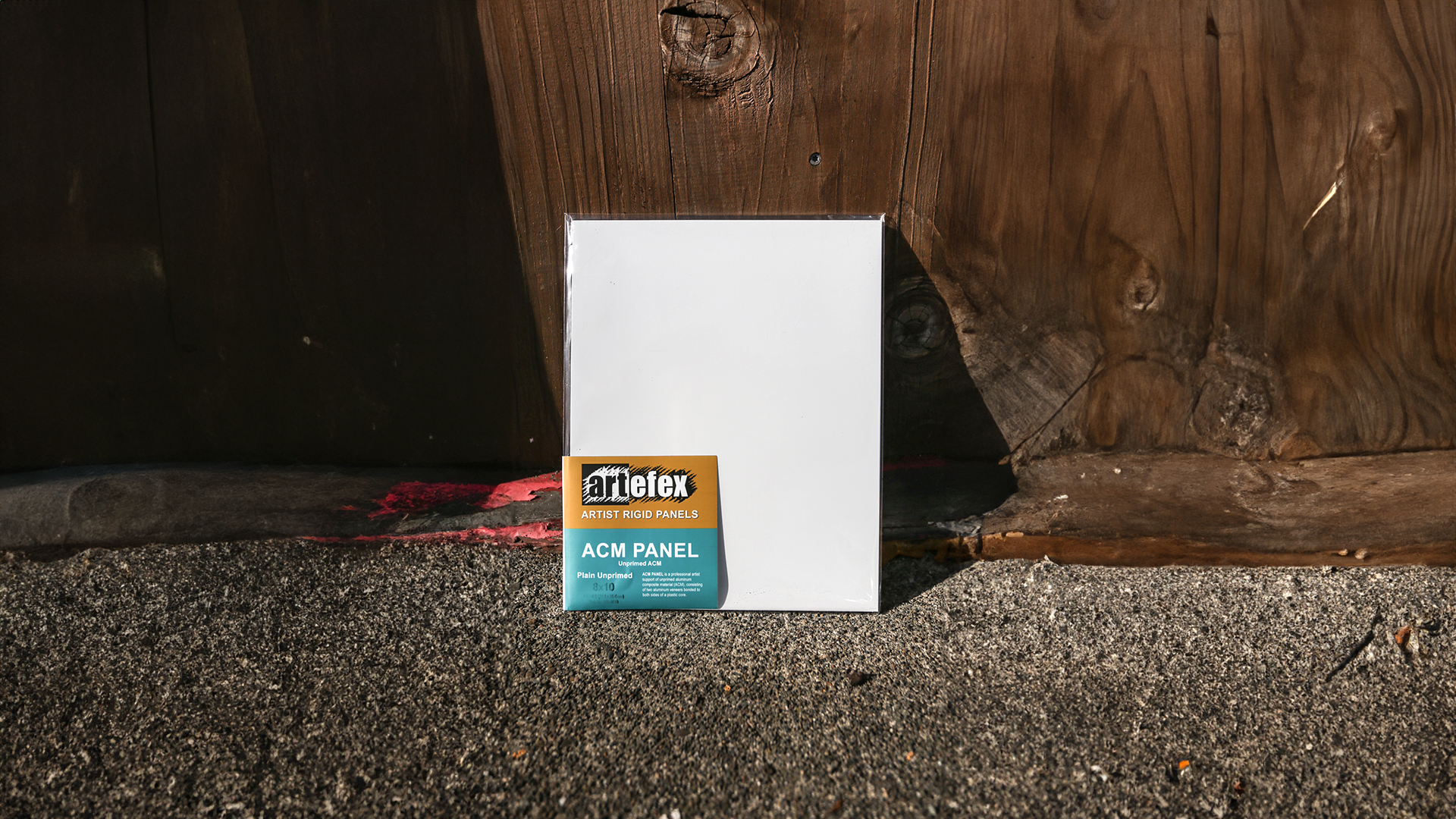
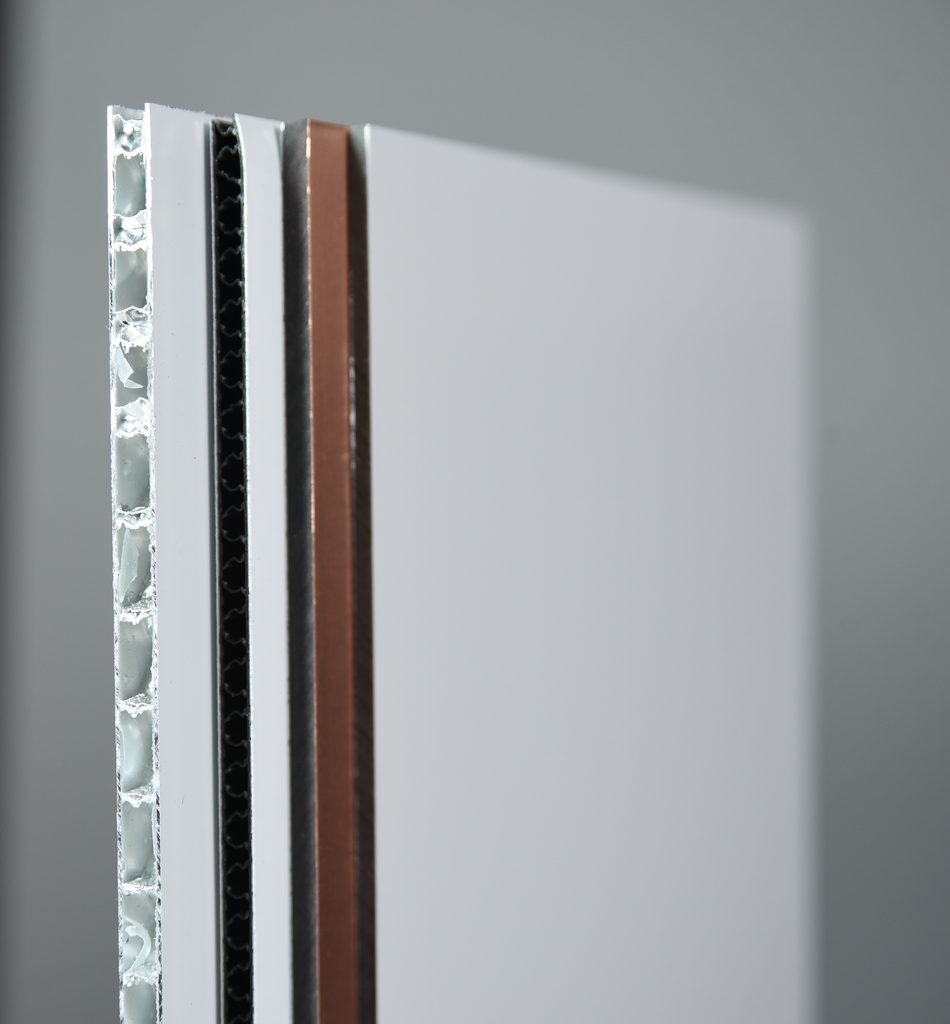
Aluminum composite material (ACM) consists of two aluminum sheets bonded to a polyethylene core. The result is a panel that’s rigid, lightweight relative to wood, and largely unaffected by changes in humidity and temperature. Those properties matter for archival performance because wood-based supports move. They expand, contract, and eventually compromise paint layers. ACM doesn’t. Artefex builds its panel lines on ACM and other rigid composite supports for this reason: the substrate is a primary factor in whether a painting survives intact over decades, and inert composite materials often outperform organic supports on key conservation metrics like dimensional stability and moisture resistance, though paint ground, mounting, and storage all contribute to long-term outcomes as well.
MDF, hardboard, and canvas panels: where they fit and where they fall short
MDF and hardboard are affordable, widely available, and smooth enough for detailed work. They’re practical for studies and student-level production. The problem is moisture sensitivity. Both materials are wood-fiber-based, and in changing humidity conditions they can swell, warp, and degrade over time. For serious archival work, they’re a stepping stone rather than a destination. Canvas panels sit further down the hierarchy: convenient for practice sessions and inexpensive, but generally less durable and less suited to long-term archival work unless they are of high quality and properly prepared. The canvas layer can loosen or crack, and the backing typically offers minimal resistance to deformation. They’re best reserved for studies and practice unless otherwise specified by the maker.
Gesso boards: not all pre-primed panels are equal
A gesso board is only as good as what’s beneath the ground coating. Many panels sold as “professional” or “archival” carry a gesso surface over MDF, cardboard, or low-grade hardboard. In high-humidity conditions, for instance, gesso over MDF will still be affected by core swelling in the substrate beneath it. The gesso layer doesn’t fix that instability; it delays the point where the problem becomes visible. When evaluating any pre-primed panel online, look past the surface description to the base material. If the product page lists gesso without naming the underlying substrate, close that gap before you buy, seal verification on all panel faces is worth confirming as well.
Matching surface and texture to your medium
A panel ideal for oil painting can work against acrylic and is inappropriate for watercolor entirely. Surface compatibility isn’t a minor detail. It determines how paint behaves from the first stroke to the final varnish layer.
Oil painting: why the ground matters as much as the substrate
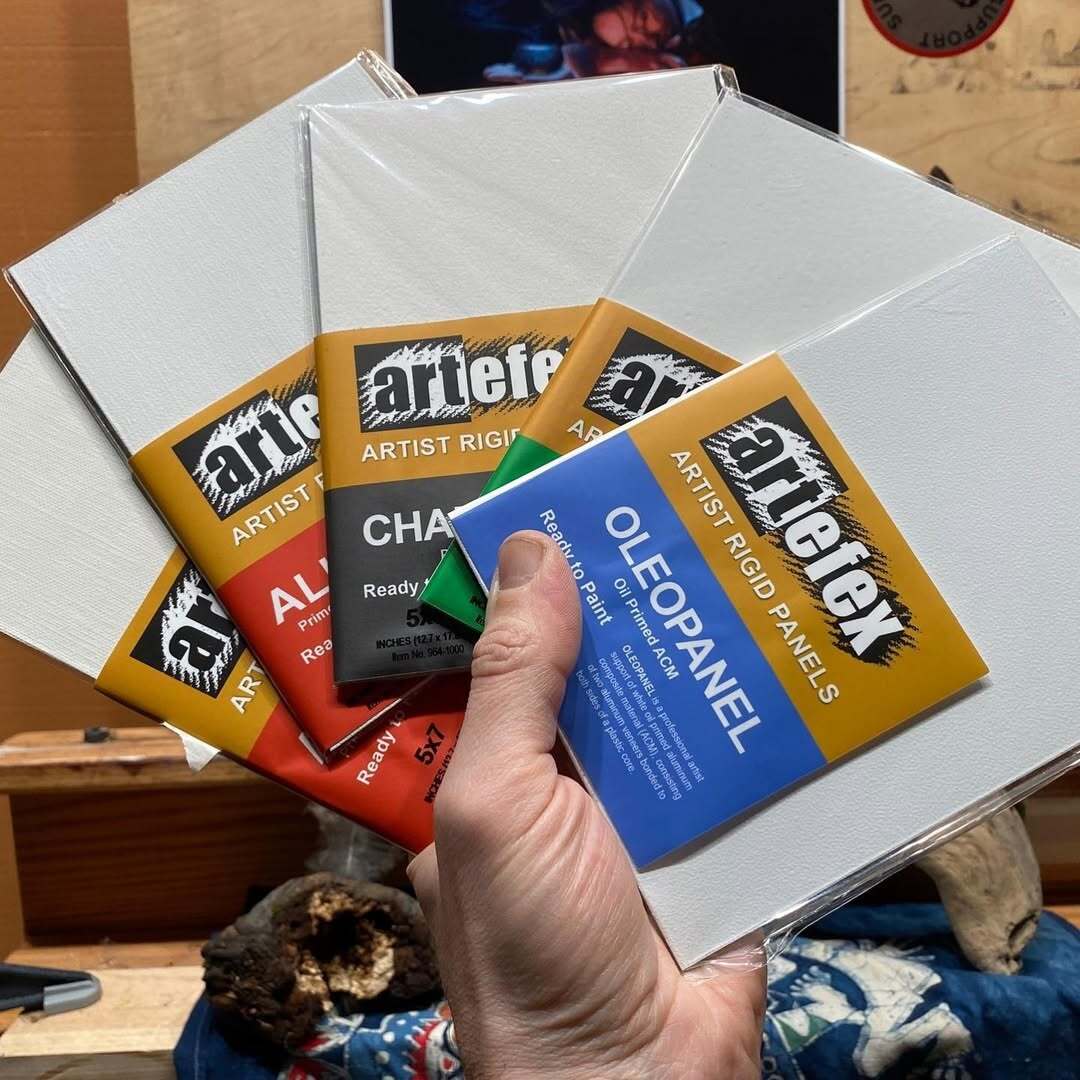
Oil painters need an oil-compatible ground. An oil-primed surface stays flexible and chemically suited to oil paint layers over time. Oil painters often prefer oil-primed grounds because they are formulated for oil paint handling; if you’re working on an acrylic-primed surface with oil paint, confirm long-term compatibility using the manufacturer’s technical data before committing to archival work. Artefex’s Allinpanel is a linen-faced, conservation-adhered, oil-primed panel built on ACM, check the technical data sheet for the specific construction details and adhesive specifications. The Oleopanel uses an oil priming that classical and realist painters specifically seek out for its handling characteristics. These panels are engineered around how oil paint actually works, not marketed as generic gesso boards with a price premium.
Texture selection within oil-primed surfaces follows technique. Extra-fine and portrait-grade textures suit detail work, smooth blending, and glazing. Medium textures work well for alla prima and layered approaches. The right choice depends on how you actually paint, not just what medium you use.
Acrylic and mixed media: rigid support, absorbency, and heavy applications
Acrylic painters working with impasto, heavy mediums, or mixed media need a surface that won’t flex or buckle under the weight. Canvas flexes, even when well-stretched. ACM panels eliminate that movement. The result is a surface that stays flat through heavy applications and doesn’t introduce stress fractures into thick paint layers over time. Smooth to eggshell textures handle most acrylic work well, and the non-absorbent surface of a properly primed ACM panel gives paint the working time and visual clarity that porous surfaces tend to kill.
Watercolor and drawing: a category most online sellers ignore
Watercolor painters don’t need a painted surface. They need a rigid support that prevents paper buckling through the wet phases of a session. Most general retailers carry nothing designed specifically for this. Artefex’s Chartapanel addresses it directly: ACM panels designed to mount quality papers like Arches or Strathmore without taping, stretching, or struggling with cockling. For drawing applications, the same principle holds. A rigid, dimensionally stable support keeps the work surface flat and consistent in ways that soft boards and foam cores can’t match across a long session.
How to read archival claims without being misled
“Archival quality” appears on products across every price range. It’s one of the most overused terms in art supply retail, and it means very little without supporting documentation.
What “archival” should actually mean on a product spec sheet
True archival construction involves acid-free materials, pH-neutral or buffered grounds, and substrates that won’t degrade or off-gas over time. For paper-based boards and grounds, a pH in the 8 to 9.5 range with calcium carbonate buffering is a meaningful indicator. PAT (Photographic Activity Test) certification matters for products that contact photographic or light-sensitive materials. For structural panels, dimensional stability and chemical inertness are the primary markers: a panel that won’t move, off-gas, or interact with the paint system built on it.
Specs worth checking before you purchase professional artist panels online
Before purchasing any panel described as archival, look for these specifics on the product page:
- Substrate material and construction (ACM, hardboard, MDF, composite)
- Ground type and chemistry (oil-primed, acrylic gesso, lead white, watercolor ground)
- pH level of the priming or ground layer
- Adhesive or mounting film used for face materials (BEVA 371 is a widely recognized conservation-grade adhesive; verify against technical data sheets or conservation sources for your application)
- Fiber source for any fabric face layer (linen origin, weave grade)
If none of this information is published, ask. Manufacturers who know their products will answer. Those who can’t are telling you something important about what’s in the box.
Why ACM composite holds a structural advantage for conservation
Wood has an organic core that responds to environmental conditions. ACM doesn’t. It carries no cellulose to acidify and no grain to respond to moisture. Conservation framing and mounting operations have incorporated aluminum composite materials for long-term preservation applications, following the same reasoning: reduce the variables most likely to cause failure. When Artefex chose ACM as the foundation for its panel lines, it was that same logic applied to painters’ supports: start with a substrate that doesn’t fight the paint system sitting on top of it.
Where to purchase professional artist panels online: sizing, custom orders, and shipping
Rigid panels have practical purchasing considerations that stretched canvas doesn’t. Planning for them before you order saves time, money, and frustration.
Standard sizes vs. custom options: what’s available and what it costs
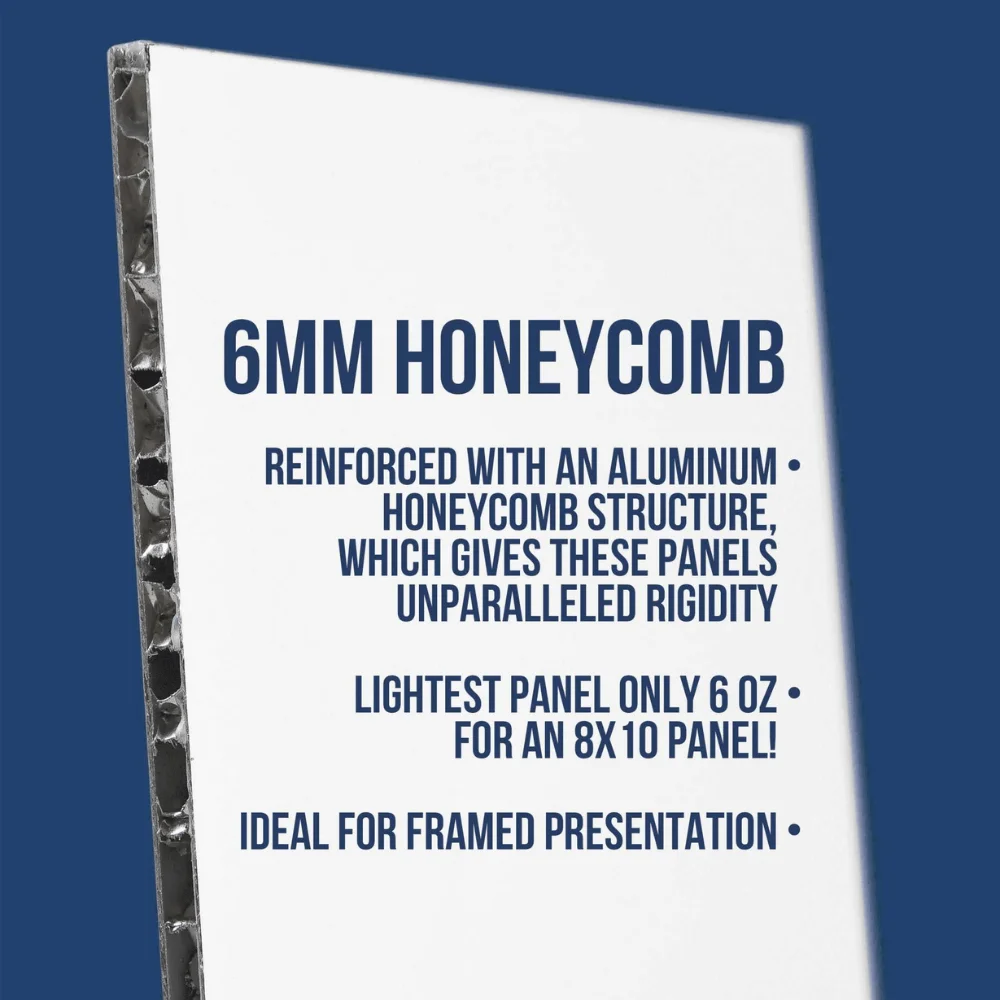
Most specialty panel manufacturers carry standard sizes from 5×7 up to 24×30 inches. For work beyond those dimensions, custom sizing becomes necessary. Artefex offers custom panels up to 120×120 inches, which covers large-format commissions and installation work that standard catalog sizes can’t accommodate. Custom orders from some specialist makers carry a minimum order value, Trekell, for example, lists a $250 minimum, and lead times of two to four weeks are typical among specialty producers. If you need a specific size for a commission, plan around that lead time rather than against it. Panel thickness also matters: 3mm panels are lighter and adequate for smaller works, while 6mm honeycomb construction adds rigidity for larger formats.
What shipping actually looks like for rigid panels
Small panels ship economically. USPS Ground Advantage handles sizes up to roughly 16×20 well, typically running $9 to $12 for lighter shipments. Panels at 18×24 and above move into UPS or FedEx Ground territory at $13 to $22 or more depending on zone and weight. Express shipping adds significant cost for any rigid panel of size; the weight and dimensional volume push rates well past what most painters expect. For large custom panels, freight becomes a real consideration. Build shipping into your budget before you order, not after. If you want to estimate costs ahead of a purchase, use an online shipping cost calculator to compare carriers and services, this helps avoid surprises at checkout: calculate shipping costs.
Testing before committing: the logic behind trial and sample packs
Buying a full set of panels on a substrate you’ve never painted on is a genuine financial risk. Surface feel, paint response, and ground compatibility vary enough between panel lines that what works perfectly for one painter may frustrate another. Trial and sample packs solve this. Artefex offers sample packs for testing: small-format versions of their panel lines at low cost with free US shipping. This is a rare feature in specialty panel manufacturing, and it’s worth factoring into any purchase decision. The cost of a sample pack is trivial compared to a full order on the wrong surface.
Where to actually buy: specialty manufacturers vs. general art supply retailers
The difference between a specialty manufacturer and a general retailer isn’t just product selection. It’s the depth of knowledge behind the product and what that means for what ends up in the box.
What general retailers offer and where they stop short
BLICK, Jerry’s Artarama, and Utrecht carry broad selections across multiple brands. For one-stop orders combining panels with other supplies, they’re convenient. The limitations show up in the details. Product knowledge at general retailers tends to be shallow, specialty lines are limited, and “professional” labels on a retail shelf don’t come with the material documentation that serious archival work requires. Published specs on pH, ground chemistry, and substrate composition are often absent from these listings, which puts the verification burden on the buyer with less information to work with. For more on comparing suppliers and supplies, see our Art Supplies Articles & Reviews.
Why buying direct from the manufacturer changes the quality equation
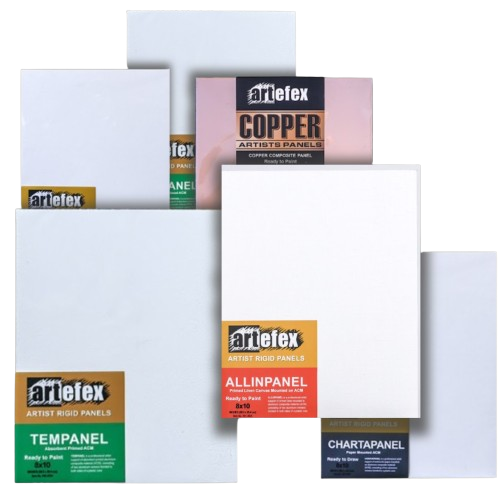
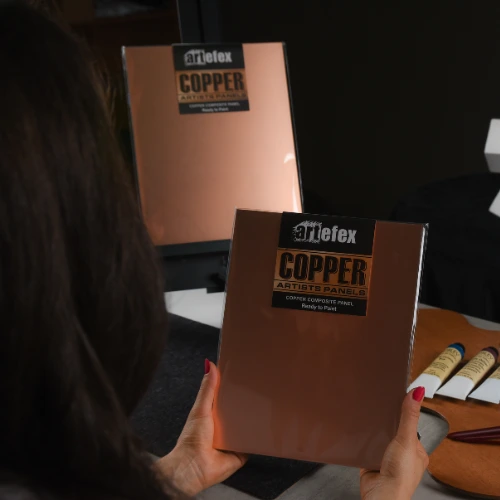
Manufacturers design panel lines with specific mediums and techniques in mind. Artefex’s Allinpanel is built for traditional oil technique. The Chartapanel is built for watercolor and drawing. The Copper Artist Panel is built for painters who need maximum resistance to environmental change. Each product has a reason behind it, and buying direct means access to the people who made those decisions. Customer support from a manufacturer who understands what the panels are for is categorically different from general retail support. Custom sizing, bulk pricing, and specialty formulations are also typically unavailable through general retailers, these options exist when you buy from the source.
How Artefex fits the checklist for purchasing high-quality professional artist panels online
Run through the framework this guide has built and Artefex addresses every factor that matters for professional panel buying: see more in our Art Articles & Guides.
- ACM substrate for archival stability and warp resistance across varied conditions
- Medium-specific formulations across oil, acrylic, watercolor, tempera, and drawing
- Trial and sample packs for testing surfaces before committing to a full purchase
- Custom sizing up to 120×120 inches for large-format and commission work
- Direct manufacturer pricing and support for professional buyers, including bulk options unavailable through general retail
No general retailer matches that combination because no general retailer manufactures panels with this level of specificity. The direct-from-manufacturer model exists because the mass market doesn’t serve serious painters well, and that gap is exactly what Artefex was built to fill. Read independent Reviews of Artefex Art Panels to see feedback from working artists.
Make the decision with the right framework
The substrate determines long-term stability. The surface ground determines medium compatibility. Archival claims need verification through real specs, not marketing language. And where you purchase professional artist panels online shapes everything from product quality to the support available when you have questions a product page can’t answer.
The field narrows quickly when you filter for manufacturers who publish full material specs, design panels for specific mediums, and let you test surfaces before committing. That combination is uncommon. When you find it, it’s a reliable signal of a manufacturer who understands what professional painters actually need, and has built their product line around those requirements rather than around shelf appeal.
If you haven’t tested Artefex panels yet, the sample packs are the lowest-friction place to start. Pick the surface closest to your medium, run it through a real painting session, and see what archival-grade performance feels like under paint. The panel you choose today could still be holding a painting decades from now. It’s worth buying from a source that takes that seriously.
Best Places to Purchase High Quality Artist Panels Online
Sourcing professional painting panels online frequently presents as a structural guessing game. Product listings enumerate raw materials without essential physical context, the term “archival” is indiscriminately applied to student-grade boards and museum-grade supports alike, and testing a surface is impossible until it is positioned on an artist’s easel. The discrepancy between marketing claims and actual performance under a brush is vast, and for professional artists, choosing an unstable support represents an expensive and structurally dangerous risk to their livelihood and legacy.
Whether working in oil paint, acrylic media, or watercolor, identifying where to purchase professional, warp-resistant painting surfaces online—and understanding what specifications to verify before completing a purchase—distinguishes a permanent support that preserves artwork for generations from an unstable board that warps, yellows, or resists artist technique from the first application. This report establishes an objective, material-science-based framework for evaluating substrates, surface grounds, conservation-grade adhesives, and direct online sourcing channels.
Substrate Material Science: The Structural Foundation
Before evaluating surface texture, ground chemistry, or price, the underlying substrate must be analyzed. As the core structural layer of any panel, the substrate determines the long-term stability and environmental resistance of the painting; every subsequent paint and ground layer relies entirely on its dimensional integrity.
Aluminum Composite Material (ACM) as the Archival Benchmark
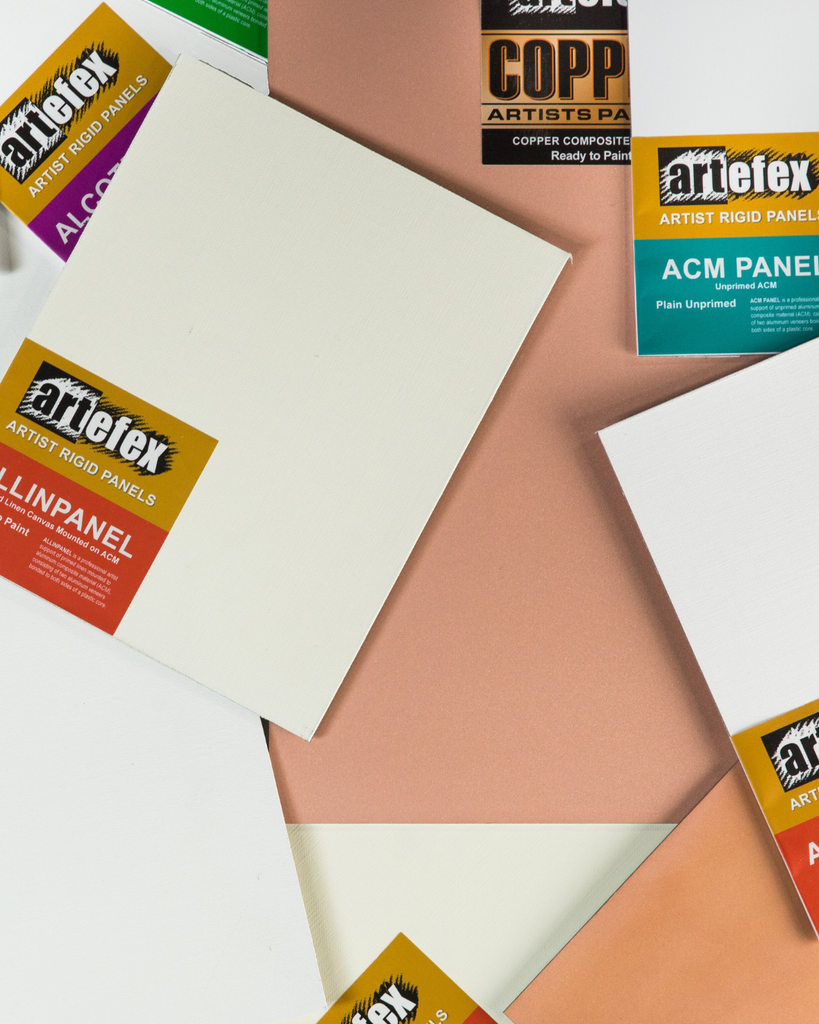
Aluminum Composite Material (ACM)—originally engineered for the aerospace and architectural cladding industries—consists of two thin sheets of solid aluminum veneer permanently bonded under pressure to a solid, inert polyethylene core. The resulting sandwich construction delivers an exceptionally rigid, flat support that remains entirely unaffected by fluctuations in relative humidity and ambient temperature.
These properties are critical for archival preservation because cellulosic, wood-based supports undergo constant hygroscopic movement. Stretched canvas is described by conservation experts as one of the least stable surfaces to paint on due to constant tension changes. Organic fibers and wood pulp constantly breathe, absorbing and releasing water vapor in response to humidity cycles. This atmospheric expansion and contraction introduces mechanical shear stress into the overlying paint layers, eventually leading to cracking, canvas sagging, and structural paint failure.
ACM, by contrast, undergoes zero moisture-induced dimensional change. Environmental chamber testing demonstrates that aluminum-based composite supports exhibit a 0% failure rate under extreme humidity cycles, whereas standard stretched canvas exhibits a 40%–50% rate of structural sagging and wood-based panels show a 30% rate of warping or torquing. For these reasons, conservation-grade panel lines, such as those manufactured by Artefex, utilize ACM as their primary substrate.
MDF, Hardboard, and Canvas Boards: Performance and Archival Limitations
Medium-Density Fiberboard (MDF) and tempered hardboards are inexpensive, readily available, and provide a smooth surface suited for fine detail work. However, these materials are fabricated from compressed wood fibers bound with synthetic resins, making them highly sensitive to moisture. Under changing humidity conditions, MDF and hardboard absorb water vapor through their edges and faces, resulting in localized swelling, warping, and eventual structural degradation. For paintings intended to survive across generations, wood-fiber supports represent a temporary practice surface rather than a permanent archival destination.
Traditional mass-market canvas boards sit even lower on the structural hierarchy. Convenient for quick studies and educational environments, the typical commercial canvas board consists of cheap cotton duck glued to cardboard, chipboard, or low-density pasteboard. These backing materials offer virtually no resistance to warping and will bend under minimal atmospheric changes. Furthermore, the water-based adhesives commonly used to mount the canvas are highly prone to biological growth and moisture-induced de-bonding, causing the fabric to bubble or peel away from its support.
To address these limitations while preserving a lightweight format, manufacturers have engineered advanced synthetic alternatives like the Alcotpanel™ series. This specialized class of synthetic canvas board utilizes a high-tensile matrix composed of 35% cotton and 65% polyester, permanently bonded to an inert ACM backing. The synthetic-blend canvas board is chemically engineered to withstand extreme water saturation, heavy acrylic impasto, and aggressive scraping without the fiber rot, bubbling, or sagging that compromises traditional cotton duck.
Gesso Boards and Pre-Primed Panels: Core Instabilities
A pre-primed gesso board is only as structurally stable as the core material beneath its ground coating. Many commercially available panels sold under “professional” or “archival” designations carry a smooth gesso surface over MDF or low-grade hardboard. In highly humid environments, the underlying MDF core will still absorb moisture, swell, and expand. The gesso layer does not prevent this movement; it merely obscures the underlying instability until the paint film begins to crack or delaminate.
When sourcing pre-primed panels online, it is essential to look past the surface description and verify the exact composition of the underlying substrate. If an online product page lists a “professional gesso surface” without explicitly identifying the core substrate, the customer must close this information gap before purchasing. Ensuring complete verification of the substrate material and seal verification across all face and edge surfaces is a mandatory requirement for serious preservation.
| Substrate Type | Core Composition | Relative Weight | Hygroscopic Sensitivity | Expected Failure Rate | Optimal Use Case |
|---|---|---|---|---|---|
| 3 mm Solid ACM | Polyethylene between aluminum veneers | Moderate | 0% | 0% | Studio & plein air |
| 6 mm Honeycomb | Aluminum honeycomb core | Ultra-light | 0% | 0% | Large commissions |
| Gallery Panel | Folded ACM box frame | Heavy | 0% | 0% | Gallery display |
| Tempered Hardboard | Wood fibers & resin | Heavy | High | 30% | Practice |
| MDF Board | Wood particles & resin | Very Heavy | Extreme | 30% | Sketches |
| Canvas Board | Cotton on chipboard | Lightweight | Extreme | 40–50% | Student work |
Aligning Surface Texture and Chemistry with the Medium
A support that performs optimally for oil painting can actively hinder acrylic applications and is chemically inappropriate for water-based media like watercolor or egg tempera. Matching ground chemistry and physical surface texture to the chosen medium is essential for ensuring both immediate handling control and long-term paint adhesion.
Ground Chemistry and Pigment Volume Concentration
The interaction between paint binders and the underlying ground is governed by the Pigment Volume Concentration (PVC) of the primer.
High-PVC Grounds (Acrylic Gesso / Universal Primers) create a highly absorbent surface ideal for acrylics and mixed media. However, they can draw oil out of oil paints, causing dark colors to sink in, lose saturation, and become matte.
Low-PVC Grounds (Oil & Alkyd Primed) produce a dense, non-absorbent surface that retains oil within the paint film, preventing sink-in while preserving depth, saturation, and gloss.
Oil Painting: Ground Formulations and Textile Profiles
Oil painters require oil-compatible grounds to maintain chemical compatibility and long-term flexibility.
Classical painters frequently choose Rublev Lead Alkyd Ground, used throughout Artefex Oleopanel™ and Allinpanel™ products. This traditional lead white primer offers exceptional flexibility and distinctive brush drag while preventing value shifts.
Safety Note: Lead white should never be dry sanded because airborne lead dust is hazardous.
Direct-Primed ACM (Oleopanel™)
The aluminum surface is coated directly with oil primer, eliminating textile entirely. Paint remains on the surface instead of soaking into fabric, maintaining exceptional color saturation while allowing wiping and scraping techniques.
Linen-Mounted ACM (Allinpanel™)
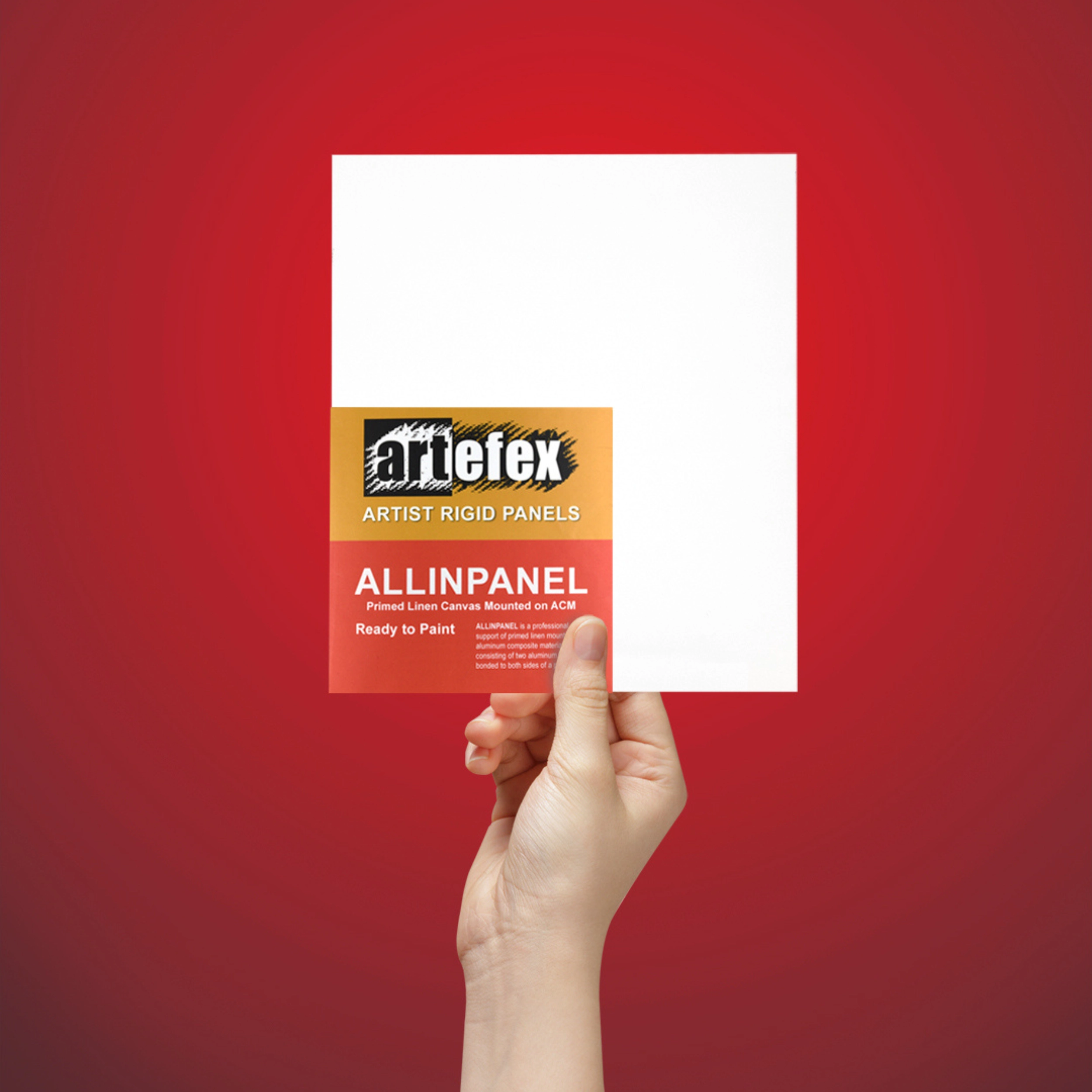
Premium Italian Bagnolo linen is permanently bonded to ACM using BEVA 371 conservation adhesive, combining traditional canvas feel with aluminum stability.
Italian Bagnolo linen is preferred because automated spinning minimizes knots and slubs, making it ideal for portraiture and hyperrealism.
The Allinpanel™ collection includes:
| Code | Linen | Ground |
|---|---|---|
| 531 | Coarse | Rublev Lead Alkyd |
| 533 | Fine | Rublev Lead Alkyd |
| 532 | Extra Fine | Rublev Lead Alkyd |
| 536 | Coarse | Titanium Oil |
| 537 | Fine | Titanium Oil |
| 538 | Extra Fine | Titanium Oil |
| 530 | Medium | Acrylic Gesso |
| 535 | Fine | Acrylic Gesso |
| 574 | Extra Fine | Acrylic Gesso |
Acrylic and Mixed Media: Rigid Engineering and Universal Priming
Acrylic painters working with heavy impasto, dimensional gel mediums, or fluid pours require a support that remains absolutely flat under high structural loads and variable surface tension. Traditional flexible canvas stretchers bow and flex under the weight of heavy acrylic applications, introducing mechanical stress that can lead to fractures or adhesion failure as the acrylic film cures and shrinks over time.
Mounting synthetic canvases or universal grounds to rigid ACM panels resolves this structural vulnerability. The Alcotpanel™ series—utilizing an extra-fine, triple-primed cotton-polyester blend (such as Code 513)—provides a highly stable, smooth, and non-directional grid texture. This specialized surface is triple-primed with a high-solids acrylic gesso that accepts acrylics, oils, and alkyds without requiring additional surface preparation. The synthetic fibers are completely immune to the rot and atmospheric expansion that affect pure cotton duck, ensuring the structural integrity of heavy mixed-media applications.
Watercolor and Drawing: Rigid Sizing and Specialized Absorbency
Traditional paper-based supports present severe handling and display challenges for watercolor and wash-heavy media. Under wet washes, unrestrained watercolor paper absorbs water, swells, and buckles (cockling), forcing artists to tape, stretch, or clamp the sheet.
The Chartapanel™ series addresses this limitation by permanently mounting professional-grade 300-gram Arches or Strathmore paper directly to a rigid ACM core using pH-neutral, water-resistant conservation adhesives. This design allows wet-into-wet washes without paper buckling, eliminating the need for stretching, taping, or heavy framing under glass.
For dry drawing applications, pastel, and silverpoint, the Tempanel™ series (Code 450) utilizes a quadruple-primed, non-gaseous matte vinyl ground formulated with a vinyl acetate-ethylene (VAE) polymer and mineral pigments. Quadruple-sanded to a flat, eggshell-like finish, this specialty surface mimics the smooth, high-absorbency characteristics of historical plaster or rabbit-skin gesso boards. It provides a consistent, non-directional bite that is ideal for silverpoint, metalpoint, egg tempera, and gold leaf water-gilding while eliminating the cracking risks associated with traditional chalk-based grounds on wood.
Decoding Archival Claims: Science vs. Marketing
The phrase “archival quality” is frequently applied to art supplies without standardized criteria, making it one of the most overused marketing terms in the industry. In professional conservation, archival status is determined by measurable standards including chemical inertness, pH stability, structural reversibility, and dimensional stability.
Technical Standards of True Archival Construction
To evaluate whether a panel is truly archival, materials scientists analyze every component:
- Acid-Free and Buffered Chemistry: Paper and fabric layers should be acid-free and pH-neutral, ideally buffered with calcium carbonate to maintain a pH between 8.0 and 9.5.
- Chemical Inertness: Structural cores should not off-gas VOCs or release acidic compounds into the paint film.
- Adhesive Stability: Commercial PVA glues become brittle and acidic over time. Conservation-grade panels instead utilize museum-quality adhesives such as BEVA 371.
The Preservation Standard of BEVA 371 Copolymer
The adhesive layer is one of the most important components in conservation-grade panels. Rather than relying on water-based glues, premium manufacturers utilize BEVA 371, a chemically stable, heat-activated conservation adhesive that has served as the museum standard for relining and mounting paintings since 1970.
When applied under controlled heat and pressure, BEVA 371 creates a uniform bond across the entire panel with an internal bond strength exceeding 150 psi, preventing bubbling, edge lifting, and localized delamination.
Perhaps more importantly, BEVA 371 satisfies the conservation requirement of reversibility. If a painting is severely damaged, a conservator can heat the panel to approximately 150°F (65°C), safely soften the adhesive, separate the painted linen from the damaged aluminum support, and mount it onto a new archival panel without harming the cured paint film.
Direct Metal Composite Substrates: Pure Copper Series 361
For artists seeking to replicate historical painting techniques, Direct Metal Composite Series 361 revives the centuries-old practice of painting directly on copper while eliminating the disadvantages of solid copper plates.
Masters including Rembrandt, El Greco, and Chardin favored copper because its perfectly smooth, non-porous surface produced extraordinary luminous glazing effects while preventing moisture-related cracking.
Modern engineered copper composite panels solve the practical limitations of traditional copper supports.
Structural Composition
Series 361 features a 0.2 mm veneer of pure deoxidized Cu-DHP copper thermally bonded to an inert composite core and backed with aluminum. The result preserves the classical painting surface while reducing weight by approximately 60% and dramatically increasing rigidity.
Thermal Expansion Compatibility
The engineered copper alloy expands and contracts at nearly the same rate as cured linseed oil paint. This synchronized movement minimizes internal shear stress and substantially reduces microscopic cracking caused by temperature changes.
Chemical Adhesion
Unlike canvas, which relies on mechanical tooth for adhesion, oil paint forms a direct chemical bond with copper. Fatty acids in drying oils react with the copper surface, creating an exceptionally durable bond capable of lasting for centuries.
Optical Advantages
Because copper is completely non-absorbent, oil paint remains on the surface rather than sinking into a porous ground. Light passes through translucent glaze layers, reflects from the polished copper beneath, and returns through the paint film, creating a remarkable sense of depth and luminosity that white canvas cannot reproduce.
Important: Copper panels are designed exclusively for oil painting. Acrylics and other water-based media can oxidize the copper surface, causing corrosion and poor adhesion.
Where to Source Professional Artist Panels Online
Rigid composite panels require careful logistical planning. The sourcing channel directly affects customization options, shipping costs, technical support, and long-term value.
Specialty Manufacturers vs. General Art Supply Retailers
When purchasing professional artist panels online, painters generally choose between large art retailers and specialty manufacturers.
General Art Retailers
Retailers such as BLICK, Jerry’s Artarama, and Utrecht offer the convenience of purchasing panels alongside brushes, paints, solvents, and other studio supplies. However, they typically provide limited technical information regarding panel construction.
Critical specifications—including substrate composition, primer chemistry, pH neutrality, and adhesive systems—are often absent from product listings. In addition, these retailers generally do not provide custom sizing, manufacturer-direct pricing, or consultation for conservation or installation projects.
Direct Specialty Manufacturers
Purchasing directly from specialty manufacturers provides access to detailed material specifications and purpose-built product lines.
Manufacturers like Artefex design different panel series specifically for different painting techniques:
- Allinpanel™ – Italian linen mounted to ACM for traditional oil painting.
- Oleopanel™ – Direct-primed aluminum panels for non-absorbent oil painting.
- Chartapanel™ – Professional watercolor paper mounted to ACM.
- Copper Series 361 – Direct metal painting surfaces for classical oil techniques.
Direct communication with the manufacturer also allows artists to discuss custom dimensions, conservation requirements, architectural installations, and large-scale commissions before placing an order.
Practical Sourcing Considerations
Standard vs. Custom Sizes
Most manufacturers stock standard panel sizes ranging from 5×7 inches to 24×30 inches.
For larger paintings or commissioned work, custom manufacturing becomes necessary.
Unlike traditional retailers that only offer catalog sizes, specialty manufacturers can fabricate:
- Custom dimensions
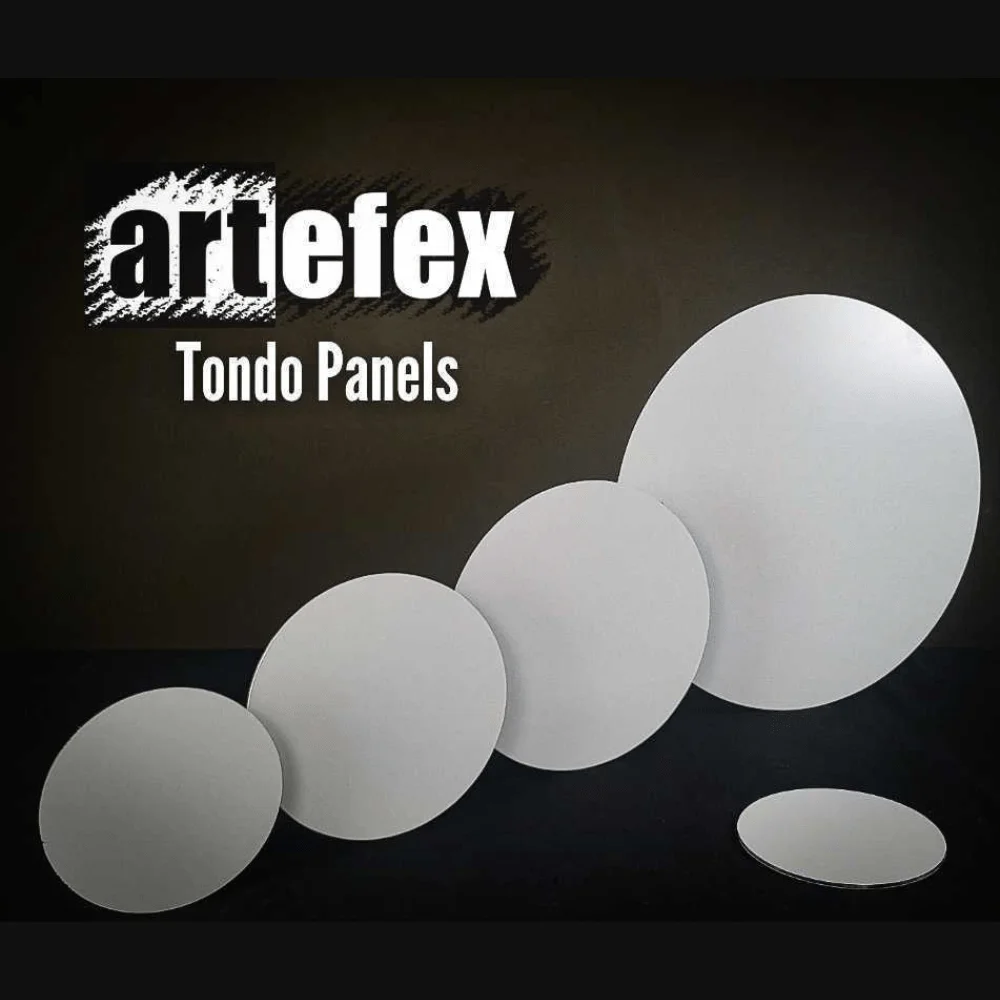
- Circular panels
- Oval panels
- Arched panels
- Triptychs
- Puzzle or interlocking panels
Many custom builders can manufacture panels with tolerances as precise as 1/8 inch.
Choosing the Correct Thickness
Panel thickness should match artwork size.
3 mm Solid ACM
- Lightweight
- Easy to transport
- Ideal for paintings up to approximately 24 × 24 inches
6 mm Aluminum Honeycomb
- Much greater rigidity
- Approximately 60% lighter than plywood
- Recommended for large commissions, murals, and oversized paintings
Honeycomb construction minimizes flex while keeping overall weight surprisingly low.
Shipping and Freight
Small panels generally ship through USPS, UPS, or FedEx Ground.
Once panels exceed approximately 30 × 40 inches, dimensional freight charges increase dramatically.
Purchasing directly from manufacturers often provides access to commercial freight discounts unavailable through retail channels. Some manufacturers negotiate discounted freight rates through commercial carriers, significantly lowering shipping costs for oversized artwork supports.
Trial Packs
Professional artists frequently test new surfaces before committing to full-size panels.
Manufacturers that offer sample packs allow painters to evaluate:
- Brush response
- Surface absorbency
- Ground texture
- Paint handling
- Drying behavior
Testing small panels before purchasing larger sizes minimizes both financial risk and workflow disruption.
Strategic Sourcing Guide
When comparing suppliers, professional artists should verify the following:
- Exact substrate composition
- Ground chemistry
- Adhesive type
- Archival certifications
- Custom sizing capability
- Shipping methods
- Technical documentation
- Conservation support
Manufacturers that openly publish technical specifications generally provide greater confidence than retailers relying primarily on marketing terminology.
Recommended Online Resources
Professional artists seeking archival painting supports should prioritize manufacturers offering:
- Custom panel builders
- Sample packs
- Direct-primed oil panels
- Linen-mounted ACM panels
- Technical articles and conservation resources
- Product testing and review documentation
A complete materials ecosystem—including supports, primers, paints, and educational resources—helps ensure compatibility across every stage of the painting process.
Secure the Foundation of Your Next Masterpiece
Don’t let unstable materials introduce the Villain of doubt into your art career. Treat your art with the respect it demands.
Option 1: (Risk-Free)
Completely Free 2×3″ Artefex Panel.
We are so confident in our panels that we will ship a 2×3″ sample to you at zero cost. No product cost, no shipping fees. Throw it in water, step on it, or paint a study. See for yourself why the pros are switching.
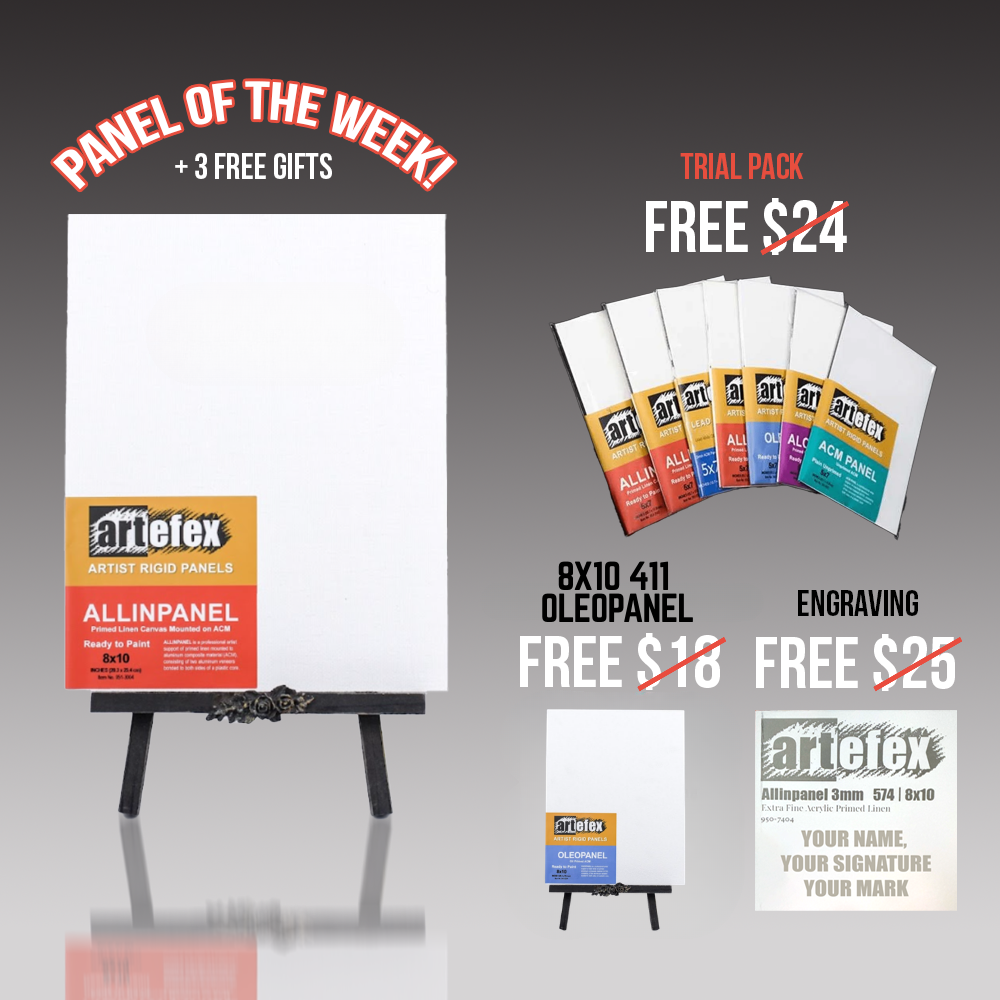
Claim Your Free 2×3″ SampleOption 2: The Artefex Trial Pack
3 Panels (5×7″) for only $24.
The fastest way to find your favorite surface. This pack includes three of our 5×7″ professional archival panels. Free shipping included.
Get the $24 Trial PackOption 3: Standard Archival ACM Panels
The professional standard for daily work. Warp-resistant, museum-grade, and ready for your next masterpiece.
Browse Standard PanelsOption 4: For Large Scale Artists (Honeycomb)
Stop wrestling with heavy wood cradles. Get aerospace-grade rigidity at a fraction of the weight. Perfect for monumental works up to 5’ x 10’.
Shop Honeycomb Panels