

Rigid Art Panels: The 2026 Buyer’s Guide for Painters
You pull a finished painting out of storage after six months and something is wrong. The canvas has bowed outward, one corner has pulled from the tack line, and a thin crack runs through the thickest part of your impasto. The painting didn’t fail. The surface did. Rigid art panels exist to eliminate exactly this problem, and they do it by replacing a flexible substrate with one that simply doesn’t move.
This isn’t a niche upgrade for specialist painters. Rigid panels are what serious artists choose when the work is meant to last, when archival performance matters as much as handling quality. Artefex has a long history manufacturing these supports, and this guide covers what you actually need to know: the main materials, how they perform across different media, what priming requires, how sizing works, and how to make a smart purchase decision.
What a Rigid Art Panel Actually Is
Stretched canvas is fabric under tension. That’s not a critique; it’s just what it is. Fabric responds to every environmental change around it: humidity causes it to sag, dry heat causes it to pull tight, and the cumulative mechanical stress of brushwork causes it to flex with every stroke. A rigid panel replaces that flexible substrate entirely with a solid, immovable backing that holds its shape regardless of what the environment or the artist does to it.
The core definition is simple: any painting support built on a stiff backing material, aluminum composite, wood, or copper, that doesn’t flex under pressure or environmental stress. What varies is the core material, and that variable determines everything downstream: archival quality, weight, surface behavior, and which media the panel suits. Not all rigid art panels are built the same, and understanding the difference between material types is where smart panel selection begins.
Why the Canvas Warping Problem Is Worse Than It Looks
Restretching is commonly treated as a maintenance task, something you do periodically to keep a canvas tight. The reality is more serious. Every time a stretched canvas moves, the paint film above it absorbs that movement. Oil paint in particular dries as a brittle film, and repeated flexing, especially in thick passages or heavily layered work, introduces micro-fractures long before visible cracking appears. By the time you can see the damage, it’s already been accumulating for years.
Museum conservators and the institutional collections they manage have documented this failure pattern across centuries of works on flexible supports. The preference for rigid supports in institutional collections isn’t aesthetic; it’s a response to observed structural deterioration. On a rigid panel, the paint film has nothing to react against. There’s no substrate expanding and contracting beneath it, no organic material introducing acid over time, no structural movement transferring stress upward through the ground. For work intended to outlast a generation, the archival case for rigid art panels is straightforward.
Rigid Art Panels: Materials Compared
Aluminum composite panels: the current engineering benchmark
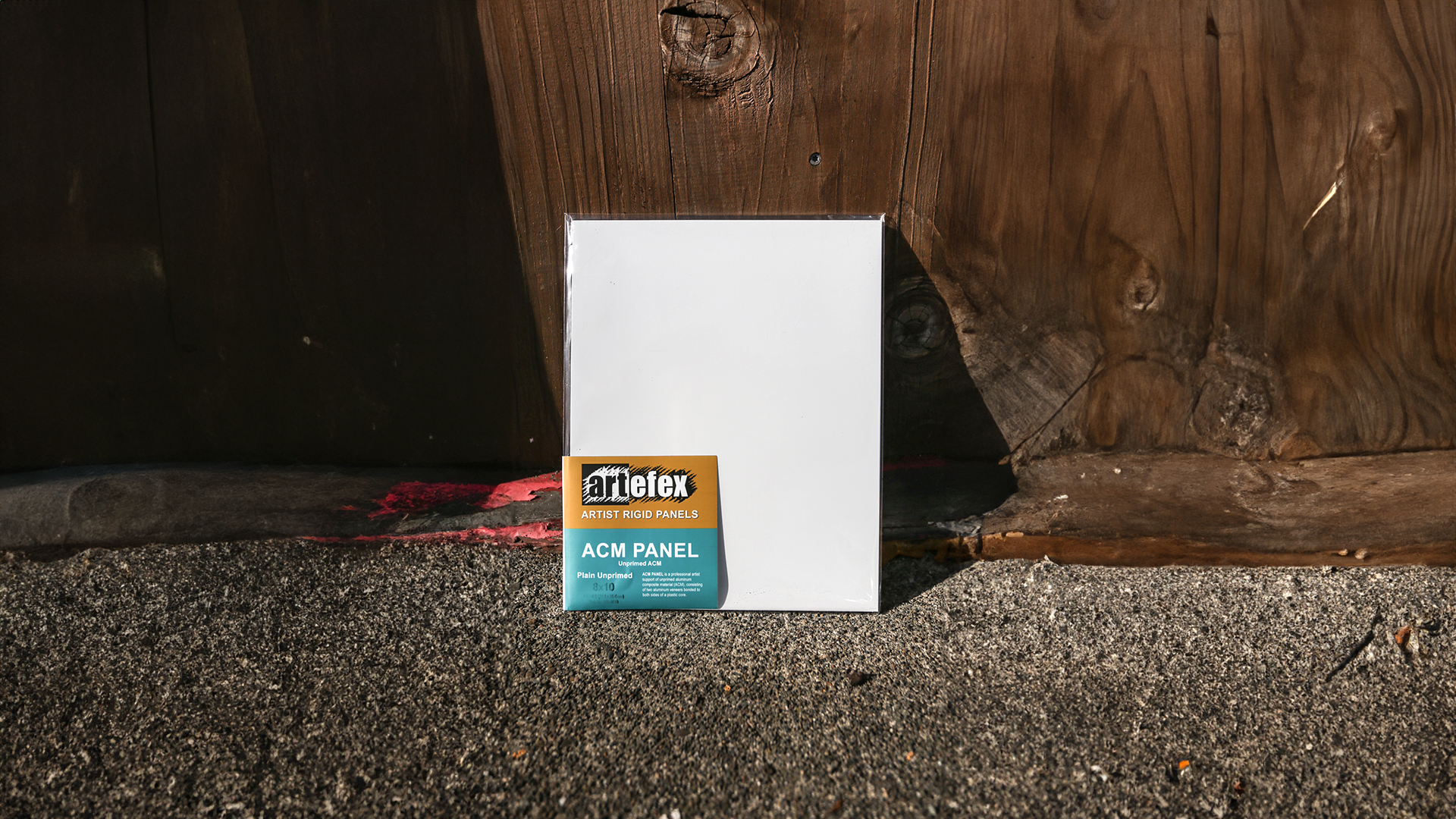
Aluminum composite material (ACM) panels consist of two thin aluminum skins bonded to a polyethylene or honeycomb core. They are the current standard for archival rigid supports: extremely warp-resistant even at large sizes, highly tolerant of studio humidity variations, and lightweight enough that a 24×30″ panel remains manageable in the field. Unlike wood, they contain no organic material that degrades or reacts to moisture over time. Off-gassing is minimal, corrosion resistance is high, and they are far less vulnerable to the humidity swings a working studio sees across seasons than any organic support. Practical guidance on working with this technology, including surface behavior and adhesion considerations, is covered in industry writeups such as a guide to painting on ACM panels.
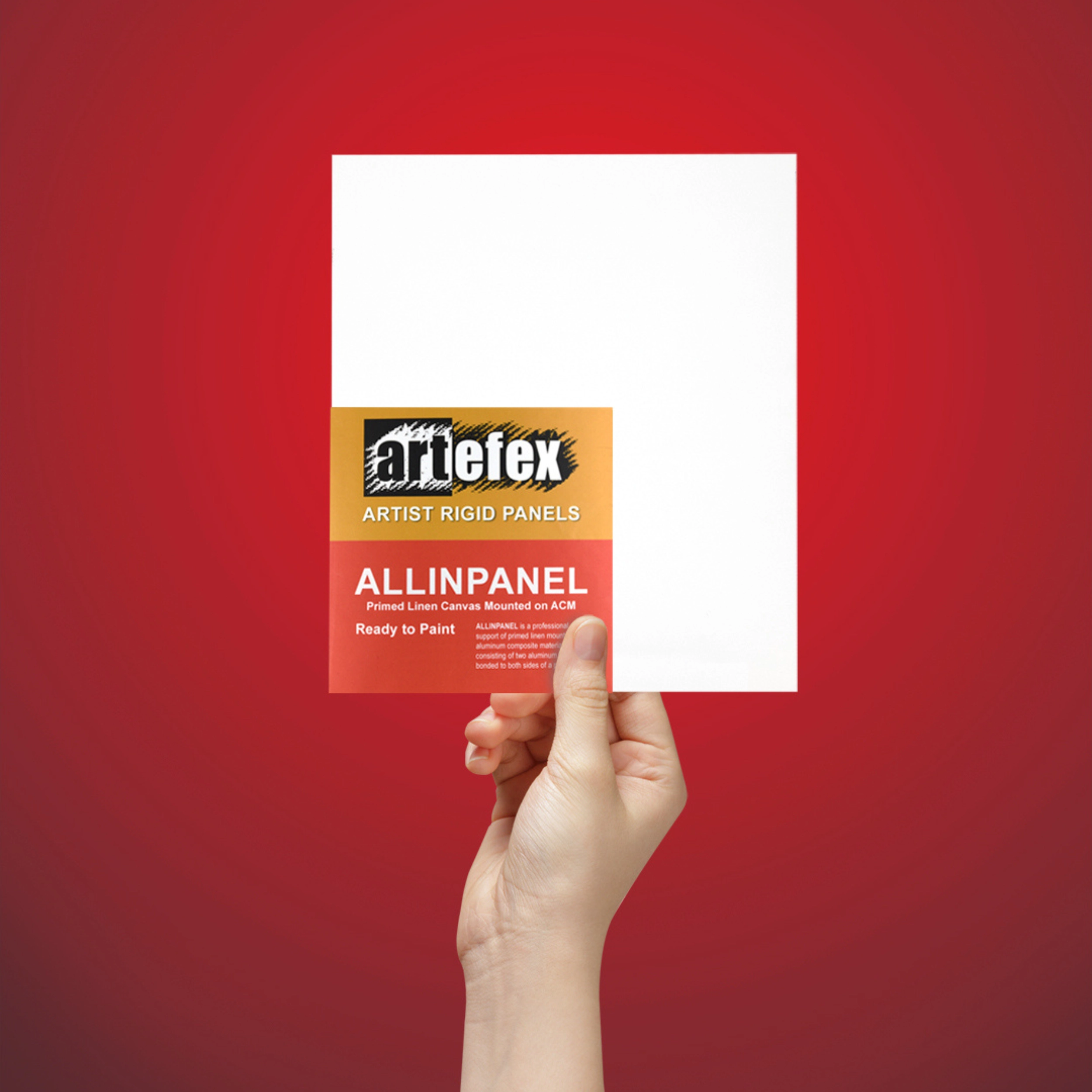
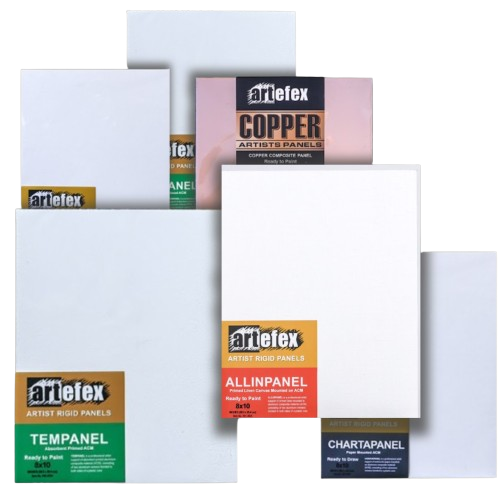
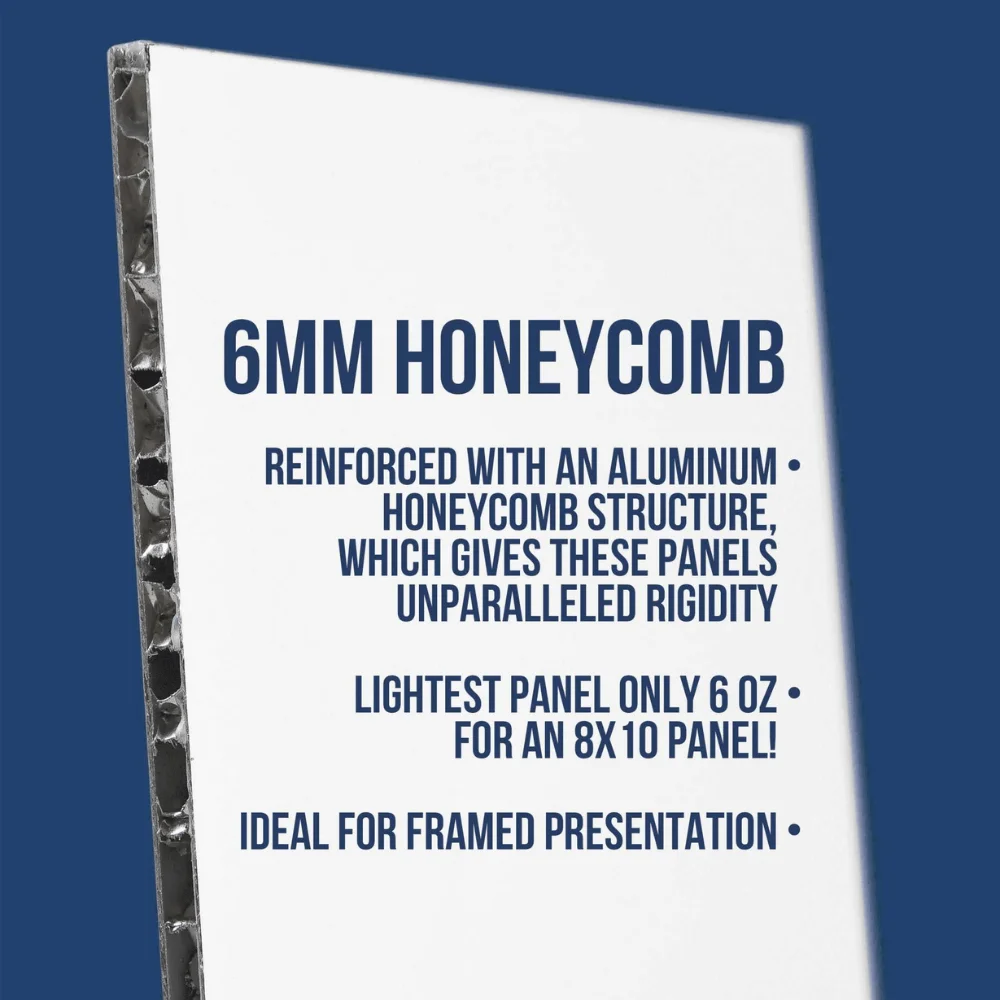
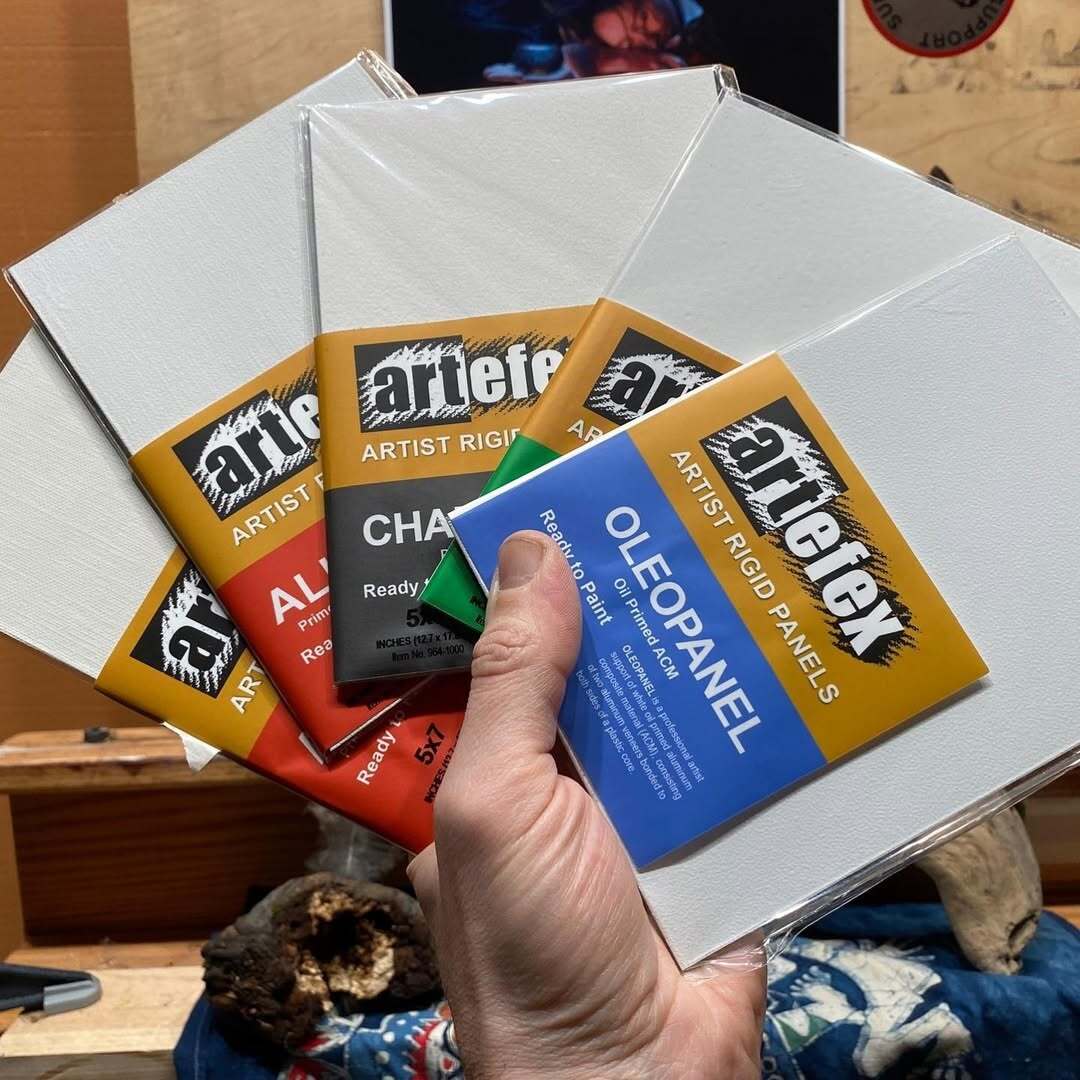
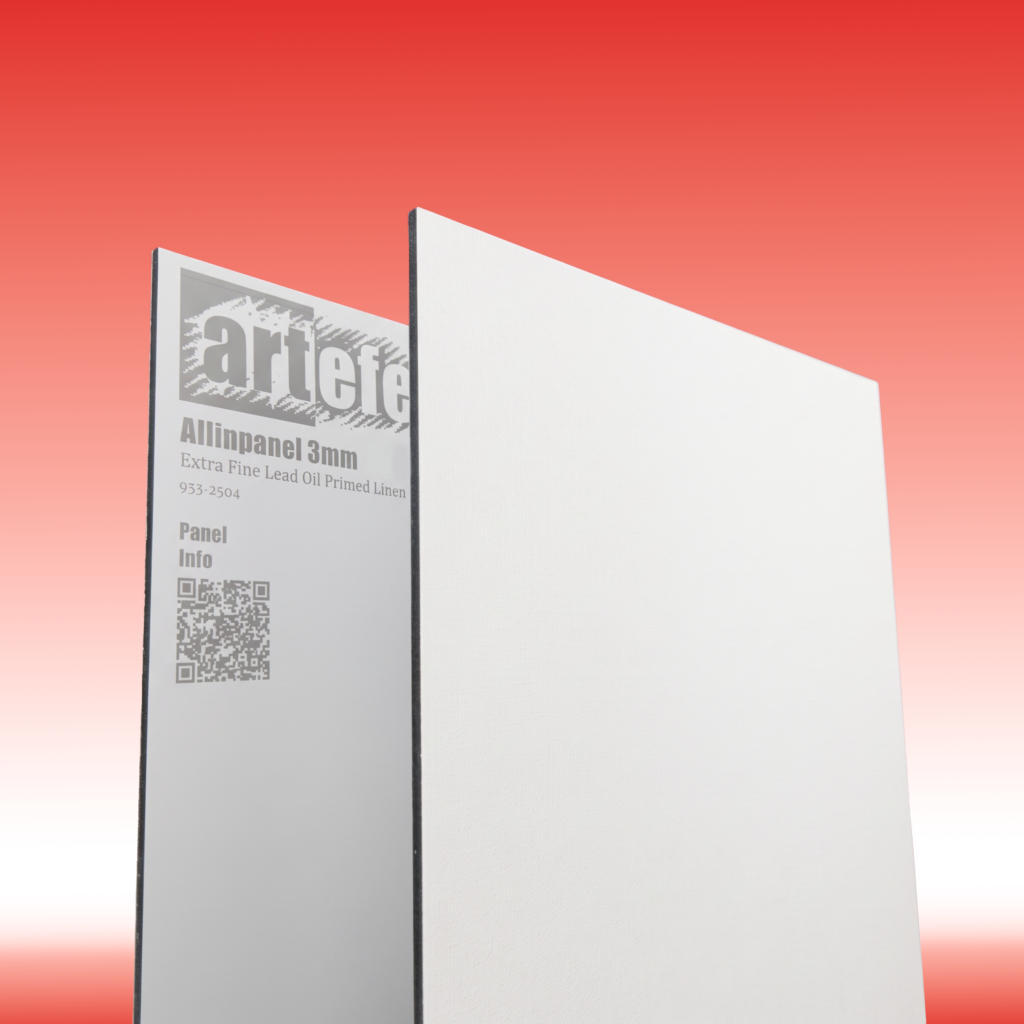
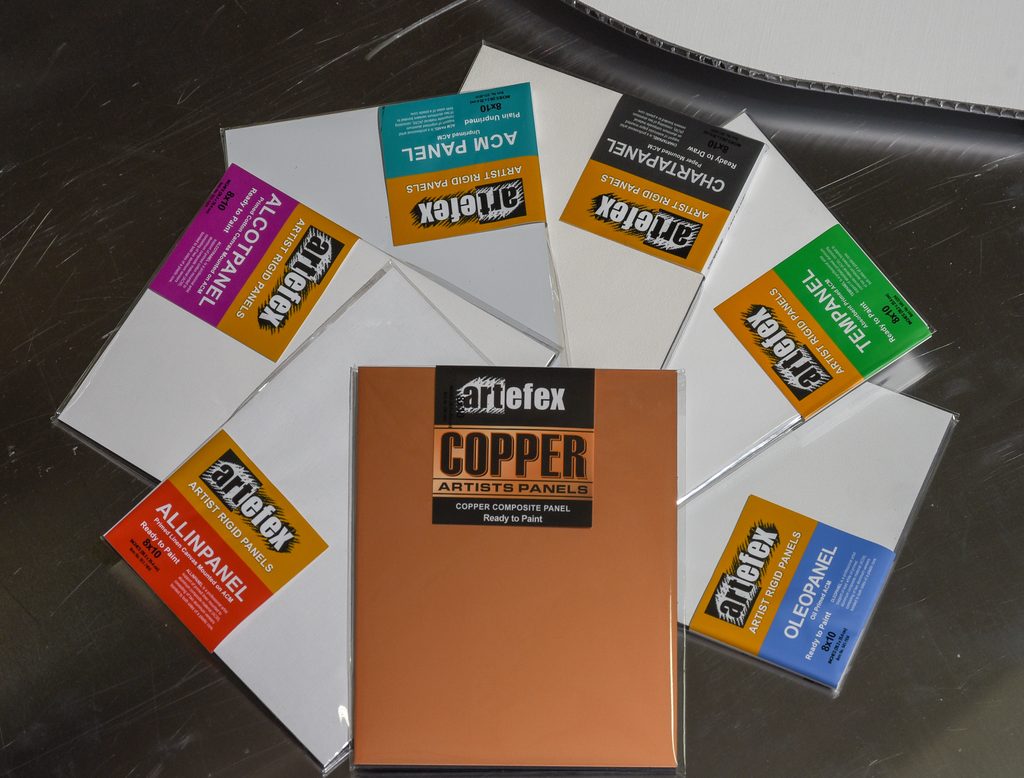
Artefex builds its core panel lineup on ACM. The Allinpanel uses 100% Italian linen adhered with BEVA 371 film, oil-primed and ready to paint. The Chartapanel mounts archival Arches or Strathmore paper on ACM for watercolor and drawing applications. Both 3mm and 6mm honeycomb thickness options are available; the thicker format suits larger studio work where additional depth adds structural integrity without significant weight. For a curated view of popular sizes and configurations, see the Artists’ Favorite Artefex ACM Panels.
Wood, hardboard, and MDF: the practical entry points
Hardboard (tempered masonite) and MDF are the affordable, accessible workhorses of the rigid support category. Hardboard is dense, resists warping well at small-to-medium sizes, and takes gesso cleanly. MDF offers a smoother surface straight out of the box but is genuinely vulnerable to moisture if edges are left unsealed. Once the fiberboard core absorbs water, the damage is permanent and the panel is compromised. Both materials require proper sealing and priming before use, particularly for oils, to prevent support-induced discoloration and moisture uptake.
These are practical starting points for artists exploring rigid artist panels or working within a budget. Unless carefully sealed and primed on all sides, hardboard and MDF carry higher long-term risk than ACM and may not meet museum-grade archival expectations over decades. The organic composition of both materials means they remain subject to environmental pressures that higher-grade rigid art support panels are designed to eliminate. Seal all sides thoroughly, prime correctly, and understand the trade-off you’re making.
Copper panels: optical performance and historical pedigree
Copper has been used as a painting support since the Renaissance for reasons that still hold. It’s dimensionally stable, highly impervious to humidity and temperature variation, and provides a smooth, non-absorbent ground that gives oil paint a clarity and luminosity that neither wood nor standard ACM can match. Paint sits on the surface rather than sinking in, allowing for longer working time, easier blending, and the translucent inner glow that Flemish painters exploited with particular skill. For practical advice on handling and painting on metal supports, see resources about painting on copper.
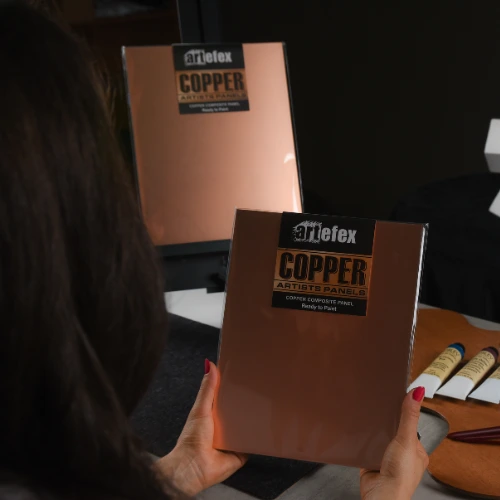
The Artefex Copper Artist Panel takes this further by bonding copper sheet to an ACM core, combining the optical and surface qualities of traditional copper with the structural advantages of composite engineering. It’s a premium choice for painters working in classical realist styles, detailed portraiture, or any application where surface luminosity is part of the visual intent.
One material worth addressing directly in this context is gatorboard, which occasionally appears in the same shopping channels as proper rigid artist boards. Gatorboard is foam-core with a paper veneer. It warps under moisture, carries no archival standing, and is not appropriate for fine art painting. It belongs in the display and mounting category, not the studio.
Choosing Rigid Art Panels for Your Medium
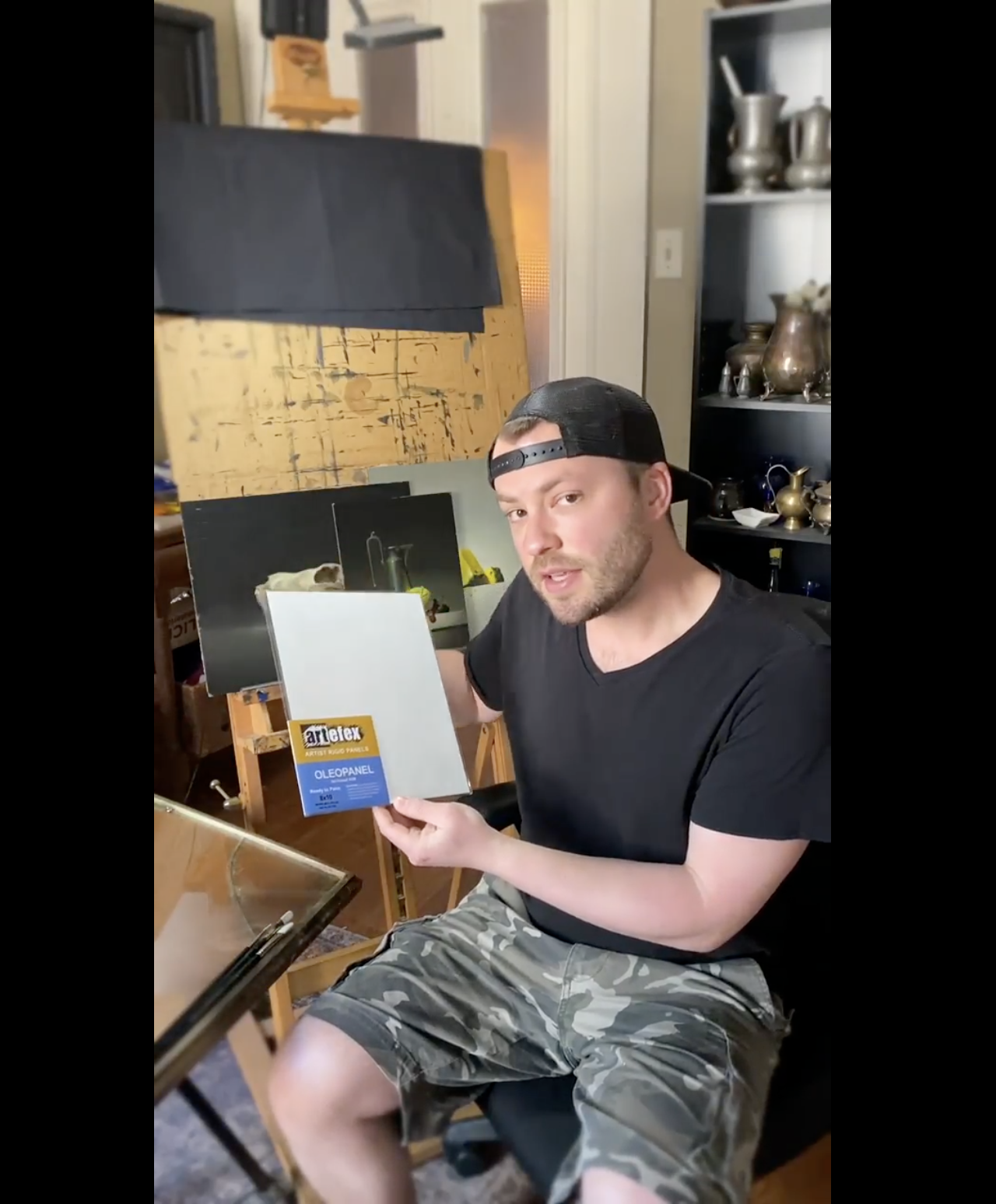
Oil painters working in traditional techniques get the most from pre-primed linen-faced panels. The texture, tooth, and absorbency of oil-primed linen on a rigid ACM backing delivers the handling qualities associated with stretched canvas while removing all of the flex and movement. For painters building thick impasto passages, the rigid backing prevents the cracking that occurs when heavy paint layers dry on a surface that still responds to environmental changes. The Artefex Allinpanel, Italian linen, BEVA 371 adhesive, oil-primed, is engineered for this workflow. The Oleopanel, primed with Rublev lead white, is the choice for painters working with classical grounds who want the handling characteristics of a traditional lead-primed preparation.
Acrylic painters benefit from ACM’s non-absorbent stability in a different way. There’s no flex to cause adhesion failure under heavy-body applications or gel mediums, and the surface accepts acrylic gesso evenly for a consistent working ground. For watercolor, a rigid backing changes the working experience entirely. Paper mounted on ACM, as in the Chartapanel, eliminates the buckling and cockling that forces watercolorists to tape, soak, and tension their sheets before every session. The paper stays flat under wet washes because the backing doesn’t allow it to move. For drawing and dry media, the rigidity simply produces a more precise, responsive working surface than anything on a flexible support. If you focus on acrylic techniques, explore the wider collection of Acrylic panels for formats and surface textures made for that medium.
Priming and Surface Preparation
ACM and copper panels don’t absorb moisture and carry no organic material, so sealing for structural protection is not required. What they do need is a prepared surface with enough grip for paint to adhere. For oils, apply an alkyd or oil-based primer in two to four thin coats to create the appropriate ground. Acrylic gesso works for acrylics applied over ACM, but it’s not the right choice under oil paint without an oil primer on top; the absorbency and flexibility characteristics don’t align with how oil paint cures over the long term.
Wood-based panels require sealing on all sides, front, back, and edges, before any priming is applied. One-sided moisture exposure causes differential expansion and warping. Golden GAC 100 or Gamblin PVA size are the standard sealers before applying oil primer; acrylic gesso is appropriate only for acrylic media. For step-by-step recommendations on how to prepare wood panels and the differences between gesso and oil grounds, see a practical primer on priming wood panels with acrylic gesso or oil grounds.
The case for pre-primed panels is direct: less preparation time, no formulation guesswork, and a guaranteed ground applied under controlled conditions. Many Artefex panels, including the Allinpanel and Oleopanel, ship pre-primed; check individual product pages for details on surface preparation and ground type. For artists who don’t want to spend time prepping panels before every session, buying pre-primed is a workflow decision, not a shortcut.
Choosing the Right Size and Thickness for Your Work
For plein air painting, portability is the primary constraint. Panels in the 9×12″ to 12×16″ range at 3mm thickness hit the right balance of rigidity and weight for field easel use. They’re light enough to carry without adding meaningfully to a pack, stiff enough at that scale to hold without any flex, and the size range aligns with standard plein air formats. For studio work, larger formats from 16×20″ through 30×40″ and beyond benefit from 6mm honeycomb ACM, which adds structural depth without adding significant weight relative to wood alternatives at the same scale.
Thickness and size work as a system. A thin panel of any material will flex at larger dimensions under its own weight unless the core provides adequate support. This is where ACM honeycomb construction earns its place: the honeycomb core distributes load across the panel face in a way that keeps large-format mounted art panels genuinely rigid. Before committing to a full panel purchase, the right approach is to test. Artefex offers trial and sample packs specifically for this reason, allowing you to evaluate surface texture, absorbency, and handling behavior across your actual medium and technique before scaling up.
Making a Smart Purchase
Not everything marketed as a rigid panel is built to archival standards. Before purchasing, check the core material (ACM versus MDF versus foam), whether the ground is oil-primed or acrylic, how linen or canvas is adhered if the panel is linen-faced (BEVA film is the museum standard), and whether the panel is available in the surface texture your work requires. Smooth, eggshell, medium, fine, and extra-fine textures all handle differently, and the right choice depends on your medium and technique.
Artefex panels span a wide range of sizes and formats, from 5×7″ through 24×30″ and beyond, across both 3mm and 6mm thicknesses, with multiple surface preparations and panel lines designed for specific media and techniques. The lineup runs from unprimed ACM for artists who prep their own grounds through fully prepared oil-primed linen panels ready to paint without any additional preparation. Artists making the move from stretched canvas for the first time will find that a trial pack removes the risk of committing to a full set before you know how the surface performs under your hand. Browse the full range and professional references in the Professional Art Panels Guide before making a larger investment.
The Long-Term Case for Rigid Art Panels
Rigid art panels solve a problem that stretched canvas was never designed to handle: the structural stability that serious, archival painting demands over decades. The material you build on determines not just how the surface handles in the studio, but how the painting survives as temperatures change, exhibitions happen, and generations pass. Whether you’re working on ACM, copper, or a linen-faced composite panel, that decision deserves the same deliberate attention as the pigments and mediums you choose.
Start with the material that fits your medium. Confirm the priming is right for your paint type. Match the size and thickness to how and where you work. Artefex panel lines exist because purpose-built rigid art support panels perform better than general-purpose ones, and because the right panel makes a difference that compounds over the life of the work.
Rigid Art Panels: The 2026 Buyer’s Guide for Painters
The Crisis of Traditional Substrates and the Archival Paradigm Shift
The structural foundation of a painting dictates its ultimate longevity, yet the fine art world has historically relied upon materials inherently predisposed to structural failure. Stretched canvas, while culturally romanticized, behaves essentially as a hygroscopic bellows, expanding and contracting continuously with fluctuations in relative humidity. This constant structural movement acts as a continuous mechanical stressor on the dry paint film. Over time, the cured paint layers lose their native elasticity, leading directly to cracking, checking, paint delamination, and severe tension loss. For professional artists whose artwork represents a lifetime investment of time, skill, and livelihood, protecting their creative vision from degradation across generations is paramount.
Recent conservation science has initiated a significant paradigm shift toward rigid painting supports. Material analysis demonstrates that over ninety percent of painting failures—including cracking, warping, and cupping—stem directly from the support surface rather than the pigment or binder chemistry. This realization has led to advanced materials engineering in the art supply sector, notably the transition from heavy, unstable wood panels to engineered metal composites.
For years, the technical discourse was dominated by the search term “art panels,” yet digital market data indicates a massive strategic pivot. Painters and retail buyers search for the term “canvas board” at a rate approximately 8.8 times higher than “art panels,” reflecting a global consumer default to familiar terminology. Consequently, the modern material landscape has evolved to redefine the classic “canvas board” from a cheap, student-grade chipboard product into a highly sophisticated, museum-grade composite support.
To capture this market, modern art supply manufacturers must optimize their presence for search queries such as “How to frame a canvas board” and “How to hang a canvas board”. These terms hold several hundred low-competition monthly searches, representing a critical organic entry point for artists looking to transition from traditional stretchers to high-performance rigid substrates.
The Physics of Warping: Organic vs. Inorganic Supports
Warping is the physical deflection of a support surface caused by uneven expansion and contraction. Organic materials such as wood, hardboard, paper, and cotton are highly porous and hygroscopic. When relative humidity shifts, these materials absorb or release moisture, causing dimensional changes along their fiber directions. If a wooden panel or canvas board is primed only on one side, moisture enters from the unsealed reverse face, creating a differential in tension that forces the board to warp, cup, or twist.
Delamination naturally follows this warping process. As the substrate bends, the water-based adhesive bond between the canvas textile and the support board fails, particularly at the corners and edges, causing the painting surface to peel away entirely. In contrast, inorganic composite substrates—such as Aluminum Composite Material (ACM) and aluminum honeycomb—are completely non-porous and non-hygroscopic. They display zero percent moisture absorption, remaining absolutely flat and dimensionally stable across extreme climate shifts, thereby protecting the delicate, brittle layers of cured oil paint from cyclic mechanical stress.
Furthermore, organic wood substrates present chemical hazards to fine art. Medium-Density Fiberboard (MDF) and tempered hardboards contain synthetic resins, formaldehydes, and organic acids that actively off-gas over time. These volatile compounds attack the canvas fibers and the paint binder, causing accelerated yellowing and support-induced discoloration (SID). Hardboard and Masonite products also display a semi-acidic pH (4 to 5) that leaches into subsequent primer layers.
The physical resilience of inorganic supports is illustrated by extreme environmental survival stories. In documented cases, artwork painted on engineered honeycomb aluminum panels survived hurricane-induced flooding in North Carolina—floating on the water and suffering zero structural warping or material degradation—while traditional stretched canvases in the same studio were completely destroyed. In another instance, panels survived a tornado that tore the roof off an artist’s studio; while the paper works were ruined by rain exposure, the aluminum panels remained flat and structurally intact.
Additionally, fire safety highlights another vulnerability of organic supports. The devastating studio fire of the artist Laura, which destroyed thirty years of work, serves as a solemn reminder of the combustibility of wood and stretched canvas. While no painting is entirely fireproof, aluminum composite substrates do not contribute to fuel load, offering far greater structural survival rates under thermal stress.
Comprehensive Physical and Conservation Substrate Analysis
The following matrix evaluates the primary substrate technologies across critical conservation and logistical parameters to assist painters in selecting the correct support foundation.
| Substrate Material | Moisture Sensitivity | Warp Resistance | Primary Structural Advantage / Lifespan | Primary Conservation Risk / Chemical Stability |
| Chipboard / Cardboard | Extremely High | Extremely Low | Very Short (1–5 Years); suitable only for quick, non-archival practice. | Rapid rot, swelling, mold vulnerability, and total structural collapse under moisture. |
| MDF (Medium-Density Fiberboard) | High | Low | Short-Medium (5–10 Years); provides a uniform, smooth surface. | Heavy weight, extreme acidity (pH 3–5) which degrades paper/canvas, edge swelling, and harmful off-gassing of formaldehyde and organic acids. |
| Tempered Hardboard (Masonite) | Moderate | Moderate | Medium (10–20 Years); manufactured with heat-bound natural lignins. | Semi-acidic pH (4–5) leaches into paint, leading to support-induced discoloration (SID) and early cracking. |
| Baltic Birch Plywood | Moderate-High | Moderate | Medium-Long (20–50 Years); multi-ply construction offers decent strength. | Retains hygroscopic wood properties; prone to climate warping, grain raise, edge delamination, and acid off-gassing. |
| ACM Solid Core (3mm) | Non-Hygroscopic ($0\%$ absorption) | Total Warp Resistance | Centuries (Indestructible); entirely eliminates cyclic environmental stresses. | Displays mild elastic flexibility if scaled beyond $24 \text{ inches}$ without secondary bracing or cradling. |
| ACM Honeycomb (6mm) | Non-Hygroscopic ($0\%$ absorption) | Maximum Rigidity | Centuries (Indestructible); massive weight reduction ($60\%$ lighter than solid ACM) for monumental formats. | Requires custom C-channel edge finishing or framing systems for traditional display. |
| Copper Composite (4mm) | Non-Hygroscopic ($0\%$ absorption) | Total Warp Resistance | $400+$ years historically proven; expands and contracts in perfect thermal harmony with dried oil paint. | High premium cost; limited weight efficiency at giant scales, restricted primarily to thin, translucent glazing. |
Core Substrate Technologies Explained
Solid Core Aluminum Composite Material (3mm ACM)
Solid core ACM represents the modern standard for everyday professional painting supports, particularly for works where both dimensions are under 24 inches. Constructed as a sandwich panel, it features a highly stable polyethylene core thermally bonded between two thin veneers of archival-grade aluminum. This structural design provides high torsional rigidity while remaining exceptionally thin and storage-efficient.
A stack of 100 flat 3mm ACM panels occupies only about 10 inches of studio space, resolving the storage challenges faced by prolific painters working on traditional wooden cradles or stretched canvases. However, when scaled beyond 24 inches, solid 3mm ACM can display minor elastic flexibility under heavy pressure, which is why larger dimensions require a transition to thicker engineered cores.
Lightweight Honeycomb Core (6mm Aluminum Honeycomb)
For monumental studio works, public art commissions, and large-scale murals, solid core materials become less practical due to weight and minor flex. To solve this, materials engineers developed the 6mm aluminum honeycomb panel. There is a common misconception that because a 6mm panel is twice as thick as a 3mm ACM panel, it must be heavier. This is factually incorrect.
By replacing the solid plastic core with an aerospace-grade, hexagonal cellular aluminum network, this technology reduces overall panel weight by sixty percent compared to solid 3mm ACM while dramatically increasing structural stiffness. A full 4×8 foot sheet of 6mm honeycomb weighs only 19 pounds, allowing a single person to lift and transport massive paintings easily. This structural stiffness prevents the panel from sagging, bending, or vibrating during aggressive paint application or transport.
Gallery Panels: The Frameless Presentation Solution
The Gallery Panel is a highly specialized architectural solution designed for painters who prefer the clean, frameless aesthetic of a deep gallery-wrapped stretched canvas. Rather than mounting a panel to a heavy wooden cradle—which introduces hygroscopic instability back into the support—fabricators route the edges of a 3mm ACM sheet, cut out the corners with high-precision CNC equipment, and fold the metal back on itself, riveting the corners to form a hollow, three-dimensional box.
Maximum sizes for gallery panels are limited to 44×92 inches because the panel edges are created by folding the material itself, which requires a non-negotiable 4 inches of wrap-around margin on each side of a standard 48-inch sheet. Available in customizable depths ranging from 3/4 inch to over 3 inches, these lightweight, rigid metal structures can be hung flush against walls using integrated French cleat Z-clip systems, eliminating the need for traditional framing.
Surface Chemistry and Ground Mechanics
The longevity and visual output of an oil painting are heavily influenced by the chemical interaction between the paint layers and the underlying primer ground, a dynamic defined by Pigment Volume Concentration (PVC).
Low PVC Grounds: Lead Oil-Primed Linen vs. Titanium Oil-Primed Linen
Oil-primed grounds are formulated with a high ratio of binder (traditionally oil or alkyd) to pigment, resulting in a low Pigment Volume Concentration. This low porosity makes the ground structurally non-absorbent. When paint is applied, the oil binders remain in the paint film rather than being siphoned away by the ground. This keeps dark values richly saturated, eliminates the chalky “sinking in” phenomenon, and preserves intense color depth.
Lead Oil-Primed Linen: Utilizing basic lead carbonate, lead oil-primed panels (such as the Allinpanel 531, 532, and 533 series) offer a legendary brush drag or “pull” that classical realist and portrait painters prefer. Basic lead carbonate forms a highly durable chemical bond with linseed oil, creating an exceptionally stable, flexible film that resists cracking over centuries.
Titanium Oil-Primed Linen: For contemporary painters seeking a non-toxic alternative, titanium oil-primed panels (such as the Allinpanel 536, 537, and 538 series) provide comparable non-absorbent properties, utilizing titanium dioxide to maximize overall color luminosity and paint workability.
High PVC Grounds: Universally Primed and Acrylic Surfaces
Universal acrylic-primed grounds (such as the Alcotpanel 516 synthetic cotton-polyester or Allinpanel 530 linen series) are formulated with a high Pigment Volume Concentration. The high density of pigment particles creates a highly porous, sponge-like network. This porosity rapidly drains the oil binders out of applied paint layers, accelerating the initial drying time. While this is highly advantageous for fast, multi-layered techniques, plein air painting, or acrylic and mixed-media applications, it can cause dark oil colors to dry matte, requiring painters to periodically “oil out” their surfaces to restore accurate value relationships.
Bagnolo Italian Linen vs. Belgian Linen
A critical design consideration for fabric-wrapped panels is the selection of the linen textile. While Belgian linen (such as Claessens) is historically famous, it frequently contains natural knots, slubs, and irregular irregularities within the weave. While acceptable for expressive landscape painting, these textural disruptions are highly problematic for hyperrealist, portrait, and figurative painters who require absolute surface consistency, particularly in delicate focal areas such as human skin.
To address this, premium archival panels utilize Bagnolo Italian linen from Leonardesco mills. This textile is manufactured using highly controlled, automated spinning processes that eliminate knots and irregularities, providing an exceptionally uniform, flat weave that allows the painter to maintain complete control over detailed brushwork and glazing.
Specialty and Direct-Primed Surfaces
The Olio Panel (Product 411): The Olio panel represents the most popular direct-primed aluminum surface. It skips the canvas textile entirely, applying a proprietary lead alkyd ground directly to the treated ACM face. This creates an elegant “eggshell” finish with subtle structural tooth that grabs the paint brush without being glassy smooth, providing portraitists and hyperrealists with an ultra-flat surface free of textile distraction.
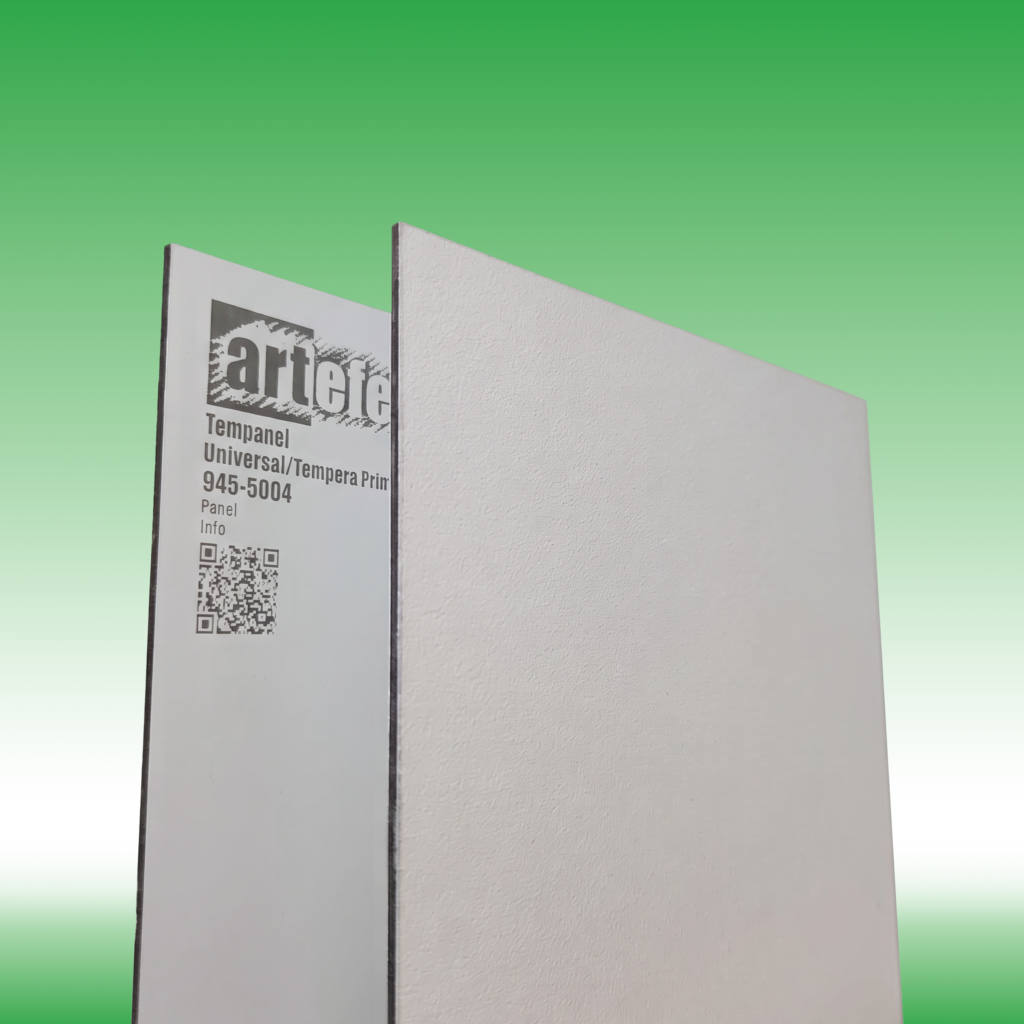
Vinyl Ground (Product 450): Highly favored by egg tempera and mixed-media artists, vinyl ground panels feature a non-gaseous, highly absorbent vinyl-based gesso applied over ACM. This surface mimics the highly absorbent properties of traditional rabbit skin glue gesso while eliminating the cracking risks associated with moisture-sensitive organic binders.
Solid Copper Panels: Archival Profile and Historical Legacy
Solid copper panels carry a proven archival lifespan exceeding 400 years, as demonstrated by the pristine preservation state of late-sixteenth-century Flemish and Italian masterworks. Copper provides a highly unique chemical interaction with oil paint. The copper ions react slowly with the free fatty acids in linseed oil, forming a localized chemical bond at the metal-paint interface. This ionic bond is significantly stronger than the purely mechanical adhesion of paint applied to textured wood or canvas, dramatically reducing the risk of paint flaking over centuries.
Furthermore, copper displays excellent thermal compatibility with cured oil paint. Copper expands and contracts under temperature changes in perfect harmony with the dried paint film, minimizing cyclic thermal tension. However, solid, heavy copper sheets present framing challenges. Modern material engineering resolves this by bonding an ultra-thin veneer of pure copper to a composite backing (such as the Copper Artist Panel, Product 361). This hybrid construction provides the identical chemical advantages of a solid copper painting surface while maintaining a lightweight, flat support that fits easily into standard frames.
The Chemistry of Reversibility: The Conservation Standard
Archival material science dictations mandate that a museum-grade art support should be constructed with reversibility in mind. If a painting on a panel is damaged, conservators must be able to salvage the artwork by separating the canvas from the damaged support.
To meet this standard, professional composite boards do not use permanent, water-soluble PVA glues, which can cause wood rot, support failure, and are difficult to remove without damaging the linen. Instead, the canvas is mounted to the aluminum panel using a specialized conservation-grade adhesive film known as BEVA 371.
BEVA 371 is a non-aqueous, chemically stable, pH-neutral copolymer adhesive developed specifically for fine art restoration. It is entirely heat-activated and reversible. If the aluminum panel experiences catastrophic physical damage, a conservator can heat the panel to approximately 150 ∘F (65 ∘C), softening the BEVA adhesive layer. This allows the painted canvas to be safely delaminated from the metal support and remounted to a new panel with zero structural degradation to the cured oil paint layers.
Practical Sourcing, Pricing, and Volume Optimization
Acquiring engineered rigid art panels requires careful planning, as shipping physical objects—especially large formats—is governed by dimensional weight pricing rather than actual weight.
Strategic Sourcing and Pricing Structures
Standard retail pricing for high-performance panels scales by surface area and core complexity. For example, a standard 24×24 inch panel carries a baseline cost of approximately $153, which drops to $120 under bulk discounting. A large 48×48 inch honeycomb panel is priced at $531, dropping to $420 with standard volume discounts.
To maximize acquisition efficiency, artists should leverage established volume tier discounts:
Three-Panel Threshold: Ordering three or more custom panels triggers an automatic 20% discount on the entire order.
Ten-Panel Threshold: Ordering ten or more panels of similar dimensions (within 30 square inches of each other) unlocks the 20% discount combined with free domestic shipping.
Geographic Consolidation: Because shipping a single large panel costs almost the same as shipping an entire pallet, multiple artists in the same geographic region (such as the East Coast or Midwest) frequently consolidate their orders. By shipping up to 100 panels on a shared freight pallet, shipping costs drop to under $50 per person.
Subscription and Membership Funnels
For active professionals and workshop instructors, subscription programs offer substantial cost relief. The Art Pal Membership ($5 monthly or $50 annually) provides access to the bi-weekly Secret Shop, where overstocked or minor-defect “mystery panels” are sold at up to 50% off retail pricing. For high-volume painters, the Art Friend Membership ($100 annually) adds free standard shipping on all standard sizes, a persistent 5% storewide discount, and 25 free custom back engravings per year.
Conclusions
The transition from traditional stretched canvas to engineered aluminum composite supports is not merely an aesthetic choice; it is a fundamental preservation requirement. By choosing chemically stable, non-hygroscopic substrates such as 3mm ACM and 6mm aluminum honeycomb, painters protect their artwork from the inevitable cracking, warping, and delamination that plagues organic wood and cotton supports.
Whether executing highly detailed portrait work on a direct-primed Olio panel, creating large-scale public murals on lightweight honeycomb, or exploring the luminous, chemical stability of copper composite supports, materials engineering provides the physical insurance policy that ensures a painter’s legacy survives intact for centuries.
Secure the Foundation of Your Next Masterpiece
Don’t let unstable materials introduce the Villain of doubt into your art career. Treat your art with the respect it demands.
Option 1: (Risk-Free)
Completely Free 2×3″ Artefex Panel.
We are so confident in our panels that we will ship a 2×3″ sample to you at zero cost. No product cost, no shipping fees. Throw it in water, step on it, or paint a study. See for yourself why the pros are switching.
Claim Your Free 2×3″ SampleOption 2: The Artefex Trial Pack
3 Panels (5×7″) for only $24.
The fastest way to find your favorite surface. This pack includes three of our 5×7″ professional archival panels. Free shipping included.
Get the $24 Trial PackOption 3: Standard Archival ACM Panels
The professional standard for daily work. Warp-resistant, museum-grade, and ready for your next masterpiece.
Browse Standard PanelsOption 4: For Large Scale Artists (Honeycomb)
Stop wrestling with heavy wood cradles. Get aerospace-grade rigidity at a fraction of the weight. Perfect for monumental works up to 5’ x 10’.
Shop Honeycomb Panels