


What Is a Canvas Board? A Complete Artist’s Guide
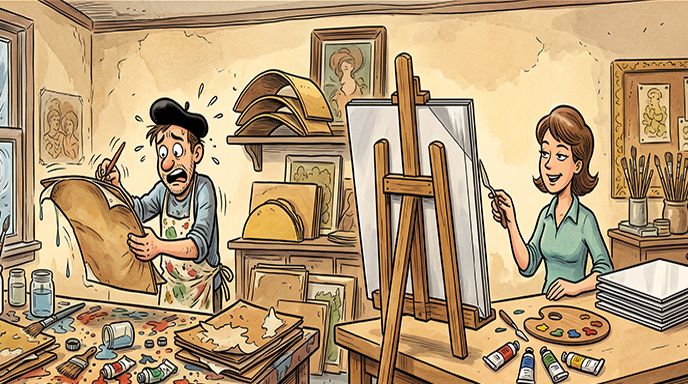
A canvas board is the most accessible rigid painting surface on the market. It’s a piece of canvas, usually cotton, glued to a rigid backing and sold primed and ready to use. That simple construction makes it approachable and affordable. It also means that what’s underneath the canvas determines almost everything: how paint behaves on the surface, how the board holds up over time, and whether the work survives beyond a few years of storage.
For most painters, a canvas board is the natural first step up from sketchbooks and paper. They’re widely available, come in standard frame-ready sizes, and require no preparation before painting. But the gap between a student-grade canvas panel and a professionally built painting surface is wider than the price tag suggests. Understanding the construction helps you choose the right board for where you are right now, and it helps you recognize when you’ve outgrown it.
What separates a basic painting board from an archival-quality surface comes down to the substrate, the adhesive, and the primer. Once you understand those three layers, buying decisions become straightforward and the tradeoffs are clear.
What a canvas board is and how it’s built
Every canvas board is made from two components: a rigid backing substrate and a layer of canvas bonded to its surface. The canvas is almost always cotton duck, occasionally linen, and is adhered using either a water-based adhesive or a heat-activated film, adhesive types vary considerably between manufacturers and price points. How well those two layers hold together over years of humidity changes, temperature swings, and physical handling is the real measure of quality.
The substrate layer: chipboard, masonite, MDF, and plywood compared
Student-grade canvas boards typically use chipboard or cardboard cores. These are cheap and lightweight, which keeps the price low, but chipboard is the least durable substrate available. It absorbs moisture, expands and contracts with humidity, and degrades over time. Boards built on chipboard are fine for practice sessions and throwaway color studies, but they’re a poor choice for finished work.
Masonite (tempered hardboard) is a significant step up. It’s denser, more rigid, and resists warping better than chipboard when properly sealed. A masonite canvas panel also tends to hold its surface more consistently than chipboard across humidity fluctuations. MDF offers a very flat, uniform surface and handles paint well, but it’s moisture-sensitive and heavier than hardboard. Plywood is structurally the strongest of the group, especially in birch or marine-grade form, though quality varies. All of these wood-based substrates require sealing on all sides to perform well long-term. For practical guidance on preparing and priming wood panels, see priming wood panels with acrylic gesso or oil grounds.
How the canvas is bonded to the board
The adhesive layer is often overlooked when buying canvas panels. Some water-based adhesives work initially but may fail when the board absorbs moisture or cycles through temperature changes. When the bond fails, the canvas peels away from the backing and the painting goes with it. Higher-quality panels use more stable adhesives, including archival bonding films used by professional-grade manufacturers, to ensure a permanent connection between the canvas and the support.
Cotton vs. linen canvas boards
Most commercial canvas boards use cotton duck. It’s widely available, economical, and provides adequate tooth for both acrylic and oil work. Cotton canvas boards are the right choice for studies, learning, and exploration. Linen canvas boards are much harder to find in standard formats. Linen has a tighter, more uniform weave, holds paint more consistently, and is simply more durable than cotton. In professional oil painting contexts, linen has long been the preferred surface, which is part of why serious painters eventually move away from standard art panels built on cotton entirely.
Canvas board sizes: matching the board to your subject
Canvas board sizes follow standard framing dimensions, which matters practically. Painting on a non-standard size means custom framing costs. The most commonly sold sizes are 8×10, 9×12, 11×14, 12×16, 16×20, and 18×24 inches (roughly 20×25, 23×30, 28×36, 30×40, 40×50, and 46×61 cm). These aren’t arbitrary numbers, they reflect what actually fits standard easels, frames, and mat cutters.
Best canvas board sizes by subject
For portraits and figure work, 8×10, 11×14, and 16×20 in vertical format are the practical standards. The 4:5 and 3:4 aspect ratios handle head-and-shoulders or half-body compositions well, and these sizes fit frames that are easy to find and affordable. For landscapes and plein air work, 12×16, 16×20, and 18×24 in horizontal orientation give more room for wide compositions, horizon lines, and depth. The 18×24 is worth noting: it’s large enough to develop a complete landscape but still portable enough for field work.
For color studies and practice sessions, 8×10 and 9×12 are the workhorses. They’re economical enough to use freely, fast to cover, and easy to lay out side by side for comparison. If you’re building a practice habit, buying a consistent multi-pack of 8×10 or 9×12 boards lets you compare results without introducing too many surface variables. For newer painters especially, starting in this range keeps the cost of learning low while still producing work that fits standard frames.
Primed vs. unprimed boards: what actually matters for your painting
Most canvas boards sold in art supply stores come acrylic-primed and labeled ready to use. For acrylic painting, that’s accurate. For oil painting, it’s a useful starting point but worth understanding more carefully.
Pre-gessoed panels and when they’re ready to use
Acrylic-primed or “universal” primed panels accept both acrylic and oil paint. The priming acts as a barrier between the paint and the substrate and provides tooth for adhesion. The quality of factory priming varies significantly. Student-grade gessoed panels often have thin, single-coat priming that absorbs the first layers of paint unevenly, pulling color into the ground and making it harder to control tonal values. Adding one or two extra coats of gesso over a factory-primed surface solves this problem quickly. For step-by-step advice on preparing and priming a canvas, see this practical guide to priming artist canvas.
Oil-primed vs. acrylic-primed: a clear distinction
Oil-primed surfaces are designed for oil paint only. Acrylic paint does not bond reliably to an oil ground over the long term. Acrylic-primed surfaces accept both mediums. This distinction is frequently overlooked when buying primed canvas panels without reading the label carefully. If you paint in oil and want the most compatible surface, oil-primed panels are the correct choice from an adhesion and longevity standpoint. A more detailed comparison of oil-primed versus acrylic-primed linen can help you choose the best ground for serious oil painting: see the oil‑primed vs acrylic‑primed linen discussion.
Unprimed boards and the case for DIY priming
Unprimed boards give you complete control over the ground. For oil painters especially, applying a full priming sequence, size coat, followed by multiple gesso layers, over an unprimed board results in better paint behavior, more reliable adhesion, and a surface built to your specific technique. For those working in classical techniques, oil-specific primers such as lead white or alkyd-based grounds are worth considering as a final layer. The extra time is minimal, and the results are noticeably better than thin, factory-applied gesso.
How to prime a canvas board before you paint
Priming a canvas board yourself is straightforward. The process takes a few hours across a day and produces a surface that handles paint significantly better than most factory-primed boards. Use this sequence for both raw boards and factory-primed surfaces you want to improve.
- Start with a clean, dry board. Remove any dust with a dry cloth.
- Apply a thin coat of acrylic size or sealer if the board is raw or very absorbent. Let it dry completely (a few hours minimum).
- Apply the first coat of acrylic gesso thinly and evenly. Let dry 1 to 2 hours.
- Sand lightly with 220 to 400 grit sandpaper for a smoother surface. Wipe away all dust.
- Apply a second thin coat of gesso perpendicular to the first. Let dry 1 to 2 hours.
- Add a third coat for the smoothest possible finish.
- Allow the final coat to cure for at least 24 hours before oil painting.
For acrylic painters, two solid coats of acrylic gesso on a sealed surface are sufficient. For oil painters, the minimum is two full coats over a sealed substrate, with 24 hours of curing before you start. Artists who want a more traditional oil-primed ground should consider whether a canvas board is the right support at all before going through the effort of a full repriming process. If you want a quick checklist of supplies for that process, see our recommendations on essential art supplies for painters.
Canvas boards vs. other rigid painting surfaces: durability and archival quality compared
Canvas boards handle studies, practice work, and short-term projects well. They’re affordable and portable, available at any art supply store, and compatible with both acrylic and oil. For painters who are developing technique, testing color relationships, or working quickly outdoors, a canvas panel is a sensible and practical tool. There’s no reason to use expensive materials for work that’s meant to be exploratory.
The warping problem and what causes it
The structural weakness of most canvas boards is the substrate. Chipboard and MDF absorb moisture and respond to humidity changes by expanding and contracting. Over time, this movement warps the board and buckles the canvas. Even masonite-backed boards are vulnerable unless all edges and the back are fully sealed. Delamination often follows warping: the adhesive bond between canvas and backing starts to fail at the edges and corners, and eventually the canvas separates from the board entirely.
This isn’t a worst-case scenario, it’s a predictable outcome for wood-based and cardboard-based supports stored in environments with normal humidity variation. Canvas boards were designed around convenience and affordability, not archival longevity. That’s not a criticism; it’s just accurate.
Why professional artists upgrade to purpose-built rigid panels
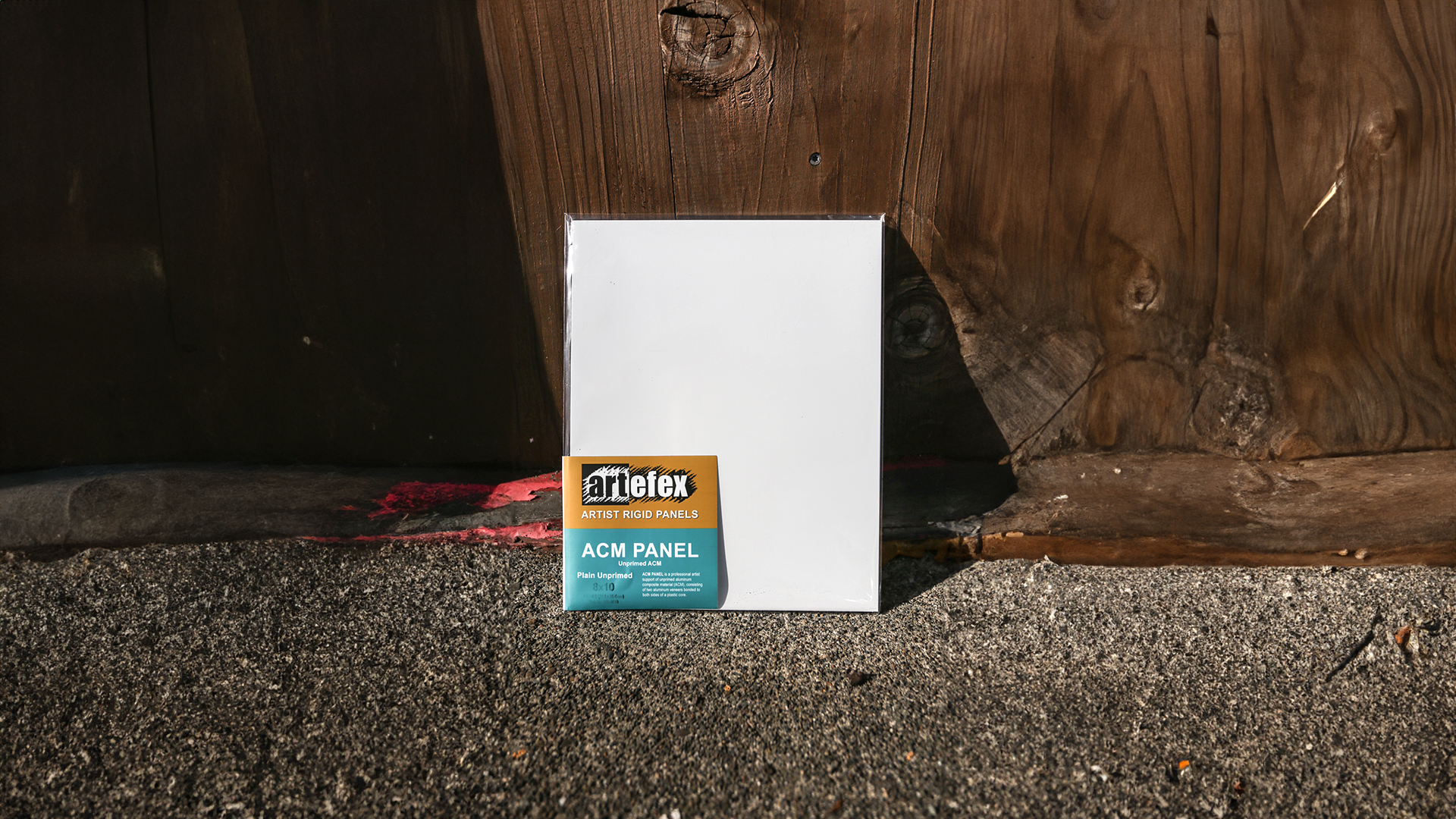
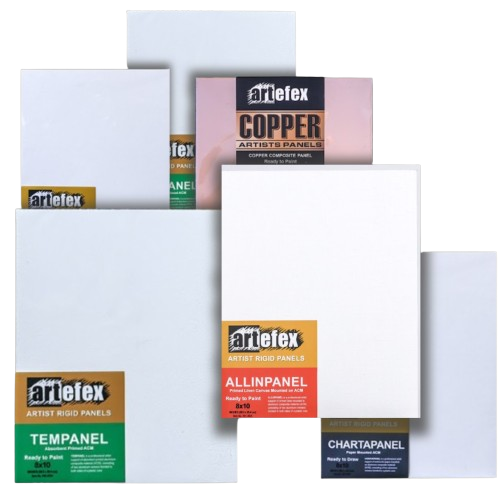
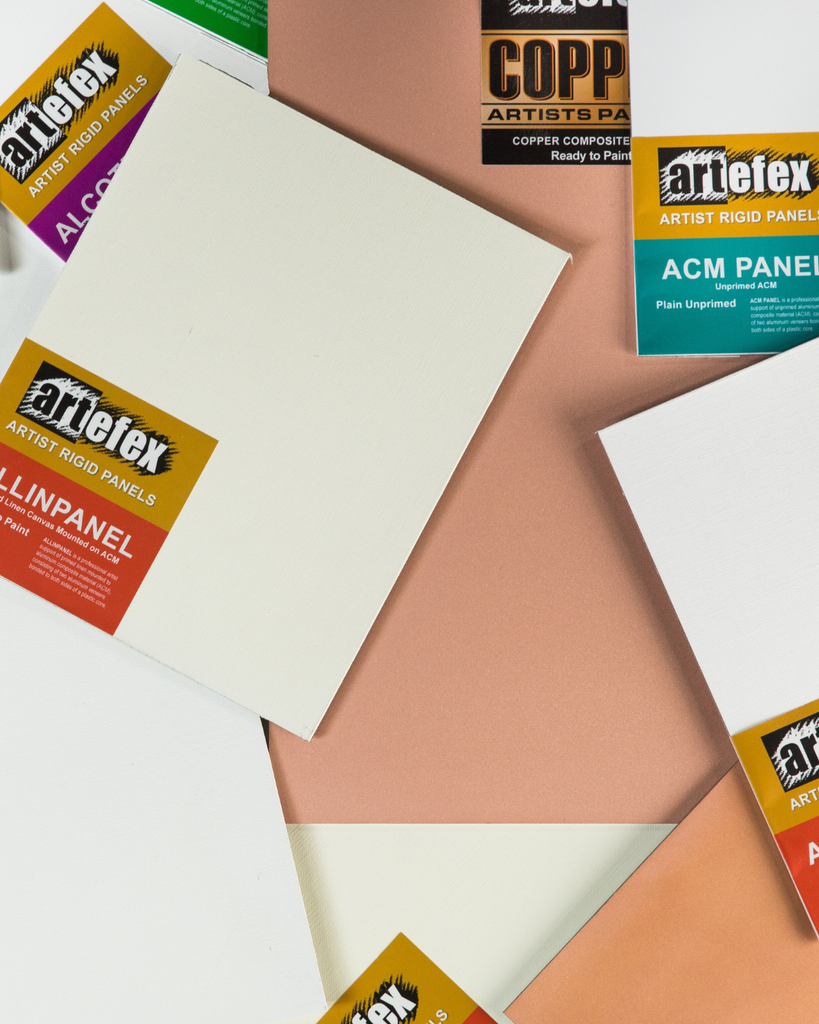
That’s the problem Artefex set out to solve. When archival stability becomes the priority, artists move toward supports engineered specifically for permanence. Artefex builds its panels on aluminum composite material (ACM): a substrate that is dimensionally stable, warp-resistant, and far less prone to expansion, contraction, or moisture absorption than wood-based alternatives. The canvas or linen surface stays exactly where it was bonded, for decades. Read more about why professional artists are abandoning traditional canvas for the Artefex “Master Surface”.
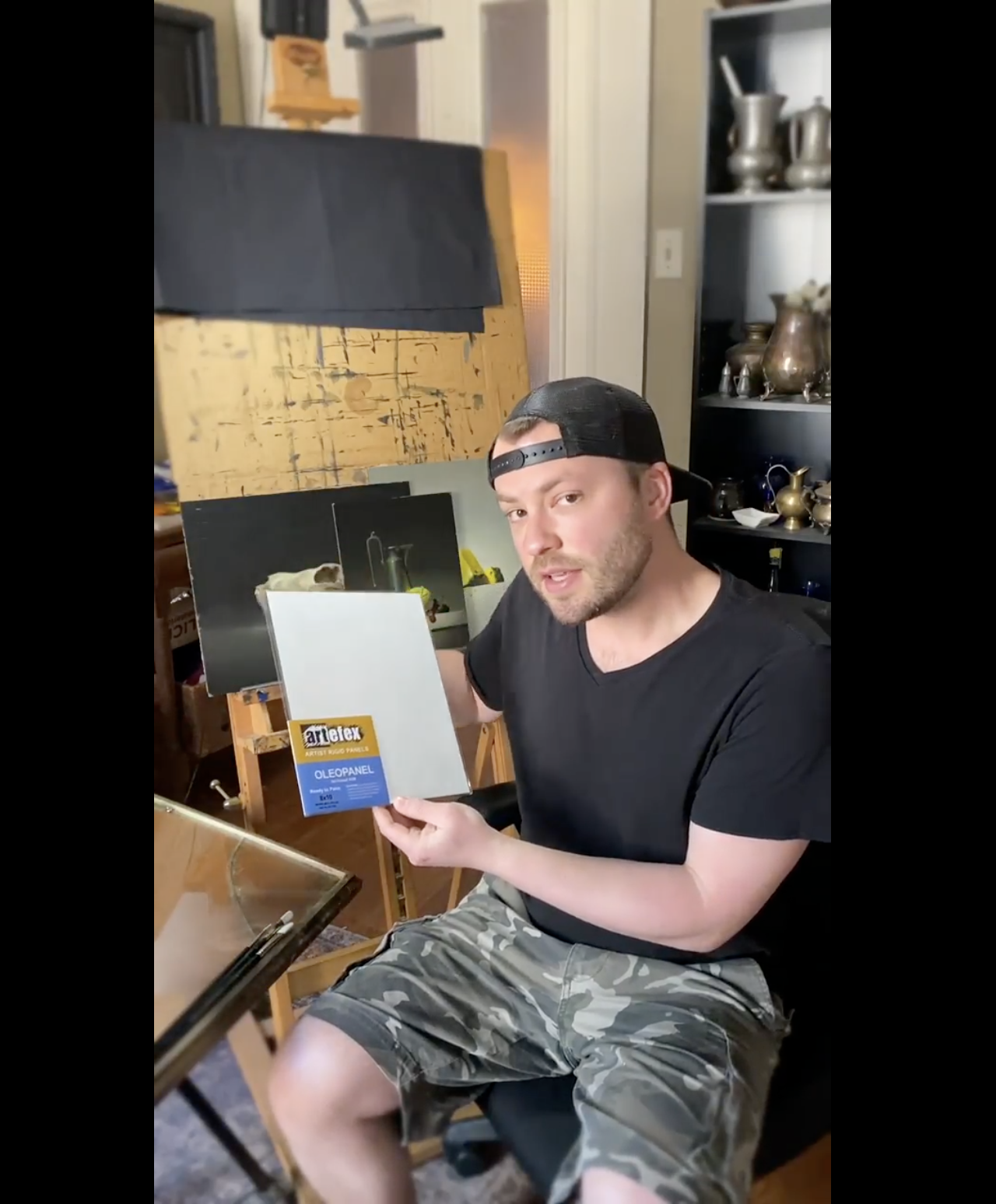
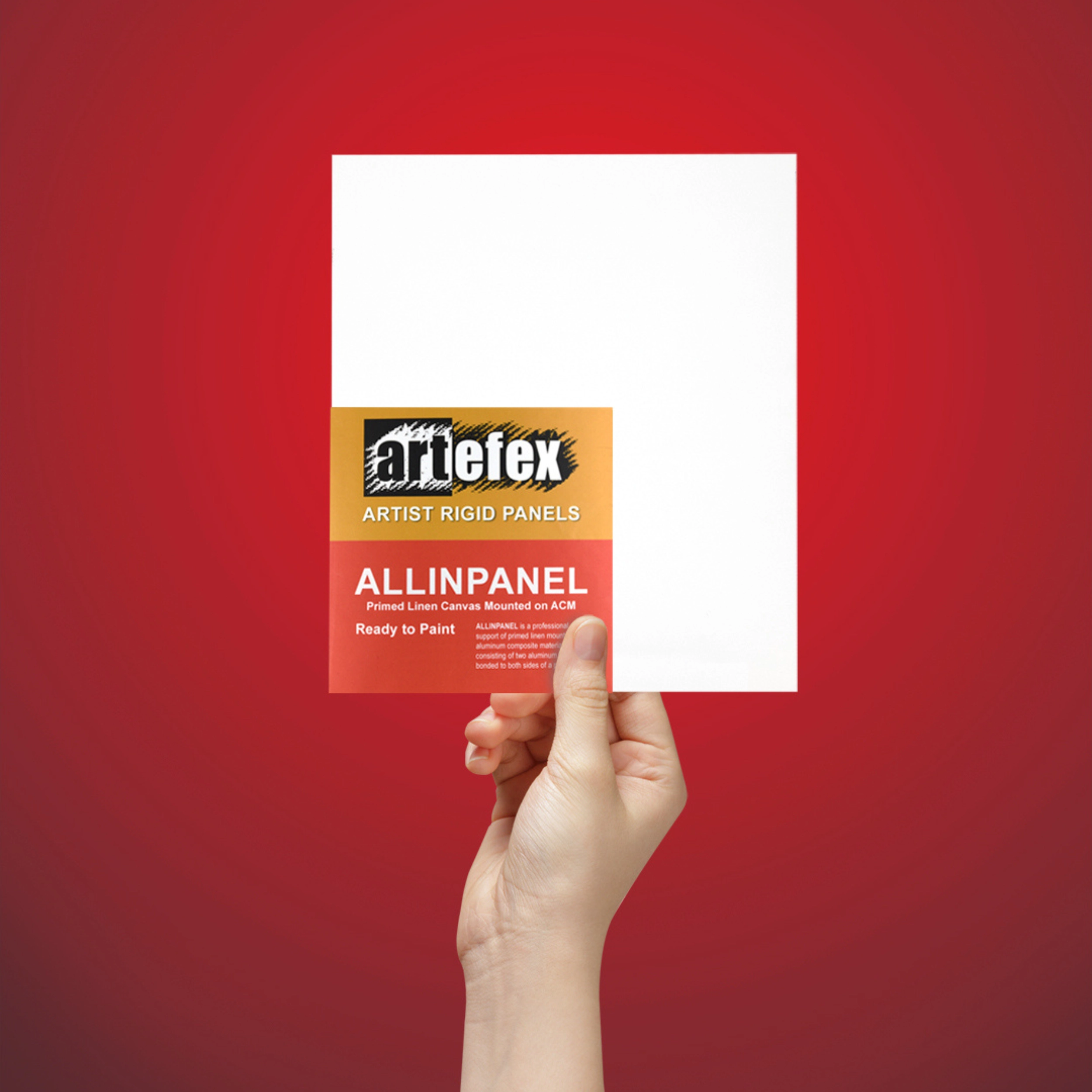
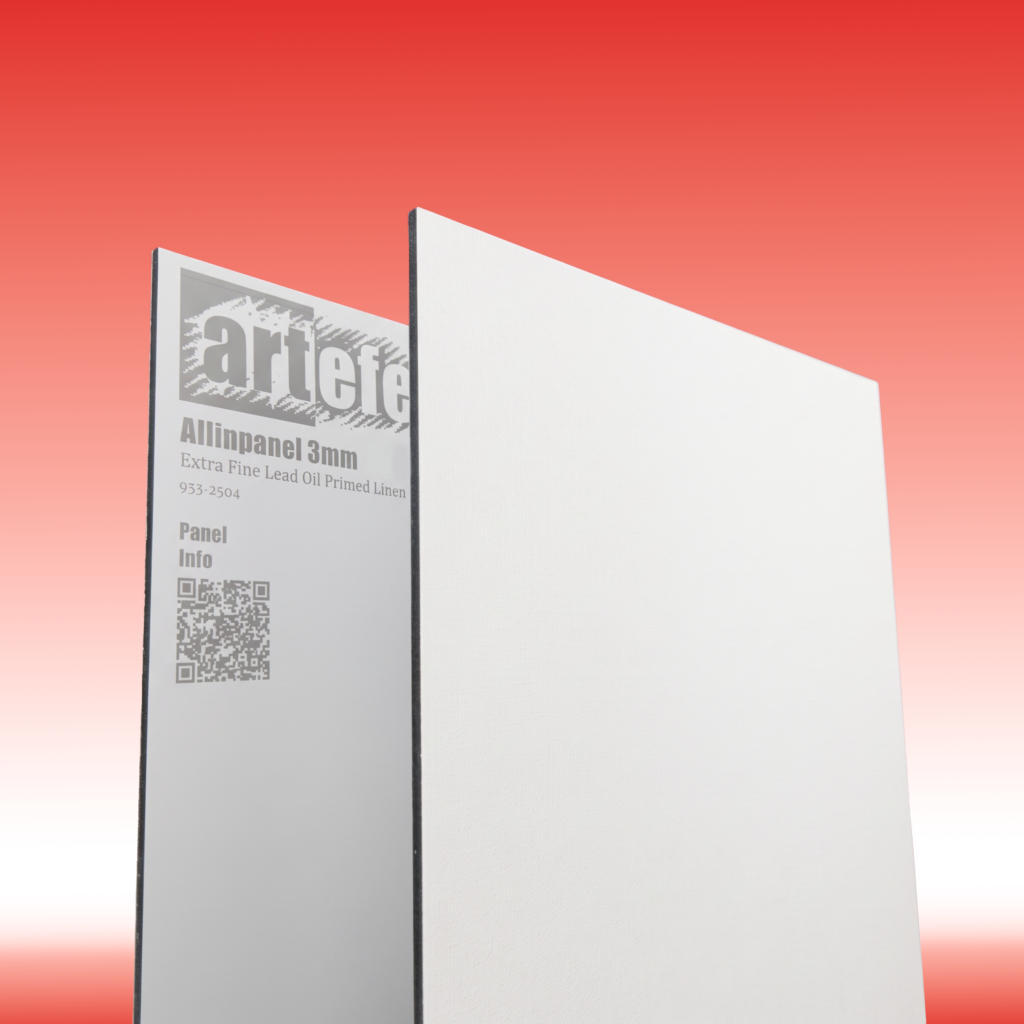
The Allinpanel line uses 100% Italian oil-primed linen on ACM, giving oil painters a traditional linen surface with none of the structural risk of a wood or cardboard-backed board. The Oleopanel uses Rublev lead white oil priming for painters working in classical techniques. These aren’t incremental improvements on a canvas board, they’re a different category of product built around a different set of priorities. Many painters make this transition as their work develops and the surfaces they paint on start to matter as much as the paint itself, a change I discuss personally in changing painting surfaces can be tough: here is why it was easy for me.
Choosing the right surface for where you are in your practice
For students and developing painters, cotton canvas boards in the 8×10 to 12×16 range are the correct starting point. They’re low enough in cost to encourage real experimentation, compatible with both acrylic and oil, and available in any art supply store. Buy a consistent surface in quantity so you can compare results across sessions without changing too many variables at once.
For working professionals and archival-minded painters, a canvas board is a compromise on finished work. The substrate carries structural risk over time, and the factory priming rarely meets the standard that serious oil painting demands. If you’re building a body of work for exhibition, commission, or sale, to collectors who expect work to last, the support needs to match that intention. Purpose-built rigid panels on ACM substrates give you the stability and longevity that canvas boards can’t provide. Testing a sample pack before committing to a full system is the practical way to find the surface that fits your technique and working method.
The right surface starts with understanding what’s underneath
A canvas board is a well-designed, genuinely useful surface for a specific range of purposes. Understanding the substrate, the primer type, and the size that fits your subject gives you real control over your results from the first session. The priming steps are simple and worth doing even on a factory-primed board.
When archival stability, surface quality, and long-term durability become the standard you’re working to, the conversation shifts to surfaces built around those values from the start. A primed canvas panel serves a student well; a purpose-built rigid panel on ACM serves the work that needs to last. For a practical primer on archival care and protecting your work for the future, consider this guide to archival-quality care and protecting your art. Knowing which one you need gets easier once you understand what’s underneath the paint.
What Is a Canvas Board? A Complete Artist’s Guide to Rigid Painting Surfaces
A canvas board is the most accessible rigid painting surface on the market. It’s a piece of canvas, usually cotton, glued to a rigid backing and sold primed and ready to use. That simple construction makes it approachable and affordable. It also means that what’s underneath the canvas determines almost everything: how paint behaves on the surface, how the board holds up over time, and whether the work survives beyond a few years of storage.
For most painters, a canvas board is the natural first step up from sketchbooks and paper. They’re widely available, come in standard frame-ready sizes, and require no preparation before painting. But the gap between a student-grade canvas panel and a professionally built painting surface is wider than the price tag suggests. Understanding the construction helps you choose the right board for where you are right now, and it helps you recognize when you’ve outgrown it.
What separates a basic painting board from an archival-quality surface comes down to three fundamental layers: the substrate, the adhesive, and the primer. Once you understand how these layers interact, buying decisions become straightforward and the tradeoffs are completely clear.
What a Canvas Board Is and How It’s Built
Every canvas board is made from two primary components: a rigid backing substrate and a layer of canvas bonded to its surface. The canvas is almost always cotton duck, occasionally linen, and is adhered using either a water-based adhesive or a heat-activated film. Adhesive types vary considerably between manufacturers and price points. How well those two layers hold together over years of humidity changes, temperature swings, and physical handling is the real measure of quality.
The Substrate Layer: Chipboard, Masonite, MDF, and Plywood Compared
Student-grade canvas boards typically use chipboard or cardboard cores. These are cheap and lightweight, which keeps the price low, but chipboard is the least durable substrate available. It absorbs moisture, expands and contracts with humidity, and degrades rapidly over time. Boards built on chipboard are fine for practice sessions and throwaway color studies, but they’re a poor choice for finished, sellable work.
- Masonite (Tempered Hardboard): A significant step up. It’s denser, more rigid, and resists warping better than chipboard when properly sealed. A masonite canvas panel also tends to hold its surface more consistently across humidity fluctuations.
- MDF (Medium-Density Fiberboard): Offers a very flat, uniform surface and handles paint well, but it remains highly moisture-sensitive and noticeably heavier than hardboard.
- Plywood: Structurally the strongest of the wood-based group, especially in birch or marine-grade form, though quality varies wildly.
All of these wood-based substrates require meticulous sealing on all sides to perform well long-term. In fact, data-driven accelerated age testing proves that traditional wood plywood supports are 27 times more likely to warp over time compared to modern engineered aluminum composite substrates. For practical guidance on preparing and priming wood panels, see our guide on priming wood panels with acrylic gesso or oil grounds.
How the Canvas is Bonded to the Board
The adhesive layer is often completely overlooked when buying canvas panels. Many standard manufacturers use cheap, water-based adhesives that work initially but fail when the board absorbs environmental moisture or cycles through seasonal temperature changes. When the bond fails, the canvas peels away from the backing—and your painting goes right along with it.
Higher-quality, professional-grade panels use ultra-stable, archival bonding films to ensure a permanent connection between the canvas and the support. Leading conservation-tier processes utilize specialized, heat-activated, fully archival pH-neutral adhesives (such as Beva film) applied in an industrial heat-fusion press. This chemistry ensures that the textile and the rigid backing function as an interconnected, balanced unit. Best of all, this system remains fully reversible: if an artwork suffers severe surface damage decades from now, a conservator can safely reheat the support to 150°F–160°F, delaminate the canvas cleanly, and safely transfer the artwork to a fresh foundation.
Cotton vs. Linen Canvas Boards
Most commercial canvas boards use cotton duck. It’s widely available, economical, and provides adequate tooth for both acrylic and oil work. Cotton canvas boards are the right choice for quick studies, learning, and everyday exploration.
Linen canvas boards, on the other hand, are much harder to find in standard formats. Linen has a tighter, more uniform, knot-free weave, holds paint more consistently, and is simply far more durable than cotton. In professional oil painting contexts, linen has long been the preferred surface, which is part of why serious painters eventually move away from standard art panels built on cotton entirely.
Canvas Board Sizes: Matching the Board to Your Subject
Canvas board sizes follow standard framing dimensions, which matters immensely for your budget. Painting on a non-standard size means you are signing up for expensive custom framing costs. The most commonly sold sizes reflect what actually fits standard easels, commercial frames, and mat cutters.
Best Canvas Board Sizes by Subject
- Portraits and Figure Work: 8×10, 11×14, and 16×20 inches in a vertical format are the practical standards. The 4:5 and 3:4 aspect ratios handle head-and-shoulders or half-body compositions beautifully, and these sizes fit frames that are highly affordable and easy to find.
- Landscapes and Plein Air Work: 12×16, 16×20, and 18×24 inches in horizontal orientation give more room for wide compositions, horizon lines, and depth. The 18×24 size is particularly worth noting: it’s large enough to develop a complete, high-impact landscape but still portable enough for field work.
- Color Studies and Practice Sessions: 8×10 and 9×12 inches are the absolute workhorses of the studio. They’re economical enough to use freely, fast to cover, and easy to lay out side by side for comparison.
If you’re building a daily practice habit, buying a consistent multi-pack of smaller boards lets you compare results without introducing too many surface variables. For newer painters especially, starting in this range keeps the cost of learning low while still producing work that fits standard frames. If you are looking to step up your practice with premium surfaces, you can explore our collection of professional substrates or kickstart your upgrade through our [/freepanel/](Free Panel Experience) form.
| Substrate Format Type | Optimal Size Range | Key Material Advantage | Best Application Context |
|---|---|---|---|
| Standard 3mm ACM | Up to 24″ | Thin, highly space-efficient, lightweight, completely warp-free | Small portraits, fast studies, limited studio storage spaces |
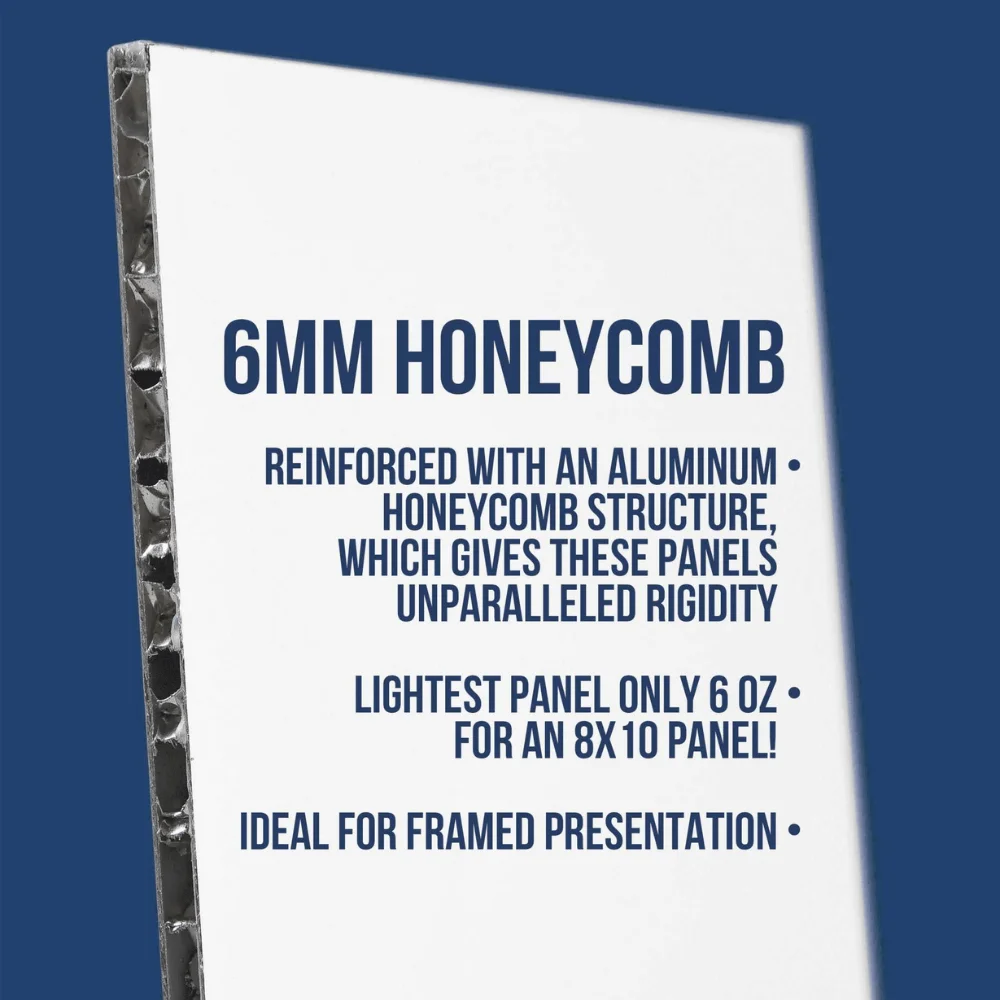
| 6mm Honeycomb Core | 24″ x 36″ up to 60″ x 120″ | 60% lighter weight than solid cores, massive structural rigidity, zero flex | Large studio commissions, heavy mixed-media, expansive murals |
| Gallery Wrapped Panel | Up to 44″ x 92″ | Folded all-metal edge profile, eliminates custom framing costs entirely | Frame-free gallery exhibitions, modern float presentations |
Primed vs. Unprimed Boards: What Matters for Your Paint
Most canvas boards sold in big-box art supply stores come acrylic-primed and labeled “ready to use.” For acrylic painting, that’s completely accurate. For oil painting, it’s a useful starting point but worth understanding more carefully.
Pre-Gessoed Panels and When They’re Ready to Use
Acrylic-primed or “universal” primed panels accept both acrylic and oil paint. The priming acts as a barrier between the paint and the substrate and provides tooth for adhesion. However, the quality of factory priming varies significantly. Student-grade gessoed panels often have thin, single-coat priming that drops up to 25% in total volume as water evaporates during curing. This creates an aggressively porous, thirsty surface that sucks the oil vehicle right out of your paint film, causing your deep dark colors, umbers, and rich values to “sink in” and turn completely matte overnight.
Adding one or two extra coats of high-quality gesso over a factory-primed surface can help solve this problem. For step-by-step advice on preparing a raw surface, see our practical guide to priming artist canvas.
Oil-Primed vs. Acrylic-Primed: A Clear Distinction
- Oil-Primed Surfaces: Designed for oil paint only. Acrylic paint does not bond reliably to an oil ground over the long term and will eventually delaminate. If you paint exclusively in oil and want the most compatible, non-absorbent, buttery surface, oil-primed panels are the correct choice from an adhesion and longevity standpoint.
- Acrylic-Primed Surfaces: Accept both mediums, making them highly versatile for mixed-media artists but inherently more absorbent.
This distinction is frequently overlooked when buying panels without reading the label carefully. A more detailed breakdown can help you choose the best ground for serious work: see our comprehensive oil‑primed vs acrylic‑primed linen discussion.
Unprimed Boards and the Case for DIY Priming
Unprimed boards give you complete control over the ground. For oil painters working in classical techniques, applying a full priming sequence—a sizing coat followed by multiple specialized oil-specific primers like lead white or alkyd-based grounds—results in vastly superior paint behavior, more reliable adhesion, and a surface perfectly tuned to your specific technique. The extra time invested yields a surface that feels noticeably better under the brush than thin, factory-applied acrylic gesso.
How to Prime a Canvas Board Before You Paint
Priming a canvas board yourself is straightforward. The process takes a few hours across a single day and produces a surface that handles paint significantly better than most factory-primed student boards. Use this sequence for both raw boards and factory-primed surfaces you want to improve:
- Clean the Substrate: Start with a clean, dry board. Remove any manufacturing dust or lint with a dry microfiber cloth.
- Apply Size: Apply a thin coat of acrylic size or sealer if the board is raw or highly absorbent. Let it dry completely (a few hours minimum).
- First Coat of Gesso: Apply the first coat of acrylic gesso thinly and evenly. Let dry 1 to 2 hours.
- Sand Lightly: Sand lightly with 220 to 400 grit sandpaper for a smoother surface. Wipe away all residual dust.
- Second Coat of Gesso: Apply a second thin coat of gesso perpendicular to the direction of your first coat. Let dry 1 to 2 hours.
- Final Perfecting Coat: Add a third coat if you desire the smoothest possible finish for fine detail work.
- Cure Completely: Allow the final coat to cure for at least 24 hours before you begin oil painting.
For acrylic painters, two solid coats of acrylic gesso on a sealed surface are completely sufficient. For oil painters, the minimum is two full coats over a sealed substrate, with a full day of curing before your brush hits the panel. If you want a quick checklist of supplies for that process, see our recommendations on essential art supplies for painters.
Canvas Boards vs. Other Rigid Painting Surfaces: Durability and Archival Quality Compared
Canvas boards handle studies, practice work, and short-term projects exceptionally well. They’re affordable, portable, and highly compatible with both acrylic and oil. For painters who are developing technique, testing color relationships, or working quickly outdoors, a standard canvas panel is a sensible and practical tool. There’s no reason to use expensive museum materials for work that’s meant to be purely exploratory.
The Warping Problem and What Causes It
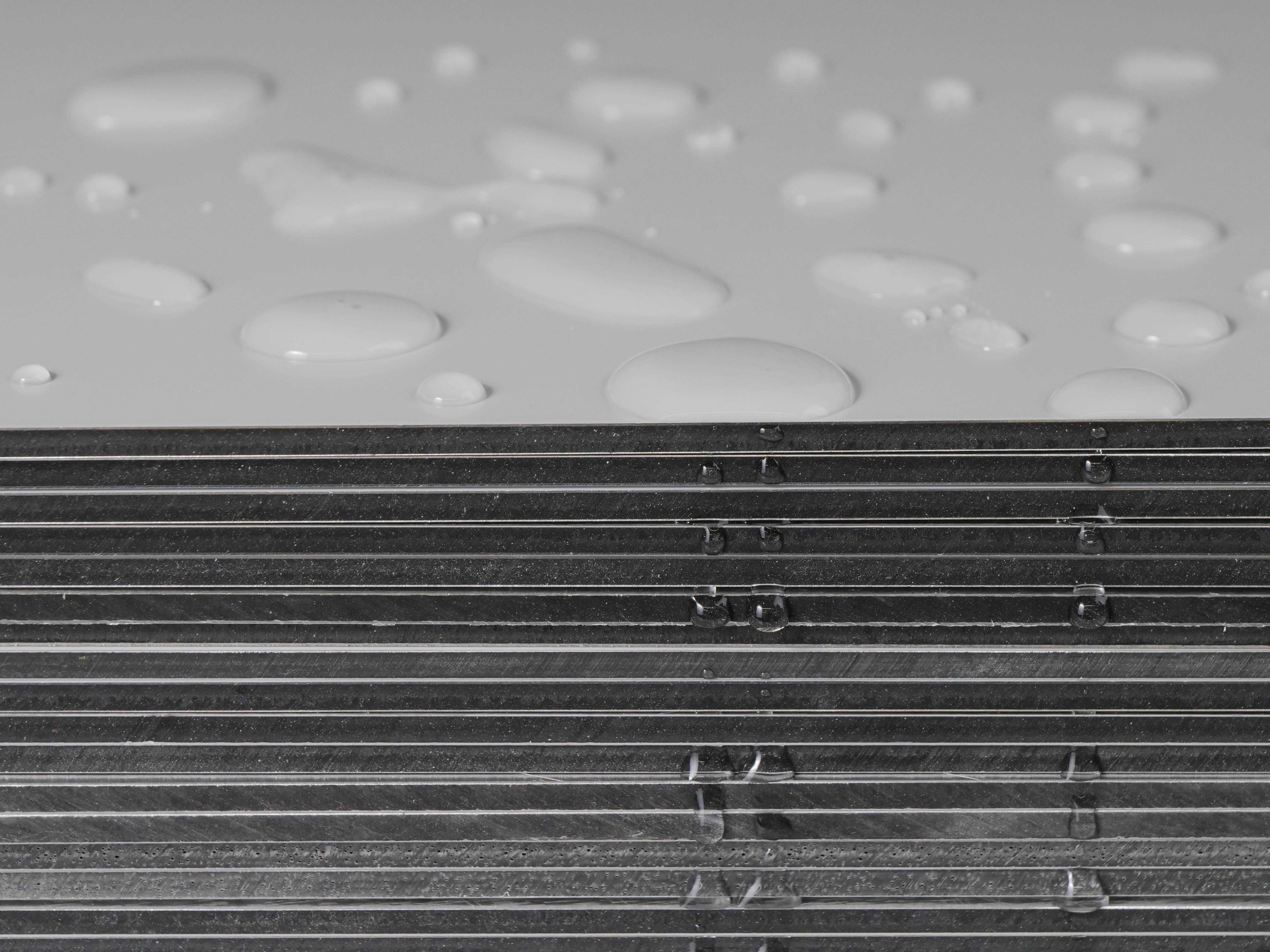
The fatal structural flaw of most traditional canvas boards is the organic nature of the substrate. Chipboard, MDF, and plywood absorb atmospheric moisture and respond to environmental changes by expanding and contracting. Over time, this constant mechanical movement warps the board and buckles the canvas. Even masonite-backed boards are vulnerable unless all edges and the back are fully sealed.
Delamination almost always follows warping: the adhesive bond between the canvas and backing starts to fail at the edges and corners, and eventually, the canvas separates from the board entirely. This isn’t a rare, worst-case scenario; it’s a highly predictable outcome for wood- and cardboard-based supports stored in environments with normal humidity variations. Canvas boards were designed around convenience and affordability, not archival longevity.
[Moisture Absorption] ➔ [Substrate Expansion/Contraction] ➔ [Panel Warping & Bowing] ➔ [Adhesive Delamination] ➔ [Paint Film Stress Cracking]
Why Professional Artists Upgrade to Purpose-Built Rigid Panels
That is precisely the structural problem Artefex set out to solve. When archival stability and a professional legacy become your top priorities, you must move toward supports engineered specifically for permanence.
Artefex builds its professional panels on Aluminum Composite Material (ACM): a modern substrate that is completely dimensionally stable, warp-resistant, and entirely immune to moisture absorption, expansion, or contraction. The canvas or linen surface stays exactly where it was bonded, for centuries. Learn more about why professional artists are abandoning traditional canvas for the Artefex “Master Surface”.
- The Allinpanel® Line: Uses 100% fine Italian oil-primed linen mounted directly onto ACM, giving oil painters a traditional, responsive fabric tooth with absolutely none of the structural risk of a wood or cardboard-backed board.
- The Oleopanel® Line: Features premium linen prepared with genuine Rublev lead white oil priming, optimized for painters working in classical, multi-layered historical techniques.
- The Olio Panel Line: Delivers a direct-primed lead white alkyd ground applied seamlessly over the passivated panel surface without canvas texturing. It is the smoothest, least absorbent professional option available, completely eliminating value shifting or “sinking in” for hyperrealists and portrait masters.
These aren’t just incremental improvements on a standard canvas board; they represent an entirely different category of fine art support built around a completely different set of structural priorities. Many painters make this transition seamlessly as their studio practice develops and the surfaces they paint on start to matter just as much as the paint itself—a pivot we discuss deeply in our article, changing painting surfaces can be tough: here is why it was easy for me.
Choosing the Right Surface for Where You Are in Your Practice
For students, hobbyists, and developing painters, cotton canvas boards in the 8×10 to 12×16 inch range are the correct, economical starting point. They’re low enough in cost to encourage wild experimentation, compatible with both acrylic and oil, and easy to grab at any local art supply store. Buy a consistent surface in quantity so you can eliminate variables and focus purely on technique.
For working professionals and archival-minded painters, a standard canvas board is a massive compromise on your finished work. The organic substrate carries immense structural risk over time, and cheap factory priming rarely meets the rigorous standards that serious painting demands. If you are building a body of work for gallery exhibition, high-value commission, or direct sale to collectors who expect your work to stand the test of time, your support must match that professional intention.
Purpose-built rigid panels on ACM substrates give you the absolute stability and long-term security that traditional canvas boards simply cannot provide. Before committing to a full system change, the most practical move you can make is to put our surfaces to the test in your own studio by exploring our [/product/artboard-trial-pack/](Artboard Trial Packs).
The Right Surface Starts with Understanding What’s Underneath
A canvas board is a well-designed, genuinely useful surface for a specific range of educational and exploratory purposes. Understanding the substrate, the primer type, and the size that fits your subject gives you real control over your results from the very first brushstroke.
But when archival stability, surface quality, and multi-generational durability become the standard you work to, the conversation shifts to surfaces built around those exact values from day one. A primed canvas panel serves a student well; a purpose-built rigid panel on ACM serves the work that needs to last. For a deeper look at protecting your creative legacy, consider our comprehensive guide to archival-quality care and protecting your art. Knowing exactly which support you need gets a lot easier once you look past the canvas and understand what’s underneath the paint.
Secure the Foundation of Your Next Masterpiece
Don’t let unstable materials introduce the Villain of doubt into your art career. Treat your art with the respect it demands.
Option 1: (Risk-Free)
Completely Free 2×3″ Artefex Panel.
We are so confident in our panels that we will ship a 2×3″ sample to you at zero cost. No product cost, no shipping fees. Throw it in water, step on it, or paint a study. See for yourself why the pros are switching.
Claim Your Free 2×3″ SampleOption 2: The Artefex Trial Pack
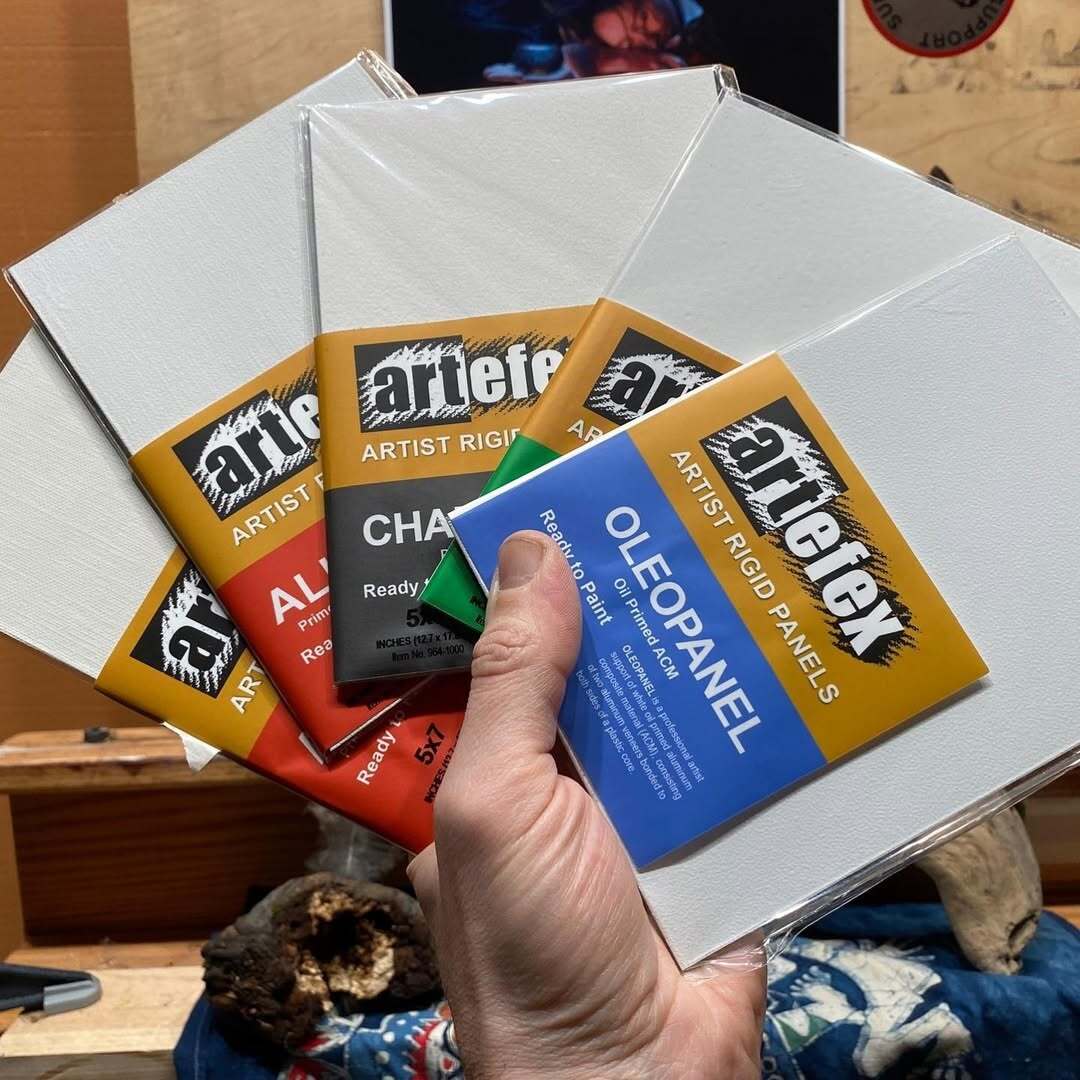
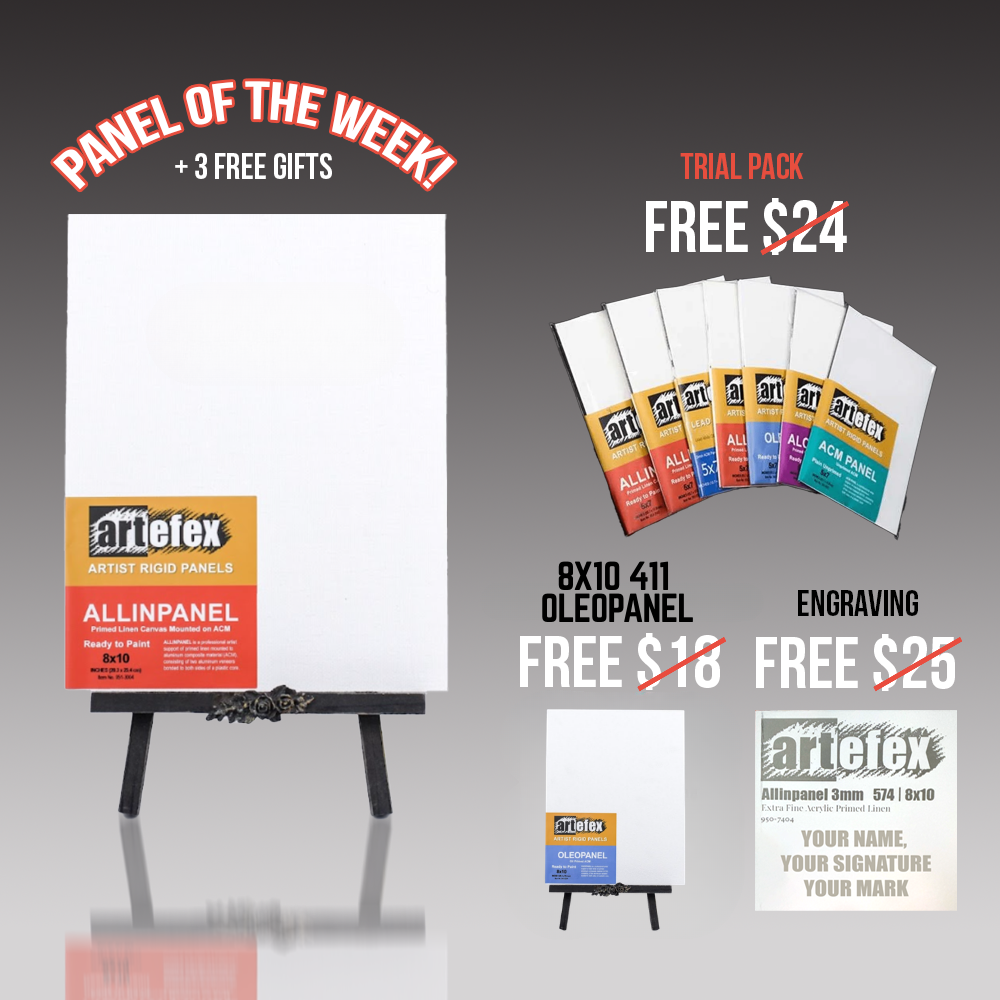
3 Panels (5×7″) for only $24.
The fastest way to find your favorite surface. This pack includes three of our 5×7″ professional archival panels. Free shipping included.
Get the $24 Trial PackOption 3: Standard Archival ACM Panels
The professional standard for daily work. Warp-resistant, museum-grade, and ready for your next masterpiece.
Browse Standard PanelsOption 4: For Large Scale Artists (Honeycomb)
Stop wrestling with heavy wood cradles. Get aerospace-grade rigidity at a fraction of the weight. Perfect for monumental works up to 5’ x 10’.
Shop Honeycomb Panels